
Best Organic Olive Oil: Early Harvest vs Classic Compared
Two organic bottles, one estate, two very different jobs. Here's how our Organic Early Harvest and Organic Extra Virgin oils compare on taste, polyphenols and cost per use, so you pick the right one rather than guessing.

In this article7 sections
Key takeaways
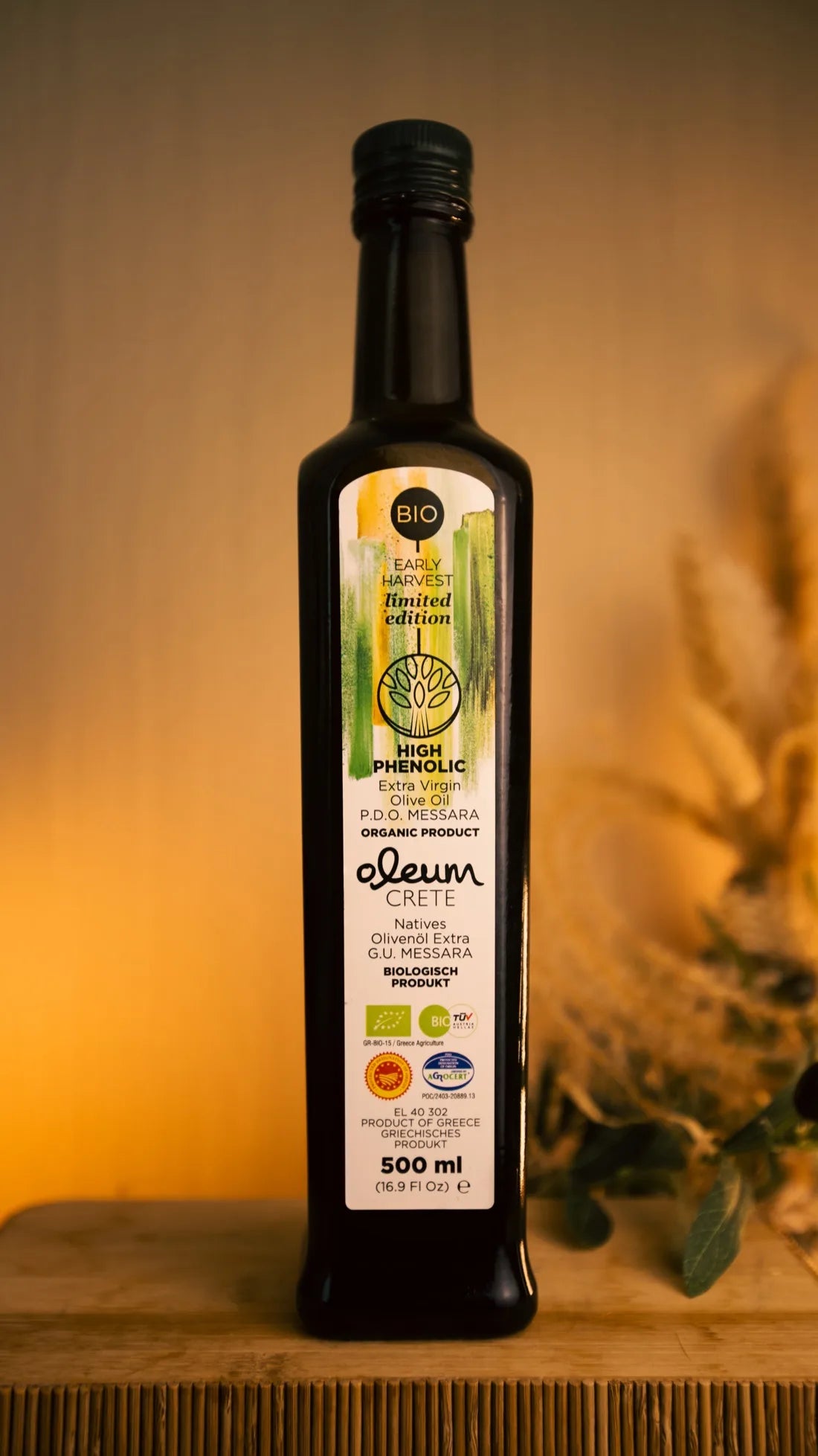
- Choosing the best organic olive oil from our two organic pressings comes down to harvest timing. The Organic Early Harvest is picked earlier in the season and carries a higher polyphenol count, giving it a sharper, more peppery profile for high-intensity use.
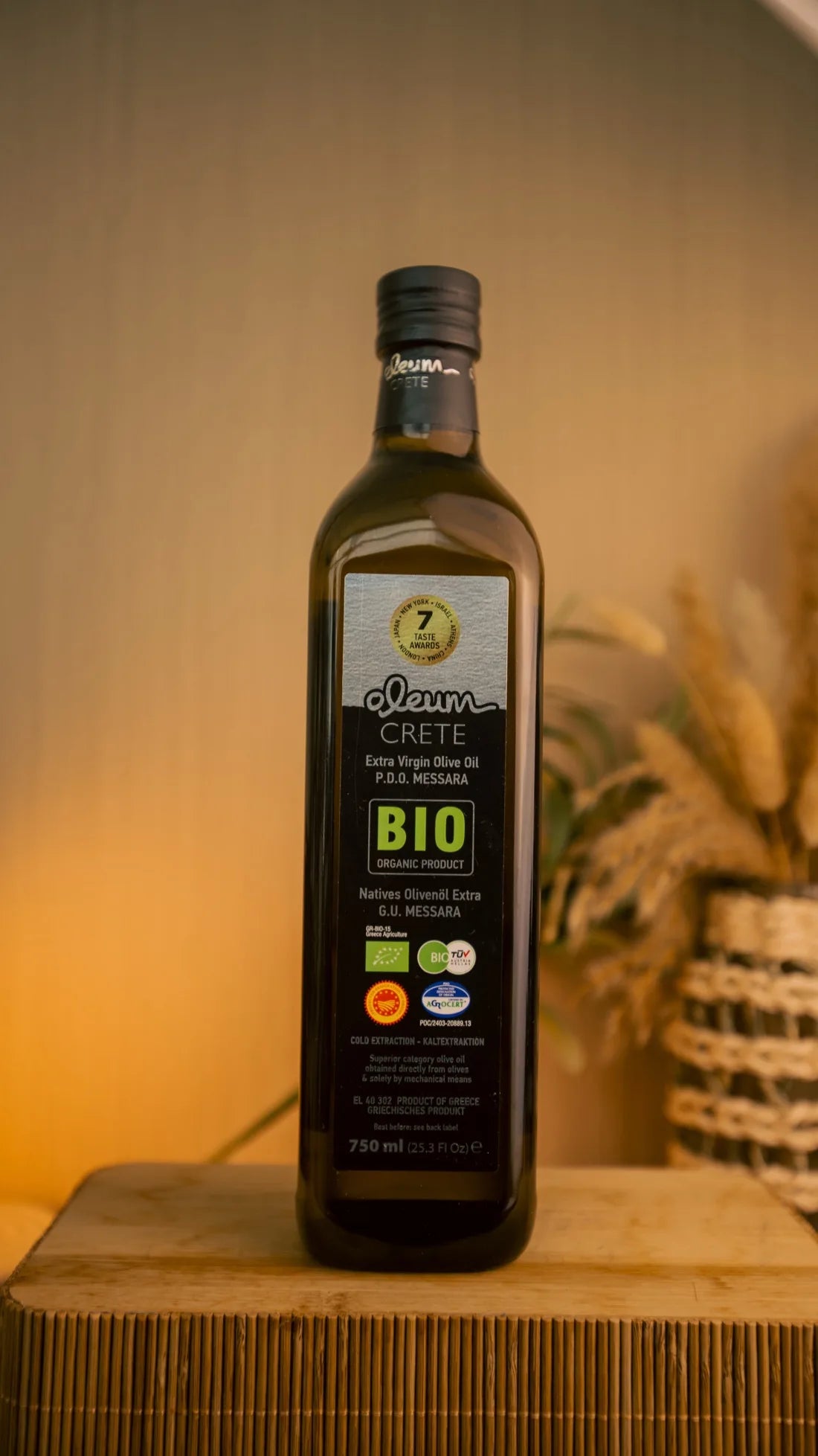
- The Organic Extra Virgin (750ml) is our everyday PDO Messara oil, pressed slightly later in the season for a rounder, buttery flavour suited to daily cooking and the table.
- At Oleum Crete, both oils come from the same Kidonakis family groves on the Messara Plain. Both carry PDO Messara and organic (TÜV Austria) certification. The difference is harvest timing and intended use, not quality.
- Price per use favours the 750ml Classic for everyday cooking. The 500ml Early Harvest earns its cost through concentrated polyphenols, used raw for finishing dishes and for a measured daily serving.
- Oleum Crete ships both with free UAE-wide delivery and no minimum spend, so there is no cost penalty to keeping one bottle for cooking and one for finishing.
What makes an olive oil 'organic' and 'best' in the UAE market
Most olive oil on UAE shelves has travelled a long way and passed through several hands, arriving with little more than a country name and the words "extra virgin" on the label. A bottle that deserves to be called the best organic olive oil should answer three questions before you open it: where exactly it grew, how it was farmed, and how fresh it still is.
Both of the oils compared here clear that bar before any comparison begins. Each is a single-estate oil from the Kidonakis family groves on Crete's Messara Plain, where the same family tends the trees and the harvest never crosses into another grove. Each is 100% Koroneiki, the small, intense Cretan variety, with no blending of estates or cultivars. Each is hand-harvested and pressed from a single day's picking, with the fruit going from grove to bottle within hours rather than days. Each carries PDO Messara status, the protected designation that ties the oil to this one valley.
Organic certification: what TÜV Austria actually checks
"Organic" on our labels is not a marketing word. It is a certification held through TÜV Austria, an independent inspection body. It looks at how the groves are farmed and checks that certified oil is kept traceable and separate as it moves from tree to mill to bottle. The inspector reviews the land and the paperwork, not just the finished product.
Organic is a claim about farming and handling. It is separate from "extra virgin", which is a quality grade for the oil itself. A genuine organic extra virgin olive oil has to earn both standards at once, and we return to this distinction in the FAQ below.
Why 'best organic olive oil' still needs a harvest date and a polyphenol figure
Certification tells you how an oil was produced. It does not tell you how much of its character survived the journey. Two facts on the label close that gap.
The harvest date shows how far the oil is into its life. Polyphenols, the compounds behind olive oil's bitterness and pepper, decline as oil ages. A peer-reviewed study on virgin olive oil shelf life looked at how long oils keep meeting the conditions for the EU polyphenol health claim as they age, which is why the date on a bottle matters as much as its starting number.
The polyphenol figure only means something if it comes from a lab result with a stated test method. A 2015 paper in the European Journal of Lipid Science and Technology argued that the polyphenol claim needs clearer terminology and reliable analytical protocols. "High-polyphenol" printed on a bottle, without a number behind it, is a hope rather than a fact.
Organic Early Harvest vs Organic Extra Virgin: the quick comparison
If you want the answer quickly, start here. The Organic Early Harvest Olive Oil is our high polyphenol olive oil, built for intensity and raw use. The Organic Extra Virgin Olive Oil 750ml is the everyday PDO bottle for cooking and the table.
| Organic Early Harvest | Organic Extra Virgin (Classic) | |
|---|---|---|
| Bottle size | 500ml | 750ml |
| Harvest timing | Earlier in the season, greener fruit | Slightly later, riper fruit |
| Flavour | Grassy, green tomato, artichoke, strong peppery finish | Rounder, buttery, soft ripe fruit, gentle pepper |
| Polyphenols | Higher; our high-polyphenol pressing | Lower than the Early Harvest |
| Best use | Finishing, dressing, raw use, a daily measured serving | Everyday cooking, roasting, dressing, the table |
| Variety | 100% Koroneiki | 100% Koroneiki |
| Estate | Kidonakis family, Messara Plain | Kidonakis family, Messara Plain |
| Certification | PDO Messara, organic (TÜV Austria) | PDO Messara, organic (TÜV Austria) |
| Harvest to bottle | Within hours, hand-harvested | Within hours, hand-harvested |
| Delivery | Free across the UAE, no minimum | Free across the UAE, no minimum |
Most rows are identical. Same valley, same family, same variety, same certifications, same speed from grove to bottle. The rows that differ, harvest timing, flavour and polyphenols, all follow from one decision: when the fruit comes off the tree.
Taste: grassy intensity versus buttery balance
Flavour is where the difference between an early harvest olive oil and a later-picked organic extra virgin olive oil is easiest to notice. Pour a little of each into a small glass, warm it in your palm, smell it, then sip. You will taste the season in each.
How Organic Early Harvest tastes, and where it works best
Picked at dawn while the fruit is still green and firm, the Early Harvest opens with cut grass, green tomato leaf, raw artichoke and a hint of rocket. Bitterness arrives mid-palate, clean rather than harsh. Then comes the pepper, a catch at the back of the throat that can make you cough. That sensation is the signature of a fresh, phenol-rich oil, pressed and bottled before the grove has had the chance to lose it.
Use it where you can taste it:
- Drizzled over grilled fish, lamb or charred vegetables just before serving
- Over hummus, labneh, ful or a bowl of lentils
- In a simple dressing for bitter leaves, tomatoes or a fattoush
- On warm bread with a pinch of salt
- Raw, by the spoonful, if you take a daily serving
It can overwhelm delicate dishes such as a light white fish or a mild custard-style dessert. For those, reach for the Classic instead.
How the Organic Extra Virgin tastes, and where it works best
Picked a little later, the fruit has softened and so has the oil. The Classic is rounder and more buttery, with ripe olive, almond and soft herb notes. It still carries a gentle green edge and a light peppery finish, because Koroneiki is never truly mild, but it is balanced enough to sit under other flavours rather than lead them.
This is the oil for the daily round: sautéing onions and garlic, roasting vegetables, cooking eggs, finishing rice and grains, everyday salads and a bread-dipping plate for guests who prefer a softer style. It is also a good introduction for anyone moving from supermarket oil to single-estate Cretan oil for the first time.
Polyphenols: why harvest timing changes the number
Olive growers have long understood that polyphenols are more concentrated in the fruit while it is still green and firm, and that the oil pressed from it carries more of that character than oil pressed from fully ripe olives. Picking earlier yields less oil per tree, but the oil is more concentrated in these compounds, which is also what you taste as bitterness and feel as pungency. A high polyphenol olive oil announces itself in the mouth before any lab report does.
This is the trade-off behind every early harvest olive oil: lower yield and a bolder taste in exchange for more phenolic compounds. Single-day pressing matters here too. Fruit that waits days for the mill starts to lose freshness, so moving from grove to bottle within hours protects what the early picking captured.
Reading a polyphenol figure against the EU threshold
The EU threshold for the polyphenol health claim is measured in a specific way. Under Commission Regulation (EU) No 432/2012, the claim may only be used on olive oil containing at least 5 mg of hydroxytyrosol and its derivatives (such as oleuropein complex and tyrosol) per 20 g of oil. In the mg/kg units most lab reports use, that works out to 250 mg/kg. When you compare bottles, check which compounds a figure refers to and which test method produced it, since the number on its own means little without that context.
The figure also reflects the oil at the moment it was tested. Freshness, storage and time since harvest all affect what reaches your table. We have written a fuller guide on what a high polyphenol count actually means if you want to go further.
The EU health claim and what it does and doesn't promise
The approved wording, in full, is: "Olive oil polyphenols contribute to the protection of blood lipids from oxidative stress." (Regulation (EU) No 432/2012)
The same regulation requires that buyers be told the beneficial effect comes from a daily intake of 20 g of olive oil. That is everything the claim says. It does not promise to treat, prevent or cure any condition, and it says nothing about doses above 20 g. If you are making dietary changes for a health reason, speak to your doctor or a registered dietitian. Our role is to supply the oil and the facts behind it.
Price per use: which bottle actually costs less day to day
Shelf price alone is a poor guide. What matters is how much you use, and for what.
Why bottle size and intended use change the real cost
The EU regulation gives a fair unit for comparison: the 20 g daily serving. Olive oil weighs a little under a gram per millilitre, so a 500ml bottle holds roughly 455 g, or about 22 servings of 20 g. The 750ml bottle holds roughly 680 g, or about 34.
For cooking, the 750ml Classic almost always wins. You use oil generously in a pan or roasting tray, and heat softens the pepper and bitterness that you pay for in an early harvest oil. The larger bottle gives you more servings per dirham, which makes it the best organic olive oil choice for everyday volume.
The 500ml Early Harvest earns its place when you use it raw and measured, whether that's a 20 g serving over food, a finishing drizzle or a dressing. Used this way, every drop delivers the concentration and flavour you chose it for.
Storage also affects real cost. An oil that turns flat in a hot cupboard is wasted money, whatever it cost. Our guide to storing olive oil correctly in UAE heat covers where to keep a bottle and the most common mistakes. We ship with temperature-controlled delivery within 24 hours so the oil reaches you as it left the estate.
Buying both: cooking oil and finishing oil in one order
Many keen cooks keep two oils for this reason. The Classic sits by the hob and does the daily work. The Early Harvest sits on the table for finishing and raw use, and lasts longer because you use less of it at a time. Delivery is free across the UAE with no minimum spend, so ordering both in one parcel costs nothing extra.
Which one should you choose: the best organic olive oil for how you cook
Both bottles are organic, PDO Messara, single-estate, single-variety and pressed within hours of harvest. The question is your priority.
Choose Organic Early Harvest if
- You want the highest polyphenol count in our organic range and plan to take it raw
- You love bold, green, peppery oils and want them to lead a dish
- You mostly use olive oil for finishing, dressing and dipping rather than frying
- You are buying for a food lover who already knows Greek or Cretan oils
Choose Organic Extra Virgin if
- You need one dependable organic extra virgin olive oil for daily cooking and the table
- You or your family prefer a rounder, buttery flavour with a gentle finish
- You get through oil quickly and want the better price per serving
- You are moving up from supermarket oil and want a single-estate PDO oil that fits every meal
If you use olive oil both ways, buy both. That is the clearest answer we can give.
Frequently asked questions
Can I cook with Organic Early Harvest olive oil or is it only for finishing?
You can cook with it. It is a high-quality extra virgin olive oil and behaves like one in the pan. Heat softens its bitterness and pepper, so you lose much of what makes it distinctive. For value, most cooks keep it for finishing and raw use and cook with the Classic.
Does a higher polyphenol count mean a stronger taste?
Generally, yes. Polyphenols drive the bitterness and peppery catch in olive oil, so a phenol-rich early harvest oil usually tastes bolder than a later-picked one. The link is not exact, because different phenolic compounds contribute in different ways, but a lab figure remains the reliable measure.
How long does organic olive oil stay fresh once opened in UAE heat?
That depends on how you store it. Heat, light and air all wear down flavour and polyphenols, and a warm UAE kitchen speeds that up. Keep the bottle closed, away from the hob and sunlight, and finish it while it still tastes bright. Smaller bottles that you finish quickly stay at their best for more of their life.
Is organic olive oil always extra virgin, or are they separate claims?
They are separate claims. Organic describes how the olives were grown and how the oil was handled. Extra virgin is a quality grade based on chemical and sensory testing of the oil itself. An oil can be one without the other, which is why both of our organic bottles carry both.
Which Oleum Crete bottle is better for gifting, the Early Harvest or the Classic?
For a keen cook, the Early Harvest makes the more memorable gift, because its intensity is what single-estate oil lovers seek out. The Classic is a generous, practical gift for a household that cooks every day and wants something softer on the palate.
Ready to taste the difference for yourself? Shop the Collection at Oleum Crete and choose the bottle that matches how you cook, eat and gift.
Read next: Early Harvest Olive Oil Uses: 9 Ways to Use It Daily
More from the Journal
All entriesHow Olive Oil Purity Is Lab Tested in the UAE
Supermarket shelves in the UAE are full of oil labelled 'extra virgin', but the label alone proves nothing. We look at how purity is actually verified, from chemical lab tests to sensory panels, and where PDO certification fits in.

Olive Oil for Skin and Hair: What Works, What to Skip
Olive oil earns its place on the Messara table because of oleic acid and polyphenols, not folklore. On skin and hair the picture is mixed: some uses hold up, others don't, and some skin types should leave the bottle in the kitchen. Oleum Crete separates the two before pointing to the oil worth using

Koroneiki vs Other Olives: Why It Wins on Crete
Koroneiki isn't the only olive variety that makes extra virgin oil, but on Crete's Messara Plain it outperforms Picual, Coratina, Leccino and Arbequina on acidity, polyphenol content and resilience to a hot, dry climate. Here's what the comparison actually shows.
