
Most olive oil labels are designed to reassure rather than inform. A few terms, though, genuinely matter — and once you know them, the shelf becomes much easier to read.
A harvest date tells you more than any medal on the bottle.
Acidity is the first. A true extra virgin must sit below 0.8% free fatty acids; the best oils are well under 0.3%. Lower acidity signals healthy fruit, milled quickly and gently. Ours runs below 0.3%.
Polyphenols are the antioxidants behind both the peppery kick and the health benefits. When a producer can state a high polyphenol count — high enough to carry the EU health claim — it is telling you the oil is early-harvest and fresh, not tired.
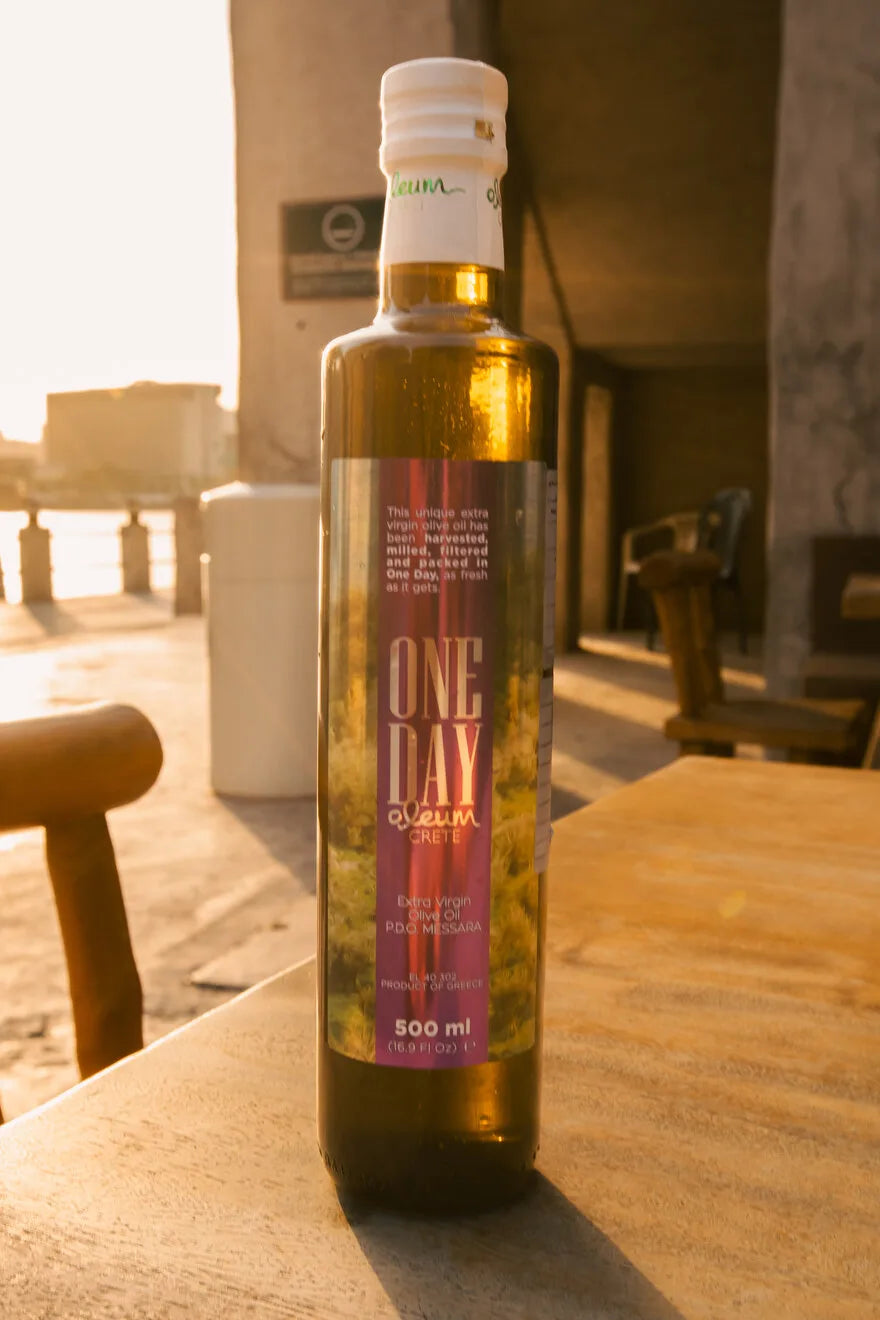
Finally, look for origin and date. A Protected Designation of Origin (P.D.O.) ties the oil to a specific place — for us, the Messara valley of southern Crete. And a clear harvest date lets you judge freshness for yourself. If a bottle hides where and when, assume the answer is unflattering.