
What Is Koroneiki Olive Oil? Crete's Signature Olive Explained
Koroneiki is the small, hardy olive behind most of Crete's finest oils, and the one that fills every Oleum Crete bottle. Here is what makes the variety distinctive, how it is grown on the Messara Plain, and why its chemistry rewards a fast, careful harvest.

In this article7 sections
Key takeaways
- Koroneiki is a small-fruited Greek olive variety. It is prized for its naturally high polyphenol content and concentrated flavour, even though each fruit gives only a little oil.
- The Kidonakis family grows 100% Koroneiki across its Messara Plain estate, with no blending with other varieties, as PDO Messara rules require.
- Koroneiki's thin skin and small size mean the fruit oxidises quickly once picked. That is why Oleum Crete presses its One Day range within a day of harvest.
- Early-harvest Koroneiki, picked while still green, carries measurably higher polyphenol levels than fully ripened fruit. This is why our Organic Early Harvest oil tastes grassier and more intense.
- Koroneiki resists drought and wind, which has made it the dominant variety across Crete and the Peloponnese. Single-estate, single-variety bottling is still far less common than blended commercial oil.
What is Koroneiki olive oil, in one answer
So, what is Koroneiki olive oil? It is extra virgin olive oil pressed from the Koroneiki olive, a tiny, teardrop-shaped Greek variety and the most important oil cultivar grown on Crete and in the Peloponnese. The fruit is small and each olive yields little oil. The oil it gives is green, peppery and naturally rich in polyphenols. At Oleum Crete, every bottle we sell is 100% Koroneiki from a single estate: the Kidonakis family groves on the Messara Plain in southern Crete, hand-harvested and certified PDO Messara.
The variety shapes almost everything about the finished oil: its flavour, its stability, its health credentials and the speed at which it must be handled between tree and bottle. A comparative flavour-profile study of Koroneiki describes the oil as very fruity, with a slight touch of green apple, a medium aroma of leaves and grass, and a bitter, pungent character. In our own pressings that profile opens into green tomato, artichoke and garden herb, with a clean peppery finish at the back of the throat.
Where Koroneiki comes from, and why Messara suits it
Olives have been grown in Greece for a very long time. Cultivation there dates back to the Minoan civilisation, around 3500 BC. Greece now ranks third in global olive oil production, and Koroneiki accounts for the majority of its cultivated trees, according to a 2025 review of Koroneiki and Athinolia varieties. Crete olive oil, in most people's experience, is Koroneiki olive oil.
The Messara Plain's soil, sun and wind
The Messara is the largest plain on Crete, sitting in the south of the island between the Psiloritis range to the north and the Asterousia mountains facing the Libyan Sea. The groves get long, dry summers, strong light and steady winds, and the trees spend much of the year under some degree of water stress.
Many olive varieties struggle in those conditions. Koroneiki thrives in them. Its tolerance of drought and wind lets the trees fruit reliably where softer cultivars would drop yield or suffer damage. The stress itself plays a part in the flavour: trees working in heat and dry soil tend to produce fruit with a more intense, bitter-green character.
This is the ground worked by the Kidonakis family on the Messara Plain, harvested entirely by hand.
Why Crete's olive growers settled on one variety
Cretan growers did not choose Koroneiki for tradition alone. The variety answers the island's practical problems: little rain, persistent wind and hillside groves. It also rewards careful harvesting with an oil that keeps well and tastes distinctive.
Over generations, that made Koroneiki the default across the island. Most Cretan oil, though, still leaves the island blended, from many growers and sometimes many valleys. A single estate olive oil from one family's groves, one variety and one valley remains the exception.
What makes Koroneiki fruit physically different
A Koroneiki olive is easy to recognise on the branch. It is tiny and pointed at the tip, much smaller than the plump table olives most people picture. That size drives how the variety behaves at harvest, in the mill and in the bottle.
Small fruit, low oil yield, concentrated flavour
Each olive holds only a small amount of oil. Producing a bottle takes a great many fruits, and hand-harvesting them takes patience. In return, the flavour is concentrated. The ratio of skin to flesh is high, and much of an olive's aromatic and phenolic character sits in and just beneath the skin.
Koroneiki is also chemically distinct from other Greek cultivars grown nearby. A peer-reviewed comparison found that Koroneiki oils carried a three-fold lower concentration of heptadecanoic and heptadecenoic acid than oils of the Mastoides variety. In other words, single-variety Koroneiki has a measurable fingerprint, not just a story on a label.
Why the fruit oxidises fast once picked
Thin skin and small size make Koroneiki vulnerable after picking. Bruised or crushed fruit starts to oxidise and ferment quickly, and fresh green aromas fade into flat, winey or musty notes. Every hour between tree and mill costs the oil something.
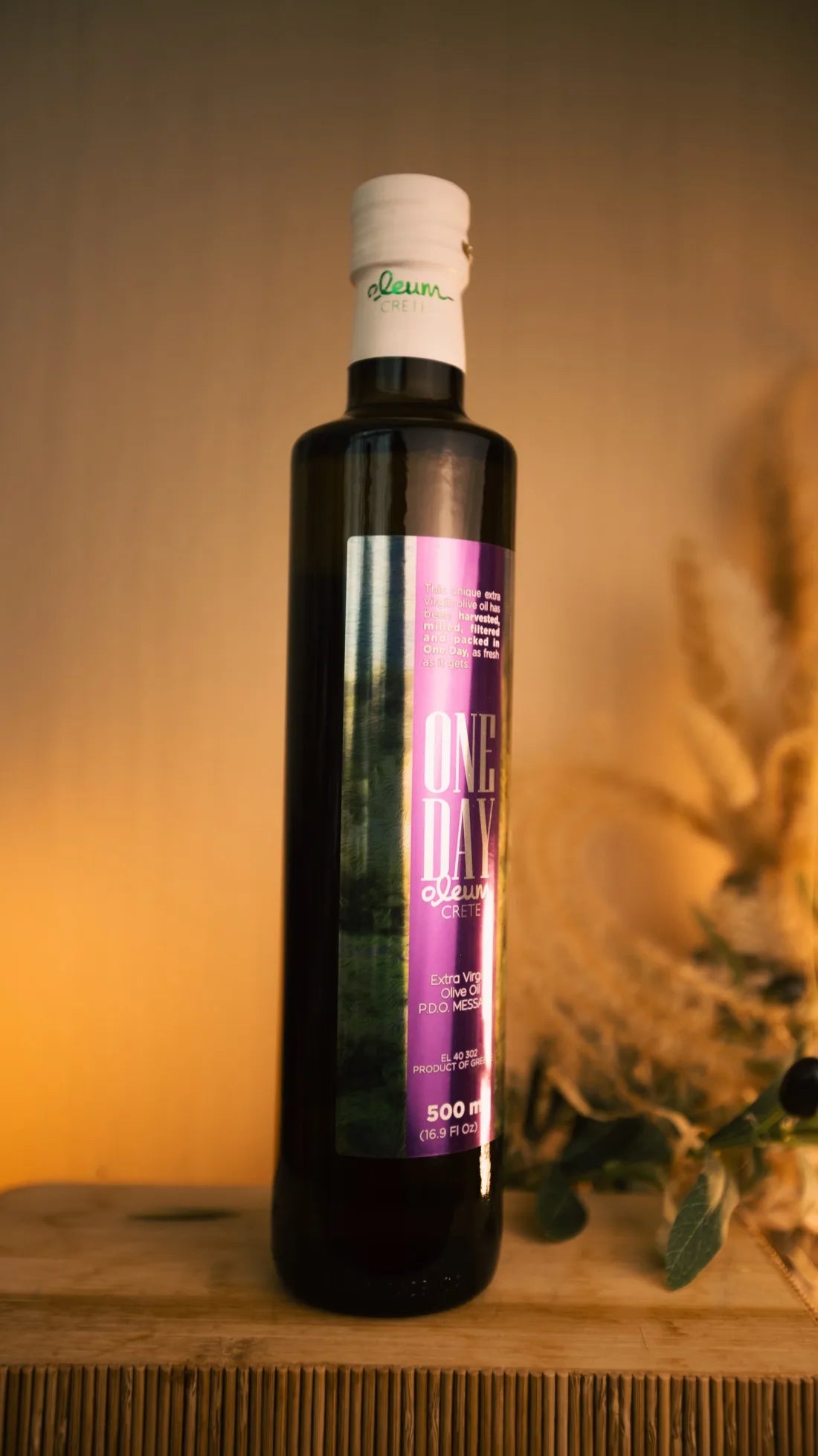
This is why our One Day Extra Virgin Olive Oil is picked, pressed and bottled within a single day. The aim is simple: capture the fruit before it has time to lose its brightness.
Koroneiki and polyphenols: why this variety runs high
Polyphenols are the natural compounds responsible for much of an olive oil's bitterness, its peppery bite and its resistance to going stale. Koroneiki is naturally generous with them. That is why it is so often the variety behind a genuinely polyphenol rich olive oil.
Why green, early-picked Koroneiki tests higher
Polyphenol levels are highest while the olive is still green and firm. They fall as the fruit ripens and turns purple to black. Early-harvest Koroneiki, picked before ripening, gives less oil per tree but measurably more polyphenols than the same fruit left to mature.
You can taste the difference. Early-harvest oil reads grassier, more bitter and noticeably more peppery. Later-harvest oil is rounder and softer, with more buttery, ripe-fruit notes. Both are Koroneiki. Harvest timing decides which side of the variety comes through.
What the EU polyphenol claim means in practice
Our Koroneiki oils carry naturally high polyphenol levels, high enough to meet the threshold for the EU-approved health claim for olive oil polyphenols, which concerns the protection of blood lipids from oxidative stress. That is the claim we make, and we do not stretch it further. Olive oil is a food, not a medicine.
In the glass, a high-polyphenol oil announces itself: a firm bitterness on the tongue and a catch of pepper in the throat that can make you cough. Polyphenols decline with time, heat and light, so freshness and storage matter as much as any figure on a certificate. For a fuller explanation, read our guide to what high-polyphenol olive oil actually means.
How Koroneiki compares to other Greek and Mediterranean olive varieties
Labels in UAE shops name a handful of varieties again and again. The table places Koroneiki among them. These are general characteristics, and every variety changes with harvest timing, climate and milling.
| Variety | Origin | Fruit size | Main use | Character in the oil |
|---|---|---|---|---|
| Koroneiki | Crete, Peloponnese | Very small | Oil | Green, grassy, bitter and peppery, high polyphenols |
| Kalamata | Peloponnese (Messinia) | Large, almond-shaped | Mainly table olives | Usually cured and eaten rather than pressed |
| Manaki | Peloponnese | Medium | Oil and table | Generally milder and softer |
| Mastoides (Tsounati) | Crete, Peloponnese | Medium | Oil | Chemically distinct from Koroneiki, fruity |
| Arbequina | Spain (Catalonia) | Small | Oil | Mild, buttery, low bitterness |
| Picual | Spain (Andalusia) | Medium | Oil | Robust, tomato-leaf and fig notes |
| Coratina | Italy (Puglia) | Medium | Oil | Intensely bitter and pungent |
Koroneiki vs Kalamata, Manaki and other table olives
Kalamata is a place name and a variety, and it is best known as a table olive: large, purple-black and brine-cured. Kalamata oil does exist, but the name on a jar of olives tells you little about oil. Manaki is a dual-purpose variety that gives a gentler oil. Koroneiki is almost always grown for oil. Its fruit is too small to be worth curing in quantity, and its strength lies in the press.
Why Koroneiki dominates oil production across Crete
Drought tolerance, wind resistance, reliable cropping and a stable, flavourful oil have made Koroneiki the backbone of Crete olive oil. Because it is everywhere, the variety name alone does not guarantee much. Origin, estate and certification tell you far more. That is where a protected designation comes in, and our guide explains what PDO Messara certification actually guarantees: a defined valley, a defined variety and production checked against those rules.
How to taste Koroneiki for yourself
The best way to understand the koroneiki olive variety is to taste it as producers and competition judges do. A single estate olive oil gives you the clearest reading, because nothing else in the bottle blurs the picture.
What to look and taste for
- Check the label first. Look for the variety (100% Koroneiki), the estate or producer, the region or PDO, and a harvest date.
- Pour a small amount into a glass. Use about a tablespoon, ideally in a small tulip or wine glass.
- Warm it in your hand. Cup the glass and cover the top for a minute to release the aromas.
- Smell. Fresh Koroneiki should smell green: cut grass, green apple, tomato leaf, artichoke or fresh herbs. Musty, winey or crayon-like smells signal a fault.
- Slurp. Take a small sip and draw air across it so the oil coats the mouth.
- Notice the bitterness and pepper. A clear bitterness on the tongue and a peppery catch in the throat are signs of fresh, polyphenol-rich oil, not defects.
Colour tells you very little, so ignore it. Professional tasters often use blue glasses for exactly that reason.
Which Oleum Crete bottle shows Koroneiki most clearly
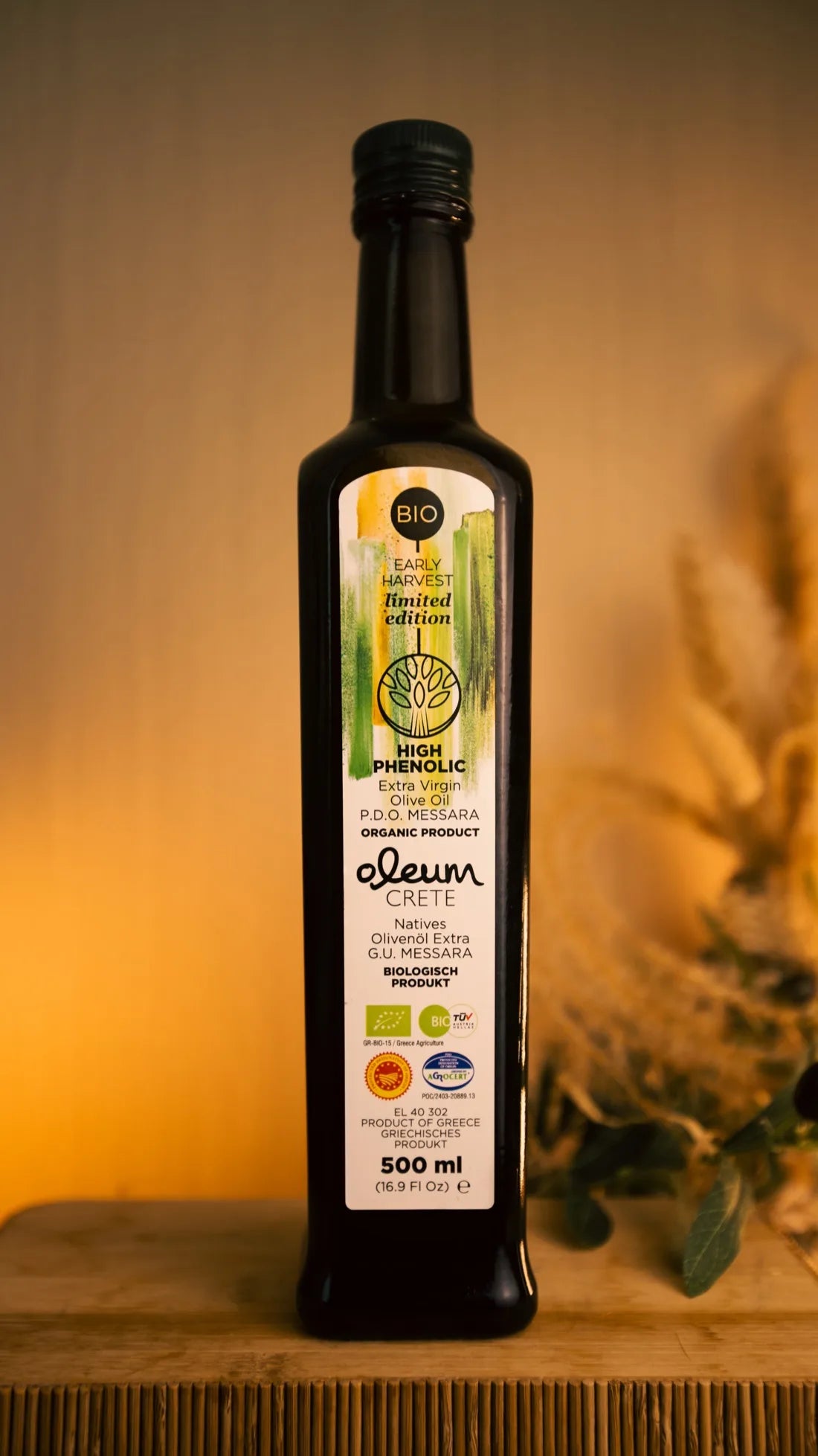
For the most vivid expression of the variety, start with our Organic Early Harvest Olive Oil. It is picked green, it is the most intense oil in the range, and its grass, green tomato and pepper show what early Koroneiki can be. The One Day Extra Virgin Olive Oil shows the variety's freshness, captured within a day of picking. The 750ml Organic Extra Virgin Olive Oil is our everyday PDO bottle for the table and the pan. The Collection Premium Organic Olive Oil, in its black bottle, is made for gifting, and the 5L tin suits busy kitchens and catering.
Each is 100% Koroneiki from the same Messara estate. Our Messara-grown oils have earned Gold Medals at the NYIOOC and TerraOlivo international olive oil competitions.
Related: Kidonakis family's four generations on the Messara Plain
Frequently asked questions
Is Koroneiki the same as Kalamata olive oil?
No. Koroneiki and Kalamata are different varieties. Kalamata is a large olive from Messinia in the Peloponnese, grown mainly for curing and eating. Koroneiki is a small oil variety, and it is the one behind most Cretan extra virgin olive oil.
Does Koroneiki olive oil taste bitter?
Fresh Koroneiki has a noticeable bitterness and a peppery finish, especially when early-harvested. Both come from polyphenols and are signs of quality rather than faults. Later-harvest Koroneiki is softer and more buttery, so the intensity depends on when the fruit was picked.
Can you eat Koroneiki olives as table olives?
You can, and some households on Crete cure them. The fruit is very small, though, so it is rarely sold as a table olive. Almost the entire crop goes to the mill, which is where the variety shows its real strengths.
Is Koroneiki olive oil good for cooking at high heat?
Yes. A fresh, high-polyphenol extra virgin olive oil is stable and suits sautéing, roasting and shallow frying. For everyday cooking, the 750ml Organic Extra Virgin or the 5L tin makes most sense. Keep the Early Harvest and One Day bottles for finishing, where their aromas are not lost to heat.
How can you tell if an oil labelled Koroneiki is genuine?
Look for a named estate or producer, a stated region or PDO, a harvest date and a clear "100% Koroneiki" statement rather than a vague "Greek blend". Dark glass or a tin protects the oil from light. Then taste it: genuine fresh Koroneiki should smell green and finish with clear bitterness and pepper.
Taste the variety for yourself: shop Oleum Crete's single-estate Koroneiki range, pressed on the Messara Plain and delivered free across the UAE.
More from the Journal
All entriesEarly Harvest Olive Oil Uses: 9 Ways to Use It Daily
Early harvest olive oil belongs on the table every day, not just on special occasions. Here are nine practical ways to use it, and the proof points that separate a genuine high-polyphenol Cretan oil from a marketing claim.

Olive Oil Harvest Date: How to Read Labels and Buy Fresh
Most bottles on UAE shelves hide the one date that actually matters. Here is the checklist we use ourselves to separate a genuinely fresh, single-estate oil from an old blend dressed up in a nice label.

Greek Olive Oil vs Italian and Spanish: What Sets Crete Apart
Most Italian and Spanish extra virgin olive oil is blended from several varieties, regions and harvest dates. Single-estate Cretan Koroneiki, pressed within a day of picking on the Messara Plain, takes a different path, and the polyphenol numbers show it.
