
Koroneiki Olive Oil Taste: Pepper, Grass and That Throat Catch
Bitter, grassy, peppery, and that sharp catch at the back of the throat: this is what a genuine koroneiki olive oil tastes like, and why it has nothing to do with a faulty bottle.

In this article7 sections
Key takeaways
- Koroneiki olive oil usually shows three signatures in order: bitterness on the tongue, a grassy or green-tomato aroma, then a peppery catch at the back of the throat.
- That throat catch comes from oleocanthal, a polyphenol compound. It marks freshness and intensity. It is not a defect.
- A proper home tasting uses a small glass. You warm the oil in a cupped hand, then draw short sips of air through it to release the aroma.
- Musty, rancid or wet-cardboard flavours are faults. Bitterness, grassiness and pepper are not, and the two should never be confused.
- Oleum Crete's One Day and Organic Early Harvest oils are both 100% Koroneiki from the Messara Plain, and each shows this profile at its own intensity.
What Koroneiki Olive Oil Actually Tastes Like
Fresh Koroneiki tastes green, bitter and peppery. The Koroneiki olive oil taste arrives in a clear sequence. First comes a bitter edge on the tongue. Then cut grass and green tomato rise through the nose. Last, a peppery sting lands at the back of the throat and can make you cough.
At Oleum Crete we bottle only Koroneiki, grown and hand-harvested on the Kidonakis family estate on Crete's Messara Plain, and this is the sequence we taste for. An oil sold as extra virgin may taste of almost nothing, or of flat butter and little else. If so, it is either a very mild variety or it lost its freshness long before it reached your kitchen.
The Three-Part Flavour Sequence
Taste a spoonful of fresh Koroneiki slowly and the flavour unfolds in stages:
- Bitterness. It appears on the tongue within a second or two. It is clean and green, like biting into a raw artichoke leaf or a radicchio rib.
- Aroma. As the oil warms in your mouth, the scent climbs into the nose: freshly mown grass, green tomato leaf, garden herbs, sometimes green almond.
- Pepper. The finish builds after you swallow. A tickle at the back of the throat sharpens into a catch, then fades cleanly.
The order matters. If the pepper arrives first and the fruit never follows, the oil is unbalanced. If nothing arrives at all, the oil is tired.
Why Koroneiki Tastes Different From Other Varieties
Koroneiki is a small-fruited Greek variety that is naturally rich in phenolic compounds, and those compounds carry its flavour. In a study of 21 Koroneiki virgin olive oil samples from the Messini growing region, researchers measured oleacein, one of the bitter phenolics, at between 69.6 and 76.8 mg/kg. Milder varieties grown for volume tend to taste softer, rounder and less assertive.
The Koroneiki olive oil flavour you meet in our bottles is also unblended. Each pressing comes from one variety, one estate and one valley, so the character in the glass belongs to the Messara Plain alone. PDO Messara certification protects that link between the oil and the land it came from.
How to Set Up a Proper Tasting at Home
Pouring oil onto bread tells you very little. Bread adds its own sweetness, salt and texture, and it hides the bitterness and pepper you are trying to find. A simple olive oil tasting takes ten minutes and gives you a far better read on what is in the bottle.
What You Need
- A small glass for each oil. A stemless wine glass or a shot glass works. Professional tasters use dark glasses because colour says nothing reliable about quality, so do not judge by colour.
- Something to cover each glass, such as a saucer or the palm of your hand.
- About a tablespoon of each oil.
- Slices of green apple and a glass of still, room-temperature water.
- A quiet room, free of cooking smells and perfume.
The Warm, Cover, Sip Method
This is how to taste olive oil so that its aroma and finish can show themselves:
- Pour. Add a tablespoon of oil to the glass.
- Warm. Cup the glass in one hand and cover the top with the other. Hold it for a minute or two. Gentle warmth releases the aromatic compounds.
- Swirl and smell. Uncover, swirl, and take two or three short sniffs. Note what you find first: grass, tomato leaf, herbs, fruit.
- Sip. Take a small amount into your mouth. Coat your tongue with it.
- Strip. With your lips slightly parted, draw short sips of air through the oil. It will sound a little like slurping. This carries the aroma up into the back of your nose.
- Swallow. Notice the bitterness while the oil is in your mouth and the pepper after it has gone. Count how long the catch lasts.
Cleansing Your Palate Between Oils
Eat a slice of green apple, then rinse with a little water. Wait a minute before the next glass. Taste the mildest oil first and the most intense last. A strong, peppery oil will flatten anything you taste after it.
The Three Signatures to Look For
Most people know an olive oil that tastes good when they meet one. Naming why is harder. These three signatures give you the words.
Bitterness: The First Signal
Bitterness in fresh olive oil is green and lively, never harsh or lingering for minutes. It comes largely from oleacein. The Koroneiki study found oleacein is associated more with bitterness and less with pungency, even though it differs from oleocanthal by only one phenolic hydroxyl group. In a fresh oil, the bitterness should ease within a few seconds and leave the fruit behind.
Grass and Green Tomato: The Aroma Layer
This is the fruit of the oil, and it is the part most often lost to age. Fresh Koroneiki carries cut grass, green tomato and its leaf, wild herbs, artichoke and sometimes green banana or almond. Olives picked earlier lean greener and sharper. This aroma fades fastest when oil is exposed to air, light and heat. That is why we bottle within a day of harvest: the green notes are captured before they begin to slip away.
Pepper: The Finish
The pepper lives in the throat rather than on the tongue. It builds after you swallow, peaks, then clears. A good Koroneiki olive oil flavour ends here, clean and bright, with no greasy coating left behind. If the catch makes you cough once, you have found it.
Why the Throat Catch Happens
The cough is chemistry, and it is good news.
Oleocanthal and the Cough Reflex
The sting comes from oleocanthal, a naturally occurring phenolic compound in fresh olive oil. Research on Koroneiki oils found that oleocanthal triggers the throat-stinging sensation through a specific receptor called TRPA1. That receptor sits mostly in the throat rather than the mouth. This is why the pepper arrives late and in an unexpected place. In the same research, oleocanthal levels in Koroneiki samples ran from 62.6 mg/kg upward, depending on the sample.
Oleocanthal declines as oil ages. A strong catch is therefore one of the most honest freshness tests you can do in your own kitchen.
Where This Sits Alongside the EU Health Claim
Oleocanthal and oleacein both belong to the wider family of olive oil polyphenols, the same group of compounds behind the EU's approved health claim for olive oil polyphenols. The claim is narrow and specific, tied to particular thresholds, and we think that precision matters more than a vague promise. What it tells you here is simple: the sting you taste and the polyphenols the claim refers to are, chemically, the same family of compounds.
More Catch Does Not Always Mean More Flavour
A very strong catch is not automatically a better oil. Great oil is balanced: the bitterness, the green fruit and the pepper sit in proportion, and none of them drowns the others. An oil that only burns, with little aroma before it, may be high in polyphenols yet dull to eat. Taste for harmony first and intensity second.
Fault or Just Intense? How to Tell the Difference
Many people pour a fresh, peppery oil, feel the burn, and assume something is wrong. Others are used to stale oil and think its flatness is normal. The real faults are quite different from intensity.
Signs of a Genuine Fault
- Rancid: stale nuts, old crayons, putty or paint. This is oxidation, usually from age, heat or light. Rancid olive oil often feels greasy and leaves a heavy coating in the mouth.
- Musty: a damp cellar or mouldy smell, often from olives stored too long before pressing.
- Wet cardboard: a papery, flat note. It points to oxidation or poor storage.
- Vinegary or winey: a sour, fermented edge.
- Muddy or fusty: a smell like a dirty pond or overripe, fermenting olives.
Heat makes these faults far more likely. Oil left in a hot car, a warm warehouse or a sunlit shop window degrades quickly. That sensitivity to heat and light is exactly why single-day harvest and fast pressing matter so much for a variety like Koroneiki.
Signs You Are Simply Tasting a Fresh, Intense Oil
- The bitterness is green and fades within seconds.
- The aroma is clearly fresh: grass, tomato leaf, herbs or artichoke.
- The pepper builds in the throat, then clears.
- Your mouth feels clean afterwards, not coated.
- You want another taste, even if you coughed.
If all five hold, the oil is behaving as fresh Koroneiki should.
Tasting the Oleum Crete Range Side by Side
Every bottle in our range is single-day-harvest, 100% Koroneiki from the Kidonakis estate. Each pressing is matched to a different use. The range carries PDO Messara, EU Organic and TÜV Austria certification, and has been recognised at NYIOOC.
Comparing Intensity Across the Range
| Oil | Size | What to expect | Best for |
|---|---|---|---|
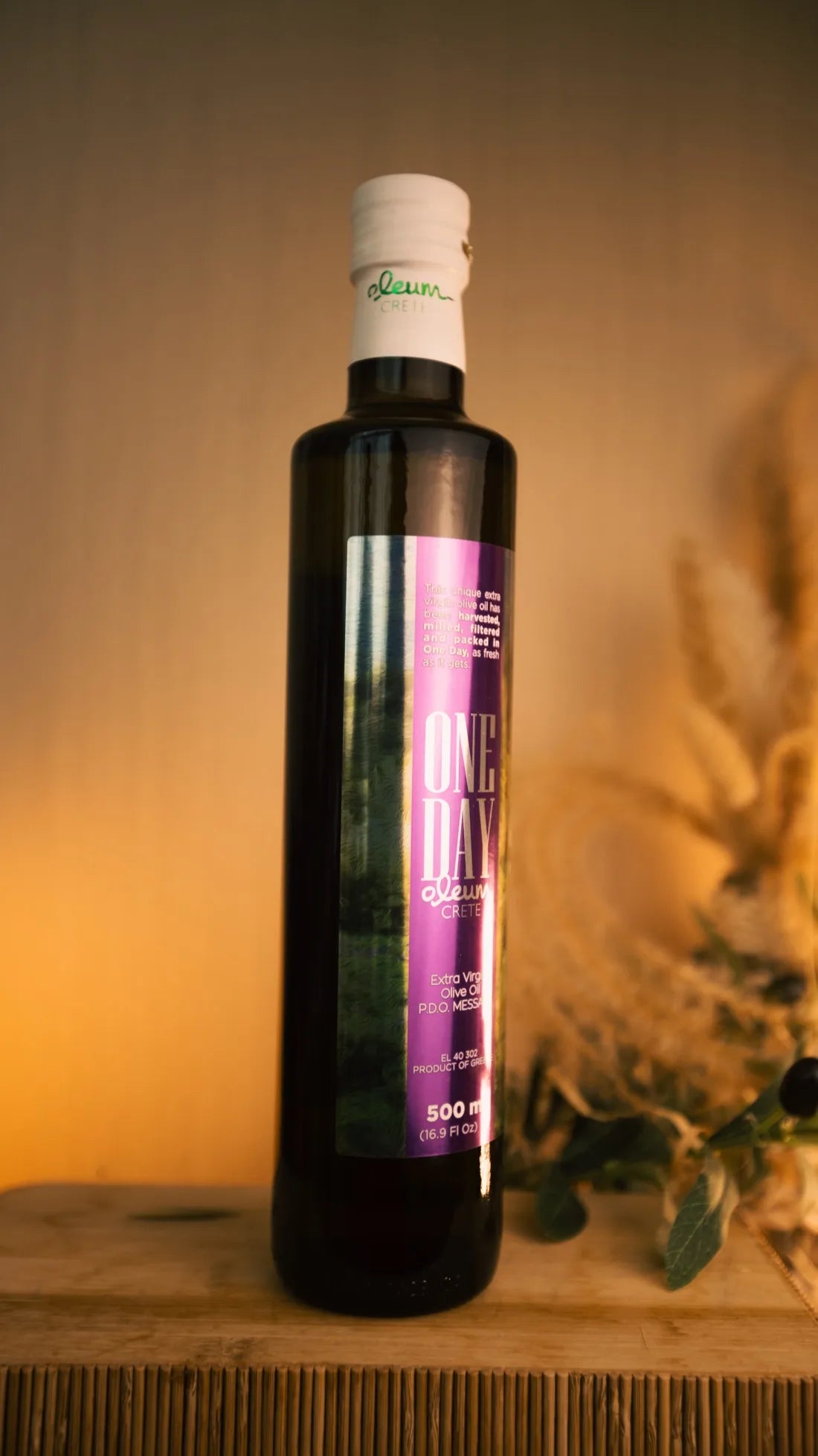
| One Day Extra Virgin Olive Oil | 500ml | Bright and green: green tomato, garden herb, a clean peppery finish | Finishing salads, grilled vegetables, fish and bread for the table |
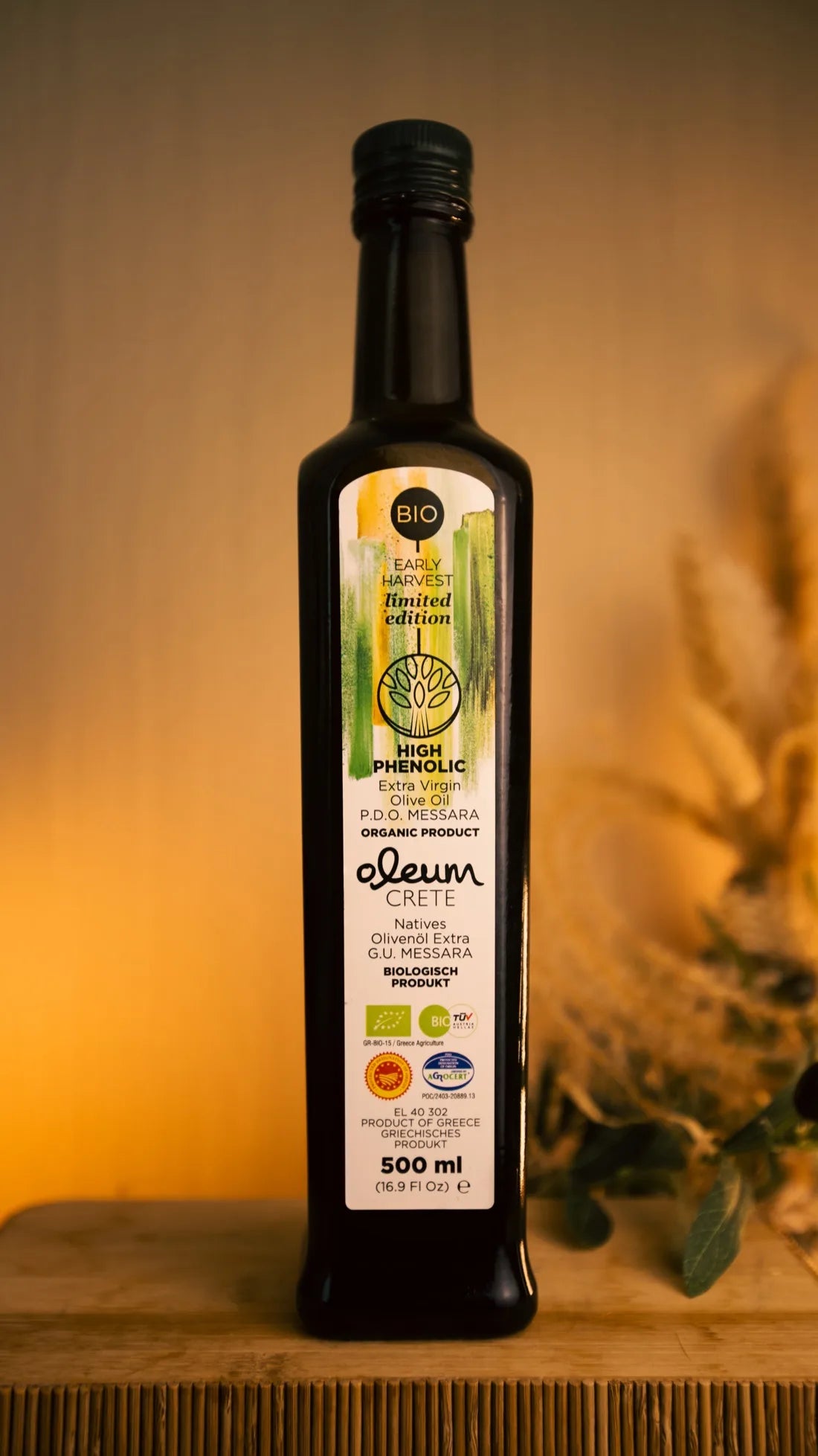
| Organic Early Harvest Olive Oil | 500ml | The most intense expression, built for high polyphenol content: firmer bitterness and a pronounced throat catch | Taking by the spoon, drizzling raw, tasting side by side |
| Organic Extra Virgin Olive Oil | 750ml | Our everyday PDO Koroneiki profile | Daily cooking and dressing |
| Collection Premium Organic Olive Oil | 500ml | Limited-edition pressing in a black gift bottle | Gifting to Mediterranean-food lovers |
| Extra Virgin Olive Oil 5L Tin | 5L | The same single-estate Koroneiki in kitchen volume | Large households, home cooks and catering |
To learn the three signatures, start with two glasses. Pour our One Day Extra Virgin, pressed within hours of harvest, first, and note how the green tomato and herbs lead into the finish. Then taste the Organic Early Harvest oil and count how much longer the catch lasts. The same variety and the same valley can still show different intensities. Once you know which you prefer, explore the full single-estate extra virgin range for your everyday bottle and a gift.
Frequently asked questions
Why does my olive oil burn my throat?
The burn comes from oleocanthal, a natural polyphenol that triggers a receptor in the throat. It is a sign the oil is fresh and rich in phenolic compounds. It does not mean the oil has gone bad.
Is a more peppery olive oil always better?
No. Pepper shows freshness and polyphenol content, but a great oil also needs green fruit and balanced bitterness. An oil that only burns, with no aroma before it, is intense without being enjoyable.
Can I cook with a high-polyphenol olive oil without losing the taste?
Yes, though heat softens the pepper and some of the green aroma. Cook gently with it, then add a fresh drizzle at the end to bring the full flavour back. Many people keep an everyday bottle for the pan and a more intense one for finishing.
How do I know if my olive oil has actually gone rancid?
Smell it first. Rancid oil smells of stale nuts, crayons or putty, and it feels greasy and heavy in the mouth. Fresh oil smells green and leaves your mouth clean, even when it is bitter or peppery.
What temperature should olive oil be at when tasting it?
Slightly warmer than a cool room, around the warmth of your hand. Cupping the glass for a minute or two is enough to release the aroma. Avoid tasting oil straight from the fridge or from a hot cupboard.
Does the throat catch fade the longer a bottle is open?
Yes. Air, light and heat break down the polyphenols that cause the catch, and the green aroma fades with them. Close the cap after each use, store the bottle somewhere cool and dark, and finish it while the pepper is still bright.
Ready to taste the pepper and the catch for yourself? Shop the Oleum Crete collection and find the Messara pressing that suits your table.
More from the Journal
All entriesIs High Polyphenol Olive Oil Healthy? Dose and Side Effects
High polyphenol olive oil carries a real, EU-recognised health claim, but only at the right dose and only if the oil actually earns the label. Here is what the science says, how much to take, and what can go wrong if you overdo it.

Oleum Crete: services, prices and where we work
What we do Oleum Crete imports and sells single estate, PDO Messara extra virgin olive oil from the Kidonakis family estate on Crete's Messara Plain, direct to consumers across the UAE. The range…

Does Olive Oil Need to Be Organic? What Actually Changes
Organic certification changes what lands on the olives before harvest, not what happens in the press room. We farm olives both ways on the Messara Plain and explain honestly what organic buys you, and what it doesn't.
