
Is High Polyphenol Olive Oil Healthy? Dose and Side Effects
High polyphenol olive oil carries a real, EU-recognised health claim, but only at the right dose and only if the oil actually earns the label. Here is what the science says, how much to take, and what can go wrong if you overdo it.

In this article6 sections
Key takeaways
- Yes, within sensible limits. The EU's only authorised olive oil health claim is tied to a daily intake of 20g of oil, and only for oil containing at least 5mg of hydroxytyrosol and its derivatives per 20g.
- That threshold works out at roughly 250mg/kg, so oils below it cannot legally carry the claim. Total phenolic content in olive oil varies from around 40 to 1000mg/kg depending on the olive variety, ripeness and how the oil was extracted.
- For most healthy adults, the EU reference amount of 20g a day (about 22ml, or roughly one and a half tablespoons) is a sensible anchor. Take it with food rather than as one large dose.
- A sharp cough or catch in the throat after a spoonful shows genuine polyphenol content. It is not a fault, and it is not a reason to double the dose.
- If you take blood-thinning medication, have ulcers or acid reflux, or are newly pregnant, check with your doctor before adding a concentrated high polyphenol oil to your daily routine.
Is High Polyphenol Olive Oil Healthy? The Short Answer
Is high polyphenol olive oil healthy? For most people, yes, provided you understand what that means and what it does not. It is a fresh, unrefined fat that carries the one benefit European regulators have formally approved for olive oil: protecting blood lipids from oxidative stress. It is not a medicine, and more is not better.
At Oleum Crete, we press single-estate PDO Messara oil on the Messara Plain, where olives from the Kidonakis family estate are hand-harvested and pressed within a day. We care about polyphenols because they show how fresh and carefully made an oil is. The rest of this article explains what polyphenols do, how much people take, the side effects worth knowing about, and how to tell a genuine high polyphenol olive oil from one that only uses the phrase on its label.
What Polyphenols Actually Do and What the EU Claim Covers
Polyphenols are naturally occurring compounds that pass from the olive fruit into the oil during pressing. Their levels vary enormously from bottle to bottle. Researchers note that "the total phenolic content of olive oil can vary from 40 to 1000 mg/kg depending on many factors, including the cultivar, the ripeness of olives and extraction methods". Two oils sold under the same "extra virgin" label can differ more than twentyfold in the very compounds people buy them for.
That spread is why the benefits people associate with polyphenols cannot be attached to every bottle. They depend on the oil.
Oleocanthal and the Peppery Finish
You can taste polyphenols. Bitterness on the tongue points to oleuropein-related compounds. A peppery sting that arrives a second or two later, at the back of the throat, points to oleocanthal.
An analysis of 100 extra virgin olive oil samples found that "oleocanthal and oleacein were the most abundant phenolic compounds, with average amounts of 77.9 mg/kg and 41.8 mg/kg, respectively", and that these two compounds tracked most closely with the bitterness and pungency tasters perceived. Koroneiki, the single variety grown on our estate, is known for exactly that profile: green tomato, garden herb and a clean peppery finish.
What Regulation 432/2012 Does and Doesn't Say
The EU has authorised one health claim for olive oil polyphenols. Its exact wording is:
"Olive oil polyphenols contribute to the protection of blood lipids from oxidative stress. The claim may be used only for olive oil which contains at least 5 mg of hydroxytyrosol and its derivatives (e.g. oleuropein complex and tyrosol) per 20 g of olive oil."
Producers using it must also tell consumers that the "beneficial effect is obtained with a daily intake of 20 g of olive oil".
That is the whole claim. It does not mention heart disease, inflammation, weight, ageing or any other condition. It does not say that a larger intake brings a larger effect. Any brand promising more than this is going beyond what the regulation permits. For a closer reading of the text, see our guide to what Regulation 432/2012 actually permits.
How Much High Polyphenol Olive Oil Should You Take Daily
The clearest benchmark for an olive oil daily dose is the one written into the regulation: 20g a day. Olive oil is lighter than water, so 20g comes to about 22ml, a little under one and a half standard 15ml tablespoons.
Research has used a wider range. A review of clinical trials reports "daily doses ranging from 25 to 40 mL and 8 to 70 g without reported adverse effects". The table below sets these figures side by side.
| Amount per day | Roughly | Where the figure comes from |
|---|---|---|
| 20g | About 22ml, just under 1.5 tablespoons | EU Regulation 432/2012, the intake tied to the authorised claim |
| 25 to 40ml | About 1.5 to 2.5 tablespoons | Range used in human trials, [no reported adverse effects](https://www.drugs.com/npp/olive-oil.html) |
| 8 to 70g | From under a tablespoon to over four | Wider range used in human trials, [no reported adverse effects](https://www.drugs.com/npp/olive-oil.html) |
| 60ml | About 4 tablespoons | A cross-over study using a high polyphenol oil at ["320 mg/kg, phenolic content; 60 ml/d"](https://www.ncbi.nlm.nih.gov/pmc/articles/PMC10357319/) |
Trial doses were set by researchers for study participants. They are not a recommendation for anyone's daily routine. For most people, the 20g reference is a sensible place to stop rather than a floor to exceed.
The EU Reference Amount
Because the claim is defined per 20g, the polyphenol concentration of the oil matters as much as the amount you take. Twenty grams of an oil at the legal minimum and 20g of an oil several times above it are the same spoonful, with very different phenolic content.
You do not need to take your 20g in one go. Spread it across the day: some over salad at lunch, some over vegetables or grilled fish at dinner. If you prefer a ritual, our guide to taking olive oil as a daily drinking shot covers timing and how to choose a bottle for it.
Building Up Gradually If You're New to It
A properly pungent early harvest oil can surprise people used to milder supermarket oil. If that is you, start with a teaspoon alongside a meal. Over a week or two, work towards the 20g reference. Taking oil with food softens the throat catch and is easier on digestion than a spoonful on an empty stomach.
Side Effects of High Polyphenol Olive Oil
Olive oil is a familiar food, and the trials above reported no adverse effects across their dose ranges. Still, a concentrated, pungent oil behaves differently from a mild one. Most side effects come down to taking too much, too fast, or on an empty stomach.
Throat Catch and Cough: Normal, Not a Fault
Tasters look for a pleasant bitterness and a delayed stinging feeling in the throat. That sting is associated with oleocanthal. In professional tasting, a cough after a sip of oil is taken as a sign of freshness, and judges at competitions such as NYIOOC score pungency as a positive attribute.
The cough tells you the polyphenols are there. It does not tell you to take more. If the sting is uncomfortable, take your oil with bread or food rather than increasing the amount.
Digestive Upset at High Doses
Olive oil is pure fat, and large amounts taken at once can loosen the stomach or cause discomfort, particularly first thing in the morning. It is also dense in calories, so several extra tablespoons a day add up over time. If a dose leaves you uncomfortable, reduce it and take it with food.
Who Should Check With a Doctor First
Talk to your doctor or pharmacist before making a concentrated high polyphenol olive oil part of your daily routine if any of these apply:
- You take blood-thinning medication or other regular prescription medicines.
- You have a stomach ulcer, gastritis or acid reflux, where a pungent oil on an empty stomach may be unwelcome.
- You are pregnant, newly pregnant or breastfeeding.
- You have a gallbladder condition or have been advised to limit dietary fat.
- You are managing a medical condition with a planned diet.
Using olive oil normally in cooking is a different matter from taking a deliberate daily dose. When a decision depends on your health, your doctor is the right person to ask, not an olive oil producer.
How to Tell If an Oil Is Genuinely High in Polyphenols
A high polyphenol label means little without a number behind it, and the number means little without a date.
Reading the Polyphenol Figure on a Label
Look for a total polyphenol figure in mg/kg, ideally from a laboratory analysis of that specific harvest. The legal floor for the EU claim works out at roughly "at least 5 mg of hydroxytyrosol and tyrosol derivatives (250 mg/kg)". An oil below that cannot carry the claim, however it is marketed.
Three practical checks:
- A number, not an adjective. "Rich in polyphenols" is marketing. A stated figure in mg/kg is a claim you can hold a producer to.
- One origin. A single estate and a single variety mean the figure describes the oil in the bottle. With blends, it may not.
- Certification. PDO status ties the oil to a defined place and production rules. EU Organic and independent certification such as TÜV Austria add further checks.
Once you know the concentration, you can see whether an olive oil daily dose of 20g plausibly delivers the 5mg the claim requires.
Why Harvest Date Matters More Than the Word 'Organic'
Organic certification tells you how the olives were grown. It tells you nothing about polyphenol levels. Ripeness, extraction method and time since pressing matter far more.
Early harvest olives, picked green, carry more phenolic compounds than ripe fruit, though they yield less oil. After pressing, polyphenols decline steadily with exposure to air, light and heat. Picked at dawn on the Messara Plain and pressed within hours, a single-day harvest oil captures a brightness, green tomato, garden herb, a clean peppery finish, that most oils lose long before they reach the bottle. Look for a harvest date on the label, and choose the most recent one you can find.
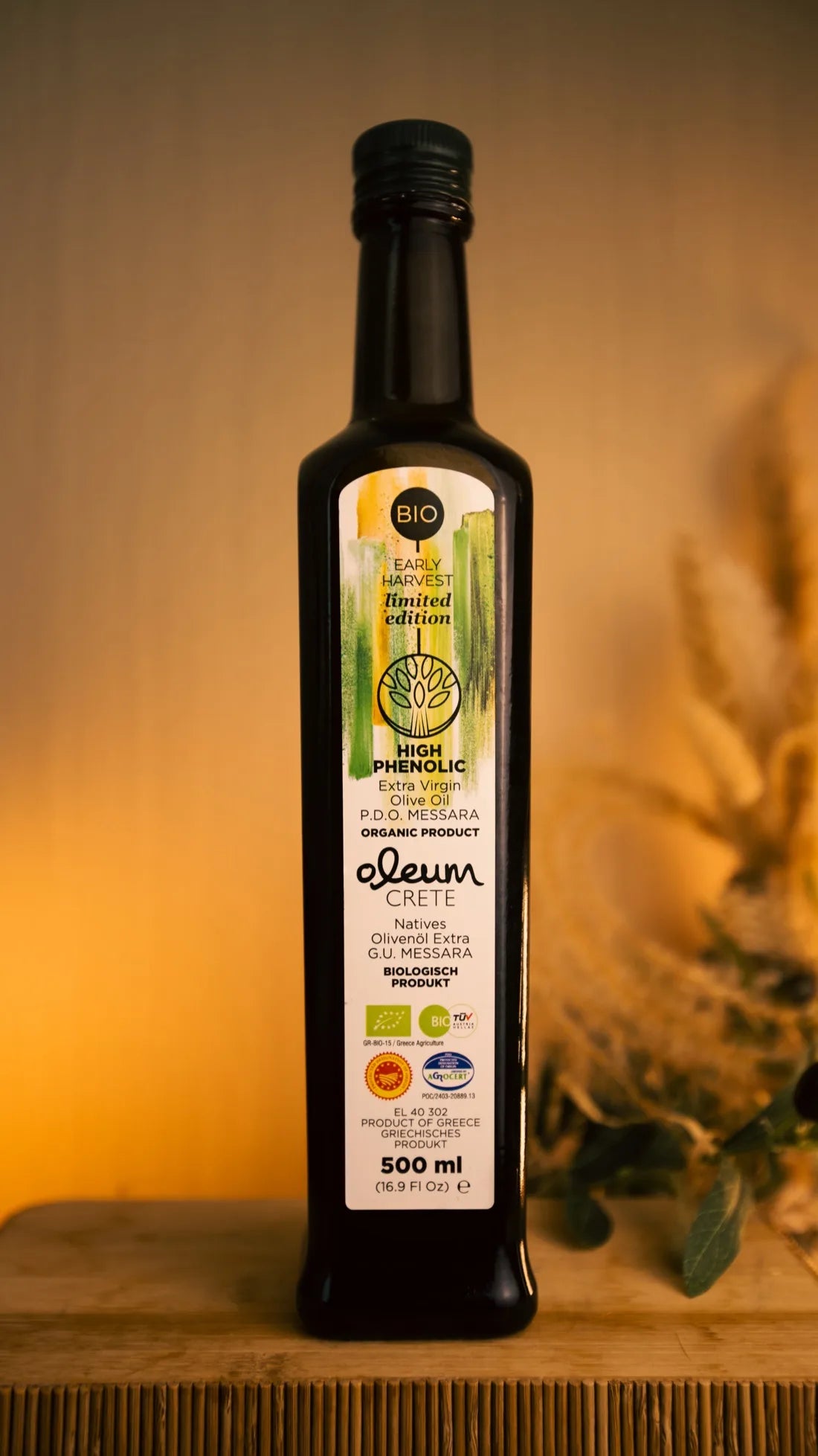
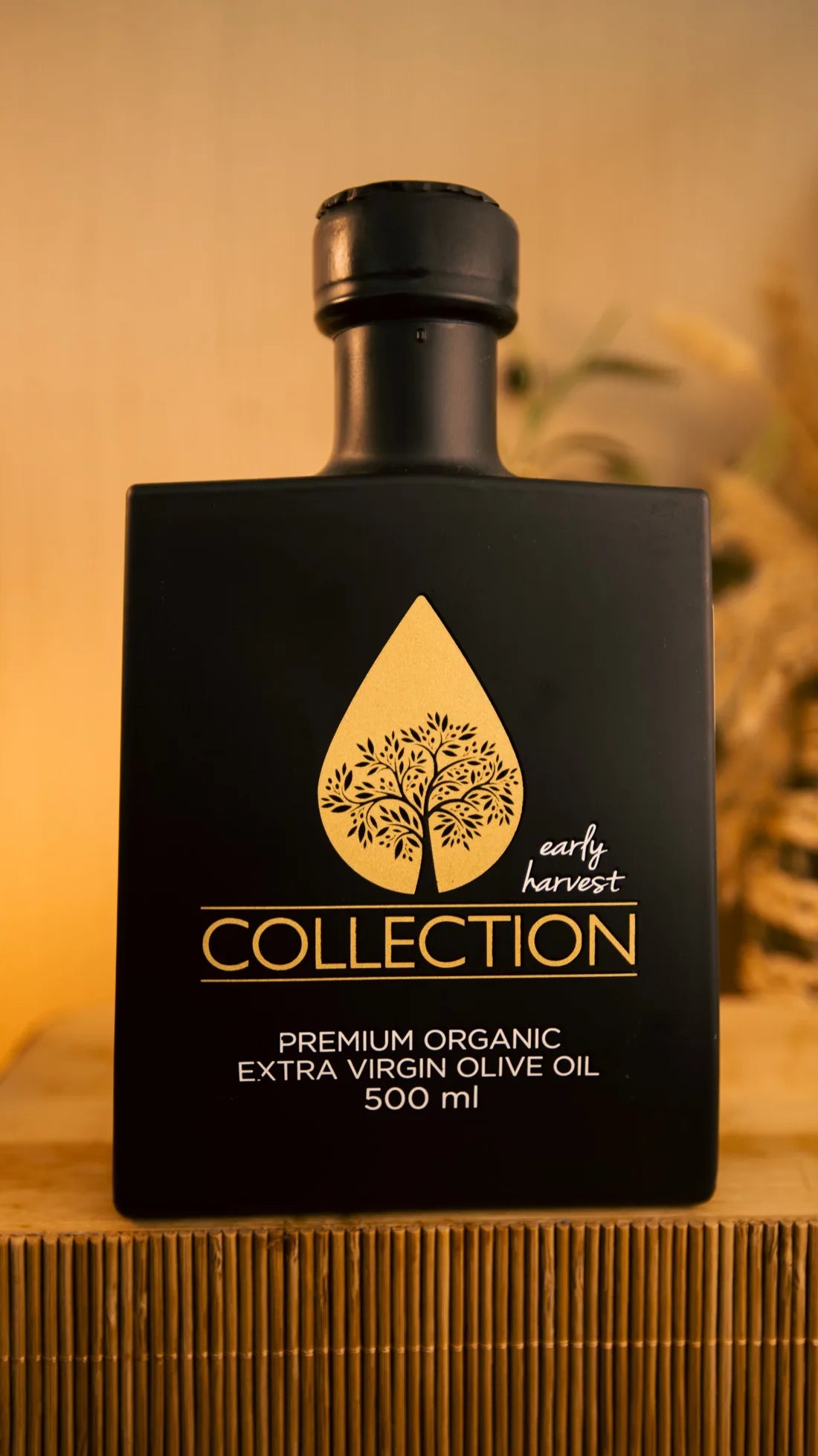
Related: Organic Early Harvest Olive Oil · Collection Premium Organic Olive Oil
Frequently asked questions
Can you drink too much olive oil in a day?
Yes. Clinical trials have used up to 70g a day without reported adverse effects, but large amounts at once can upset digestion, and olive oil is calorie-dense. The EU health claim is tied to 20g a day, and taking more does not bring a greater approved benefit. If you are unsure what suits you, ask your doctor.
Does cooking destroy the polyphenols in olive oil?
Heat reduces some of the more delicate phenolic compounds, and longer, hotter cooking causes greater losses. Gentle cooking still leaves a meaningful amount, but if you are building your day around polyphenols, take at least part of your oil raw. Drizzle it over finished dishes, salads or bread.
Is high polyphenol olive oil supposed to taste bitter?
Yes. Bitterness on the tongue and a peppery sting in the throat are the sensory signs of phenolic compounds such as oleuropein derivatives and oleocanthal. A high polyphenol olive oil that tastes flat and buttery is unlikely to be what its label claims. Taking it with food softens the intensity.
How long do polyphenols last once a bottle is opened?
Polyphenols decline once oil meets air, light and heat, and opening a bottle speeds that up. Keep it closed, in a cool, dark cupboard away from the hob, and finish it in weeks rather than saving it for months. Choosing a bottle size that matches how quickly you use oil helps.
Can high polyphenol olive oil interact with medication?
It can be a concern for some people, particularly those on blood-thinning medication. Olive oil in normal cooking is an everyday food, but a deliberate daily dose of a concentrated oil is worth raising with your doctor or pharmacist first. They can advise based on your medicines and your health.
Ready to build your daily dose around an oil that actually earns the polyphenol claim? Shop the Oleum Crete collection and taste the difference a single-day harvest makes.
More from the Journal
All entriesOleum Crete: services, prices and where we work
What we do Oleum Crete imports and sells single estate, PDO Messara extra virgin olive oil from the Kidonakis family estate on Crete's Messara Plain, direct to consumers across the UAE. The range…

Koroneiki Olive Oil Taste: Pepper, Grass and That Throat Catch
Bitter, grassy, peppery, and that sharp catch at the back of the throat: this is what a genuine koroneiki olive oil tastes like, and why it has nothing to do with a faulty bottle.

Does Olive Oil Need to Be Organic? What Actually Changes
Organic certification changes what lands on the olives before harvest, not what happens in the press room. We farm olives both ways on the Messara Plain and explain honestly what organic buys you, and what it doesn't.
