
EU Olive Oil Health Claim: What Regulation 432/2012 Actually Says
Most olive oil bottles that mention health benefits are leaning on a single, narrow EU regulation. Here is what it actually says, the polyphenol threshold it sets, and how to check whether a bottle legally earns the claim.

In this article7 sections
Key takeaways
- The olive oil health claim EU law authorises under Regulation 432/2012 reads, in full: "olive oil polyphenols contribute to the protection of blood lipids from oxidative stress".
- It may only be used for oil containing at least 5mg of hydroxytyrosol and its derivatives per 20g. The consumer must be told that the effect comes with a daily intake of 20g of olive oil, roughly one and a half tablespoons.
- The claim covers blood lipids and oxidative stress only. It is not a general wellness or heart-health claim, and oils below the threshold cannot carry it.
- The regulation's units are awkward on a label, so producers convert them to a concentration. Around 250mg/kg is often cited as the rough equivalent. Many high-polyphenol oils are marketed at 800mg/kg total polyphenols or more as a stronger benchmark.
- A qualifying bottle uses the exact regulated wording, not "rich in antioxidants" or "supports heart health".
What Regulation 432/2012 Actually Permits You to Claim
Commission Regulation (EU) No 432/2012 is the EU's list of permitted health claims for foods. For olive oil, it sets out one claim about polyphenols, with strict conditions attached. This is the olive oil health claim EU law allows a producer to print on a label, and the science behind it comes from an EFSA Panel opinion on olive oil polyphenols, published in the EFSA Journal.
This is EU law. Here in the UAE, labelling follows local rules. The EU claim remains the clearest benchmark anywhere for judging whether a polyphenol story is backed by a regulator or just a marketing line.
The Approved Wording, Word for Word
The authorised claim is:
"Olive oil polyphenols contribute to the protection of blood lipids from oxidative stress."
The regulation attaches two conditions. First, the claim may only be used for olive oil containing a minimum of 5mg of hydroxytyrosol and its derivatives (for example, oleuropein complex and tyrosol) per 20g of olive oil. Second, the consumer must be told that the beneficial effect is obtained with a daily intake of 20g of olive oil. Both conditions apply together. A bottle that meets the threshold but leaves out the intake information is not using the claim as authorised.
What the Claim Does Not Say
The claim says nothing about the heart, cholesterol, inflammation, ageing or the prevention of any disease. It doesn't say olive oil in general protects anything. It applies only to oil that meets the threshold, and it doesn't suggest that more polyphenols, or more oil, bring a bigger effect.
Read the sentence exactly as it stands, and resist stretching it further. If a dietary decision depends on your own health, a GP or registered dietitian is the right person to ask.
The Polyphenol Threshold Behind the Claim
The figure that matters is 5mg of hydroxytyrosol and its derivatives in every 20g of oil. That measures specific compounds in a specific serving, not a general count of everything antioxidant in the bottle.
Why Hydroxytyrosol and Its Derivatives, Specifically
Olive oil carries a whole family of phenolic compounds. Much of the bitterness and the peppery catch at the back of the throat in a young, green oil comes from them. The regulation doesn't reward that family as a whole. It names hydroxytyrosol and its derivatives, with oleuropein complex and tyrosol given as examples, because the conditions of use were set around these compounds.
Researchers have pointed out that the terminology and testing methods behind the claim need care. A 2015 review in the European Journal of Lipid Science and Technology called for meaningful terminology and effective analytical protocols so the claim can be applied consistently. That is why the EU polyphenol claim for olive oil depends on what a laboratory measures, not on how an oil tastes.
How Much Oil You'd Need to Consume Daily
The regulation states the intake plainly: 20g of olive oil a day. Olive oil is lighter than water, so 20g works out to roughly 22ml, about one and a half tablespoons. A generous drizzle over a salad and a little more on bread can reach it.
We set this out as a description of the regulation, not as a recommendation. How much oil suits your diet is a question for you and, where relevant, a qualified professional.
Why Most Bottles Use 800mg/kg Instead of the Regulation's Own Units
Shoppers rarely see "5mg per 20g" on a label. They see a single concentration figure, usually in milligrams per kilogram. Two figures that look the same on a label don't always measure the same thing.
Total Polyphenols vs Hydroxytyrosol Derivatives
A total polyphenol figure counts the broad family of phenolic compounds in the oil. The regulation counts a defined subset: hydroxytyrosol and its derivatives. Different laboratory methods can give different numbers for the same oil, which is the problem the 2015 review describes. A high total figure is a strong signal, but it isn't the regulated measurement itself.
When you compare a high polyphenol olive oil in the UAE, ask which number you're looking at. Is it total polyphenols, or hydroxytyrosol and its derivatives? Which method was used, and when was the sample taken?
What 800mg/kg Means in Practice
The arithmetic is simple. Five milligrams in 20g works out to 250mg in a kilogram, and around 250mg/kg is often cited as the rough equivalent minimum for meeting the requirement. Many high-polyphenol oils are marketed at or above 800mg/kg total polyphenols as a stronger benchmark.
That margin has a practical purpose. Polyphenols decline as oil ages, and researchers have studied virgin olive oil shelf life based on the EFSA health claim. An oil that starts well above the line has room to lose some ground and still sit comfortably above it.
Five Checks to See If a Bottle Legally Qualifies for the EU Olive Oil Health Claim
Check the Exact Wording on the Label
Look for the authorised sentence, word for word, together with the 20g daily intake statement. Paraphrases, partial quotes or a claim without the intake information don't match the regulation.
Check for a Polyphenol Figure, Not Just the Word 'Rich'
"Rich in polyphenols" is an adjective, not a measurement. A serious producer gives a number in mg/kg and states what it measures.
Check the Harvest Date
Polyphenols fall with time, so a figure only means something alongside a date. A best-before date alone tells you little about when the olives were picked. Our guide on how to read a harvest date on the label walks through what to look for.
Check for Independent Lab Testing
Ask whether an independent laboratory produced the figure, and from which batch. A number with no lab, no batch and no date is a claim you can't check.
Check the Variety and Single-Estate Status
An oil from one variety, one estate and one harvest gives a polyphenol figure that describes what is actually in your bottle. A blend from several origins makes a single figure harder to pin down.
| Check | What a qualifying bottle shows | Warning sign |
|---|---|---|
| Wording | The authorised sentence plus the 20g daily intake statement | "Supports heart health", "rich in antioxidants" |
| Polyphenol figure | A number in mg/kg, stating what was measured | Adjectives only, no figure |
| Harvest date | A stated harvest season or date | Best-before date only |
| Lab testing | Independent lab, batch-specific result | No lab, batch or test date named |
| Origin | Single variety, single estate, protected origin such as PDO | "Blend of EU and non-EU oils" |
Why Supermarket 'Extra Virgin' Oils Rarely Meet the Threshold
"Extra virgin" is a quality grade. It isn't a polyphenol guarantee. An oil can be properly extra virgin and still fall well short of the level Regulation 432/2012 olive oil labelling requires for the claim.
Blending Dilutes Polyphenol Concentration
Large brands often blend oils from many groves, varieties and sometimes countries to keep taste and price steady all year. That smooths out the bitter, peppery character that signals phenolic richness. Once a high-polyphenol oil is mixed with milder oils, the concentration per kilogram falls. The result is consistent, but it is rarely exceptional.
Harvest timing matters too. Olives picked early, while still green, tend to give more intensely phenolic oil than fully ripe fruit, though they yield less. We explore whether early harvest is worth paying more for in a separate guide.
Time and Heat Degrade Polyphenols After Bottling
Light, oxygen and heat all wear polyphenols down. A bottle that spends months in a warehouse, then in a shipping container, then under bright shelf lights, can lose much of what it had at pressing. In the UAE climate, heat in transit deserves particular attention.
Where We Stand on This Threshold
At Oleum Crete, we press single-estate Koroneiki olive oil from the Messara Plain on Crete, and we treat the polyphenol threshold as a production standard rather than a marketing line: speed from grove to bottle, and care in storage afterwards, are what keep an oil's phenolic content close to what it had on the day it was pressed.
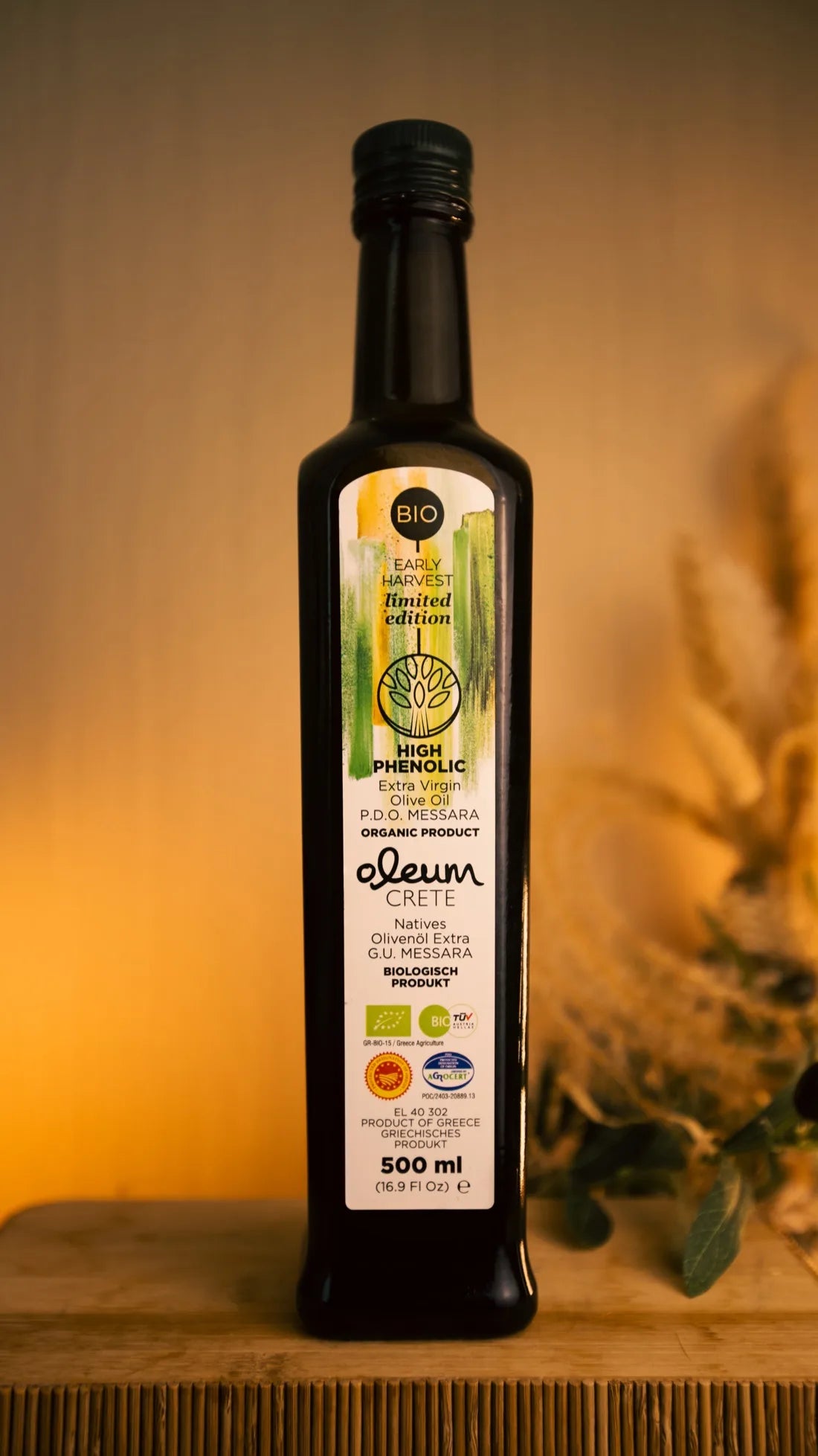
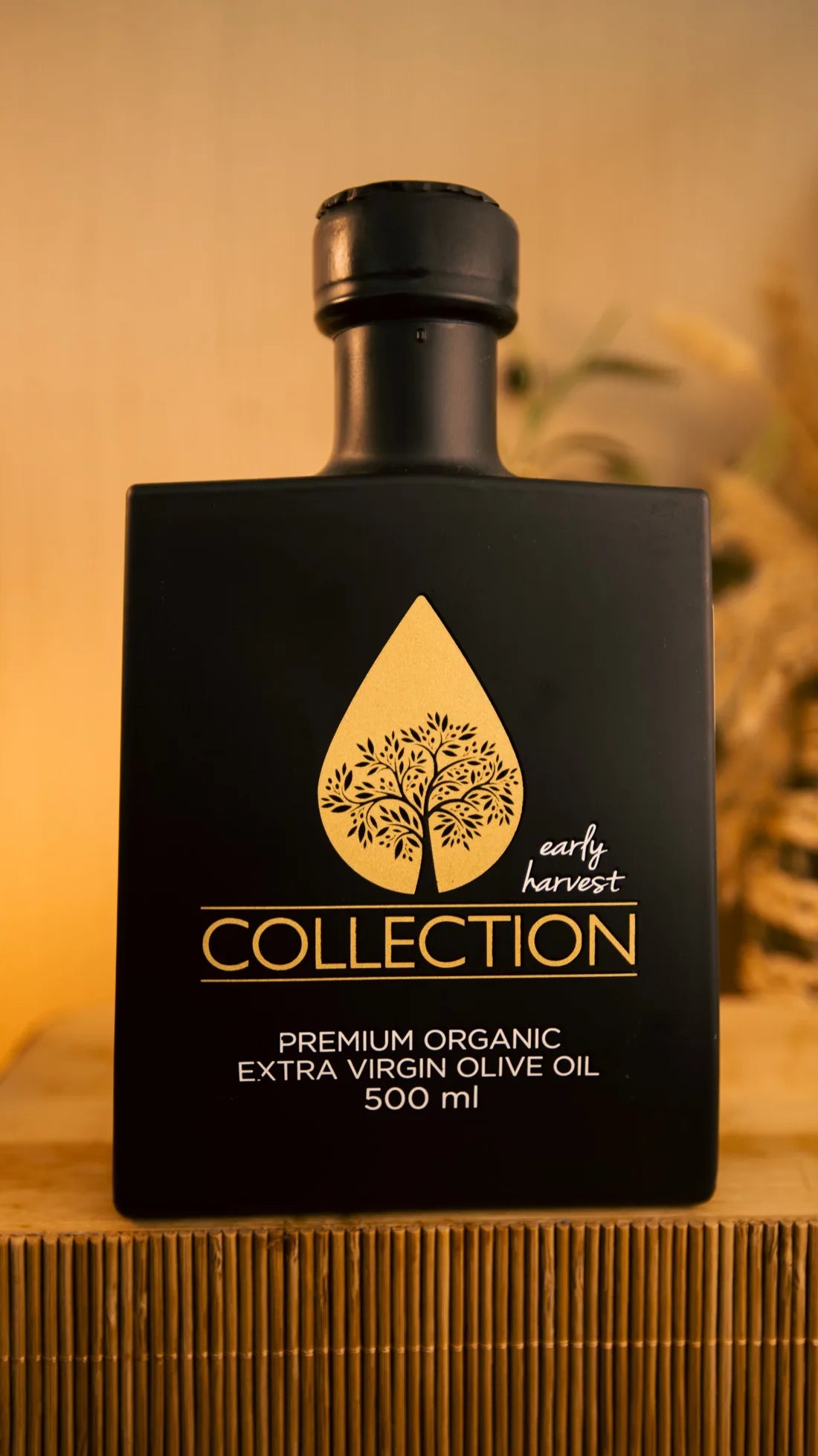
Related: Organic Early Harvest Olive Oil · Collection Premium Organic Olive Oil
Frequently asked questions
Does every extra virgin olive oil qualify for the EU health claim?
No. The claim may only be used for olive oil containing at least 5mg of hydroxytyrosol and its derivatives per 20g, as set out in Regulation 432/2012. Extra virgin is a quality grade, and many genuine extra virgin oils fall below that level.
How is hydroxytyrosol different from total polyphenols on a lab report?
Total polyphenols is a broad count of the phenolic compounds in the oil. Hydroxytyrosol and its derivatives are the specific subset the regulation measures. Different methods can give different results, so always check which figure a report gives and how it was tested.
Can a bottle legally say 'high in antioxidants' without meeting the EU threshold?
That phrase is not the authorised olive oil polyphenol claim and shouldn't be read as one. Whether a particular phrase is allowed depends on the labelling rules of the market where the oil is sold. If a bottle wants the EU-backed claim, it must use the exact authorised wording and meet the threshold.
How much olive oil would I need to eat daily to get the stated benefit?
The regulation states that the beneficial effect is obtained with a daily intake of 20g of olive oil, about one and a half tablespoons. That describes the regulation's conditions, not personal advice. A GP or dietitian can advise on what suits your diet.
Do polyphenol levels drop after a bottle is opened?
Polyphenols decline over time with exposure to oxygen, light and heat, and opening a bottle lets more oxygen in. Close it tightly after use, keep it somewhere cool and dark, and finish it within a reasonable time rather than saving it for best.
Is the EU health claim the same as organic certification?
No. Organic certification covers how the olives are grown. The health claim depends on measured levels of specific polyphenols, which is why producers list it separately from organic status or protected origin.
If you want an oil pressed with this threshold in mind rather than one that simply gestures at it, shop the Oleum Crete collection direct from the Messara Plain.
More from the Journal
All entriesIs High Polyphenol Olive Oil Healthy? Dose and Side Effects
High polyphenol olive oil carries a real, EU-recognised health claim, but only at the right dose and only if the oil actually earns the label. Here is what the science says, how much to take, and what can go wrong if you overdo it.

Oleum Crete: services, prices and where we work
What we do Oleum Crete imports and sells single estate, PDO Messara extra virgin olive oil from the Kidonakis family estate on Crete's Messara Plain, direct to consumers across the UAE. The range…

Koroneiki Olive Oil Taste: Pepper, Grass and That Throat Catch
Bitter, grassy, peppery, and that sharp catch at the back of the throat: this is what a genuine koroneiki olive oil tastes like, and why it has nothing to do with a faulty bottle.
