
Best Olive Oil in the UAE for a Daily Drinking Shot
Not every extra virgin oil belongs in a shot glass. We explain what actually makes an oil fit to drink straight and which Oleum Crete pressings meet that standard.

In this article7 sections
Key takeaways
- An oil worth drinking straight needs genuine freshness and a verified high polyphenol content, not just a label that says "extra virgin".
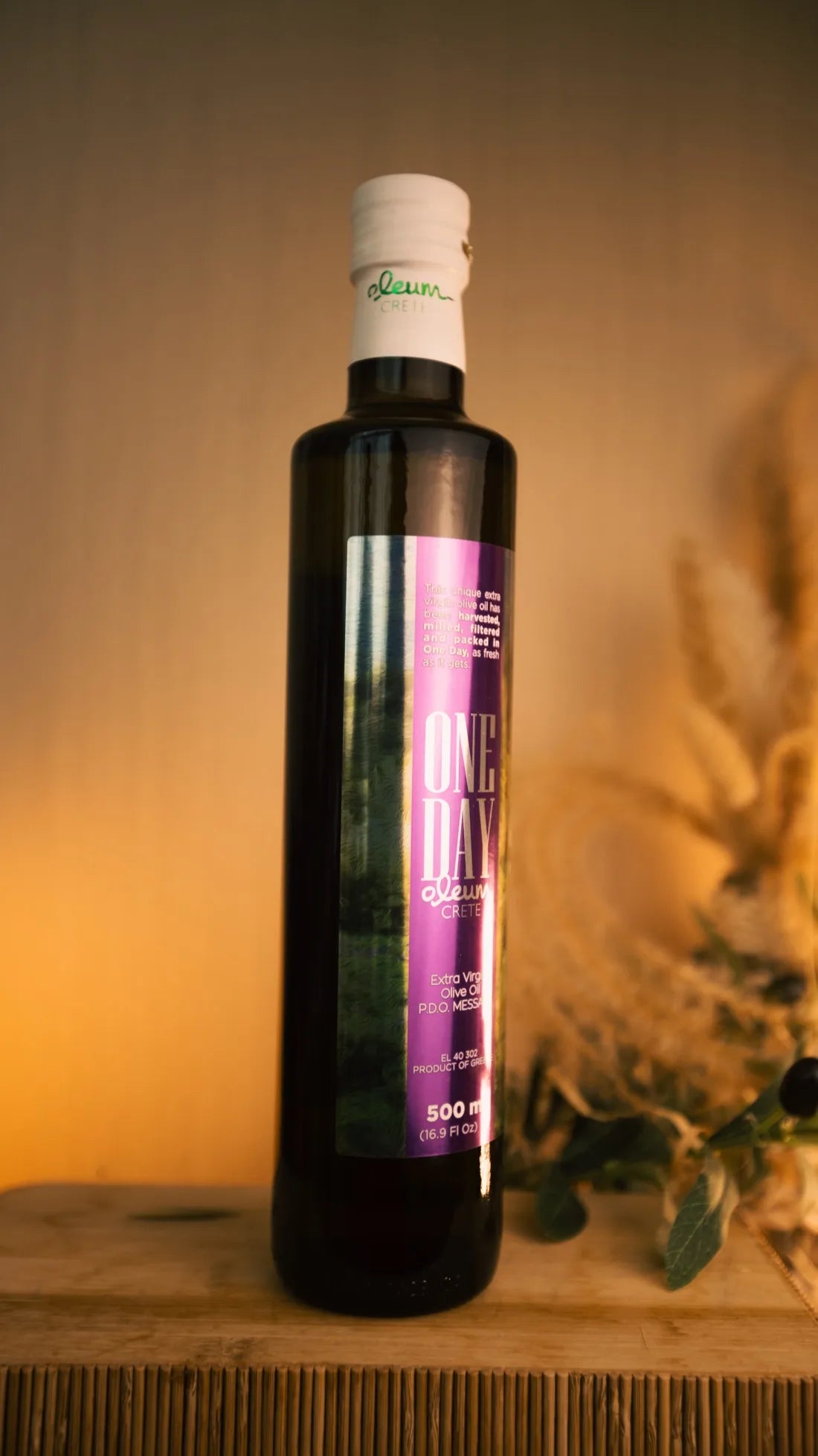
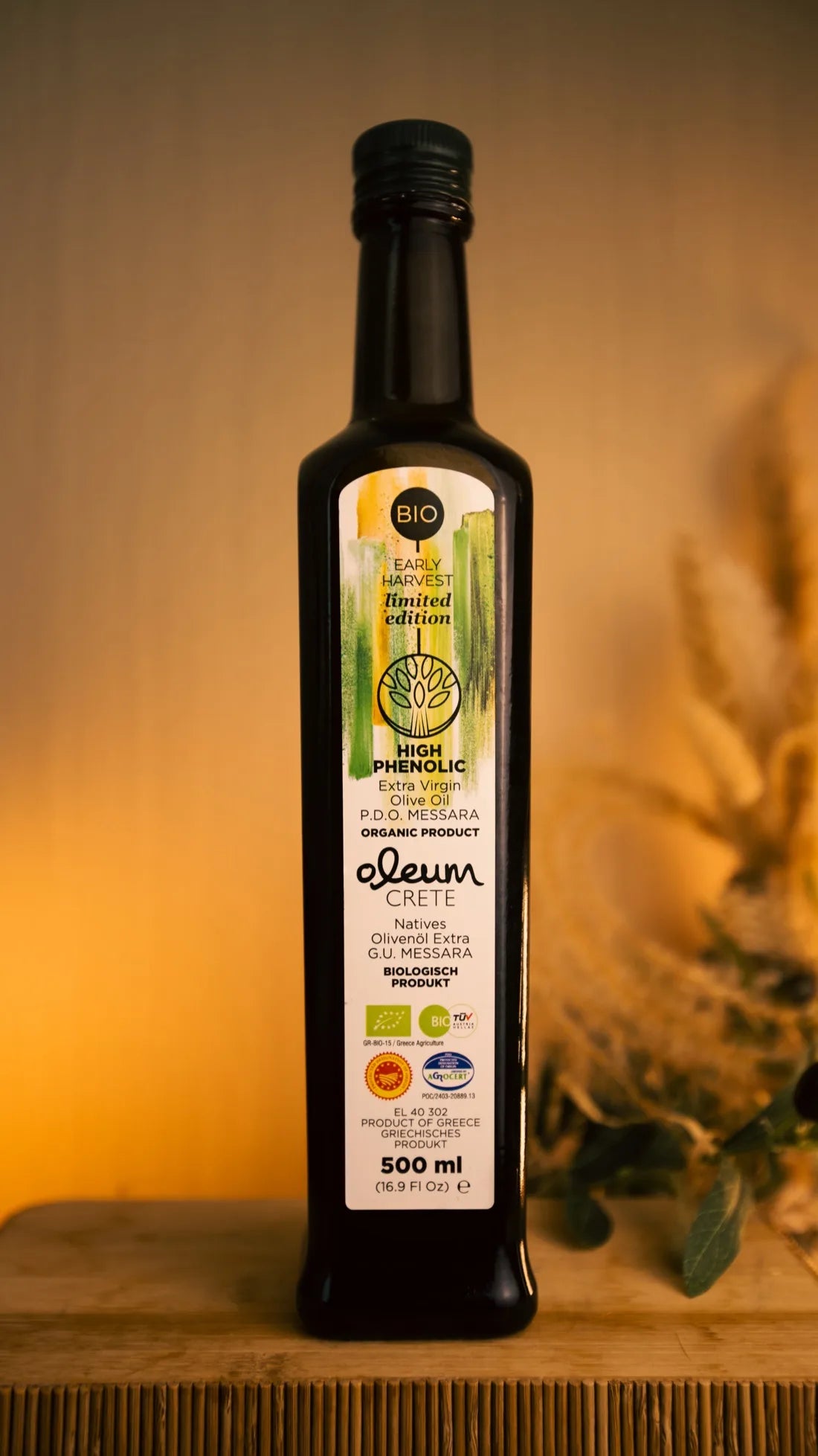
- Of the Oleum Crete range, One Day Extra Virgin and Organic Early Harvest are the two pressings suited to a daily shot. Each has a different intensity.
- Polyphenols fall as oil ages. When you buy oil to drink neat, the harvest date on the label matters more than the bottling or best-before date.
- A sharp, peppery catch at the back of the throat is a sign of genuine polyphenol content. It is not a flaw.
- Temperature-controlled shipping within 24 hours and free UAE-wide delivery protect the oil's freshness before it reaches your glass.
What Makes an Olive Oil Good Enough to Drink Straight
The best olive oil for drinking in the UAE is one you can trace to a single estate and a single harvest, pressed fast enough to keep its polyphenols intact. At Oleum Crete we judge every oil against three things: how fresh it still tastes, how low its acidity sits, and how little time passed between picking and pressing. Our oil comes from the Kidonakis family estate on Crete's Messara Plain. It is 100% Koroneiki, hand-harvested, PDO Messara certified and pressed on the day it is picked. A label can say "extra virgin" and still fail on all three counts, so here is what each one actually means.
Polyphenol Content
Polyphenols are the natural compounds that give a fresh olive oil its bitterness and pepper. They are also the reason people take a daily olive oil shot at all. The EU permits an authorised health claim on olive oil labels that meet a defined polyphenol content, set out in the official EU register. We won't quote a figure here unless we can point you to that register directly, and we'd encourage anyone comparing bottles to check the EFSA and EU eAmbrosia databases rather than take a brand's word for it.
What we can tell you is what high polyphenol oil tastes like. It is grassy, bitter at the front of the tongue and peppery in the throat. Oils with low polyphenol levels taste flat and buttery, and they give you little reason to drink them by the spoonful.
Acidity and Why Lower Is Smoother
Free acidity measures how much the oil's fats have broken down, through bruised fruit, delays before pressing or poor handling. Low acidity does not make an oil taste mild. It signals sound fruit pressed quickly. On the palate that means a clean finish, without the greasy, stale aftertaste that makes a neat spoonful hard work.
Harvest-to-Bottle Time
Once an olive leaves the tree, it starts to oxidise. Every hour between picking and pressing costs flavour and polyphenols. Our One Day process exists for this reason: olives are picked at dawn on the Messara Plain, pressed within hours and bottled the same day. You cannot taste the difference on a spec sheet. You can taste it in the glass.
How Much Olive Oil Should You Drink a Day
There is no official prescription for a daily olive oil shot, and we will not invent one. What we can do is set out what the research actually shows, so you can decide with your doctor what suits you.
A Practical Daily Amount
Most people take a single spoonful, on its own or alongside food. For context, Harvard's analysis of around 90,000 people followed for nearly 30 years found that participants who consumed more than half a tablespoon of olive oil a day were less likely to develop cardiovascular disease. That was an observational study of diet patterns, not a trial of a daily shot, so it doesn't prove cause and effect. It does suggest that modest, regular amounts are what the research has looked at, not large ones.
Olive oil is energy-dense. A daily shot is part of your fat intake for the day, not something added on top of it. If you have a medical condition, take medication or are managing your weight, speak to your GP or a registered dietitian before making it a habit.
Best Time to Take It
No good evidence says one hour of the day works better than another. Some people take their shot first thing, before breakfast, because it becomes a ritual they remember. Others prefer it with a meal, drizzled over bread or salad, because neat oil on an empty stomach doesn't suit everyone. The best time is the one you will keep to every day.
What the Research Actually Shows
A randomised, controlled, cross-over trial known as OLIVAUS examined the antioxidant and anti-inflammatory effects of high polyphenol extra virgin olive oil against comparators, and found polyphenols were associated with cardiovascular benefits. A separate systematic review and meta-analysis concluded that high polyphenol oils confer some reduction in cardiovascular risk, while calling for longer studies and more research in non-Mediterranean populations. That caution is worth bearing in mind here in the UAE, where no such studies have yet been run. None of this amounts to a treatment or a cure, and any specific health decision belongs with a qualified doctor, not a bottle label.
One Day Extra Virgin vs Organic Early Harvest: The Best Olive Oil for Drinking in the UAE
Both pressings come from the same estate, the same variety and the same valley. Neither is a blend. The difference lies in when the olives are picked, and that choice shapes everything you taste.
Flavour and Intensity
Our One Day Extra Virgin Olive Oil is the brighter, more rounded of the two. Picked at dawn and pressed within hours, it carries green tomato, garden herb and a clean peppery finish. The bitterness is present but balanced, which makes it an easy first oil for someone new to a daily shot.
Our Organic Early Harvest Olive Oil is pressed from younger, greener olives. Early fruit yields less oil, but the oil it gives is more concentrated: more grass and green leaf, a firmer bitterness and a pepper that builds in the throat. It is our most intense pressing, made for people who want the fullest expression of Messara Koroneiki.
Comparing the Two
| One Day Extra Virgin | Organic Early Harvest | |
|---|---|---|
| Size | 500ml | 500ml |
| Variety | 100% Koroneiki, single estate | 100% Koroneiki, single estate |
| Harvest | Single-day harvest to bottle | Early harvest, single-day pressing |
| Flavour profile | Balanced bitterness, clean finish | Pronounced bitterness, lingering throat catch |
| Organic | Not certified organic | Certified organic |
| Best for | First-time shot drinkers, daily ritual with food | Experienced palates seeking maximum intensity |
Flavour and bitterness vary from harvest to harvest with weather and fruit maturity. What matters is the current season's oil, not a description carried over from a past one.
Which Suits Your Palate
If you are starting a daily shot and want something you will look forward to each morning, begin with One Day. If you already drink oil neat and enjoy the pepper, choose Early Harvest. Many people keep both: Early Harvest for the shot, One Day for finishing salads and grilled fish.
Why Supermarket 'Extra Virgin' Oils Often Disappoint as a Shot
An oil can be technically extra virgin and still make a poor shot. Taken neat, it has nowhere to hide. Two problems account for most of the disappointment.
Blending Hides Age and Origin
Many supermarket bottles blend oils from several countries, harvests or varieties. Blending evens out flavour and cost, but it also hides age. A label may give a bottling date and a best-before date without telling you when the olives were picked. An oil bottled recently can still come from fruit harvested well over a year earlier.
PDO certification works the other way. Our PDO Messara status ties the oil to one defined valley and its rules of production. Single-estate, single-variety pressing means one family, one grove system and one harvest in every bottle. The estate's organic oil, Oleum Crete PDO Messara Bio, is produced by Kidonakis Bros from fruit grown in the Messara Valley, an area long known for its climate and soil suited to olive growing. The family's limited-edition Syllogi PDO Messara is pressed from Koroneiki olives from the same region. To check any bottle yourself, here is how to read the harvest date on a label.
Heat and Shipping Degrade Polyphenols
Heat speeds up oxidation, and oxidation strips polyphenols. Oil that has crossed oceans in uncontrolled containers, waited in a warehouse or sat on a sunlit shelf can lose much of its bitterness and pepper before anyone opens it. In the UAE climate that risk is real. This is why we ship temperature-controlled within 24 hours, with free delivery across the UAE and no minimum spend, so the oil reaches you as close as possible to how it left the mill.
How to Taste an Olive Oil Shot Properly
You do not need a tasting panel to judge an oil. A small glass, your hand and a few minutes of attention will tell you most of what you need to know.
The Warm-Glass Method
- Pour a spoonful into a small glass, ideally a tinted one so colour doesn't sway you. Colour says little about quality.
- Cup the glass in one hand and cover the top with the other. Hold it for a minute or two to warm the oil gently to body temperature.
- Swirl, uncover and smell at once. Fresh oil smells of cut grass, green leaf, tomato vine or artichoke. Stale oil smells of crayon, putty or old nuts.
- Take a small sip and draw air in through your teeth across the oil. This spreads it over the palate and releases aroma.
- Swallow slowly and wait. Note what happens on the tongue, then in the throat.
What to Look For: Bitterness, Pepperiness, Throat Catch
Bitterness arrives first, on the tongue. In a good oil it is clean and fades without leaving a sour or musty edge. Pepperiness follows, felt more than tasted. The throat catch, a sharp tickle that can make you cough, is the signature of fresh, polyphenol-rich oil. An oil with a strong catch has kept its character. An oil with none has usually lost it.
What you should never find is rancidity, a winey sourness or a muddy taste. These point to oxidised or poorly handled fruit, whatever the label says.
Storing Your Oil to Keep It Shot-Ready
A high polyphenol olive oil starts to lose its edge from the moment you open the cap. Good storage slows that loss. It cannot stop it.
Light, Heat and Air
Light, heat and air are the three enemies, and all three are easy to manage. Keep the bottle in a dark cupboard, away from the hob, the oven and any sunny window. Do not leave a delivery sitting in a car or on a balcony, especially in summer. Close the cap firmly after every pour, because oxygen is what breaks down polyphenols. A cool, dark, steady place suits oil far better than a fridge, which can cloud it and does no favours to the aroma.
How Long After Opening
The sooner you finish an opened bottle, the more of its character each shot keeps. That is part of why our shot-suited pressings come in 500ml bottles: for a daily habit, that size is used up while the oil is still at its best. If you buy our 5L tin for the kitchen, decant a small amount into a dark bottle for daily use and keep the tin sealed, cool and dark.
Related: What Regulation 432/2012 actually permits you to claim
Frequently asked questions
Can you drink olive oil on an empty stomach?
Many people do, often first thing in the morning. Others find neat oil on an empty stomach uncomfortable and prefer to take it with food. If you have a digestive condition or take medication, ask your GP or a registered dietitian before starting.
Does drinking olive oil help with cholesterol?
Some research links high polyphenol olive oil to protective effects on blood lipids, but that is a narrower claim than "lowers cholesterol", and it is not a substitute for medical treatment. Research into high polyphenol oils and cardiovascular risk is promising but still developing, with calls for longer studies in a wider range of populations. Cholesterol management is a conversation for your doctor, not a reason to change any treatment based on a bottle label.
What is the best time of day to drink olive oil?
No strong evidence favours one time over another. Morning suits people who like a fixed ritual, while taking it with a meal suits those who find neat oil too sharp alone. Consistency matters more than the hour.
Can early harvest olive oil cause a cough or throat irritation?
Yes, and it is a good sign. The peppery catch that makes some people cough comes from compounds found in fresh, unripe fruit, the same ones prized in early harvest oil. If you find it too strong, try our One Day Extra Virgin, which is more balanced, or take your shot with a piece of bread.
How long does opened olive oil stay fresh enough to drink neat?
Freshness declines steadily once air reaches the oil, so aim to finish an opened bottle within weeks rather than letting it sit for a season. Keep it sealed, dark and away from heat between pours. Taste it from time to time: once the bitterness and pepper fade, it is better used in cooking than as a shot.
Ready to taste the difference for yourself? Shop the Collection at Oleum Crete and start your daily shot with oil pressed the same day it was picked on the Messara Plain.
More from the Journal
All entriesIs High Polyphenol Olive Oil Healthy? Dose and Side Effects
High polyphenol olive oil carries a real, EU-recognised health claim, but only at the right dose and only if the oil actually earns the label. Here is what the science says, how much to take, and what can go wrong if you overdo it.

Oleum Crete: services, prices and where we work
What we do Oleum Crete imports and sells single estate, PDO Messara extra virgin olive oil from the Kidonakis family estate on Crete's Messara Plain, direct to consumers across the UAE. The range…

Koroneiki Olive Oil Taste: Pepper, Grass and That Throat Catch
Bitter, grassy, peppery, and that sharp catch at the back of the throat: this is what a genuine koroneiki olive oil tastes like, and why it has nothing to do with a faulty bottle.
