
Best Olive Oil for Salads and Dipping in the UAE
Not every extra virgin oil belongs on the same plate. A peppery, grassy Koroneiki that lifts a fattoush can overwhelm a bowl of burrata, and a buttery everyday oil can disappear next to hummus. Here is how to match the right Oleum Crete pressing to the dish in front of you.

In this article8 sections
Key takeaways
The best olive oil for salads and dipping is a fresh, unheated extra virgin oil matched to the intensity of the dish. Sharp salads need a peppery, bitter oil. Hummus needs a grassy one, and bread and burrata need something rounder and more buttery. At Oleum Crete, all five of our pressings come from 100% Koroneiki olives grown on one family estate on Crete's Messara Plain. Origin is never the variable. What you choose between is harvest timing, intensity and finish.
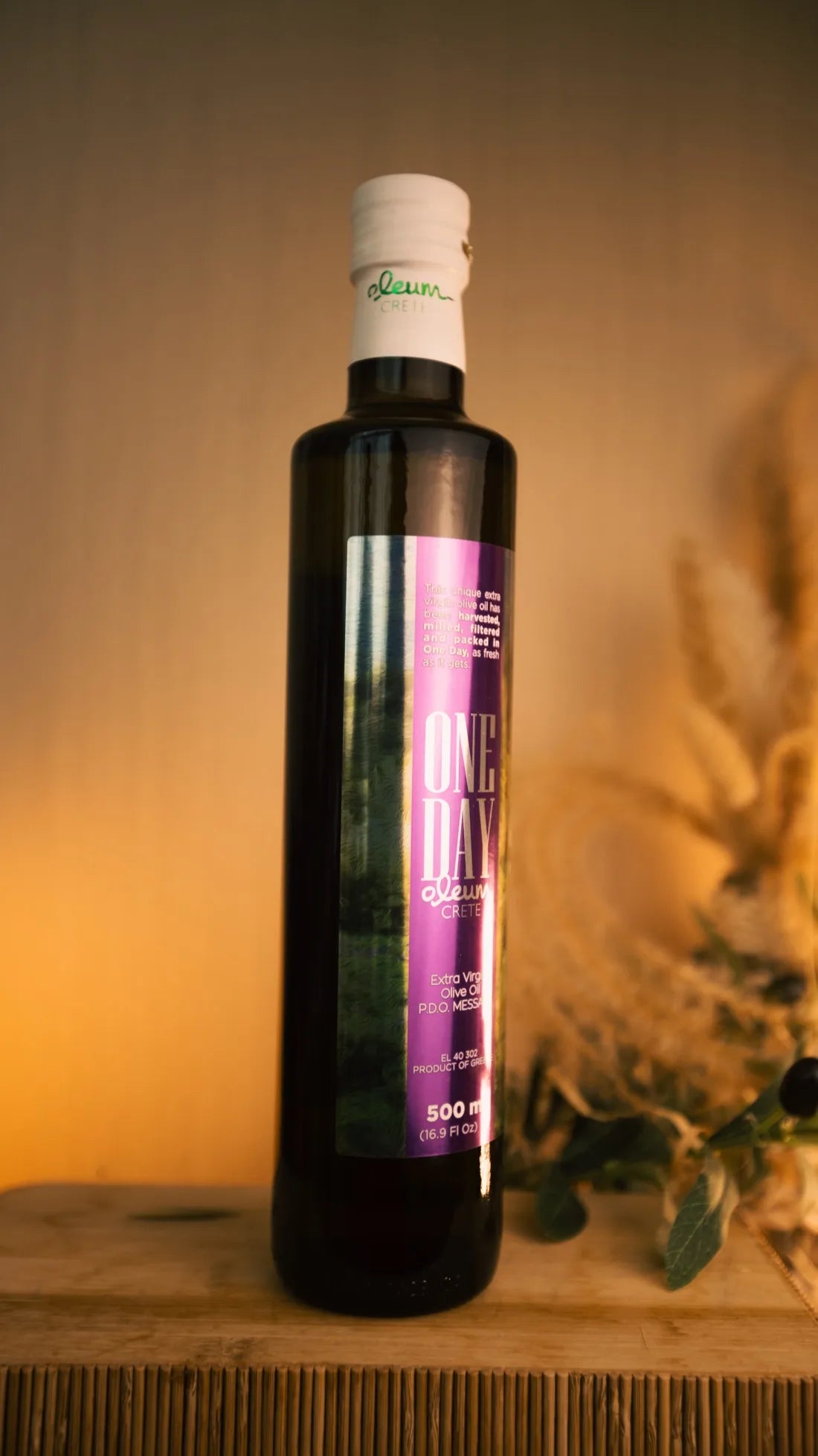
- Fattoush and sharp green salads suit the most intense, peppery oils: the One Day Extra Virgin or the Organic Early Harvest. Their bitter and pungent notes hold their own against vinegar, sumac and raw onion.
- Hummus and mezze dips benefit from an oil with a grassy, artichoke-like finish that sits on top of the dip rather than vanishing into it. That is where the Organic Early Harvest earns its place.
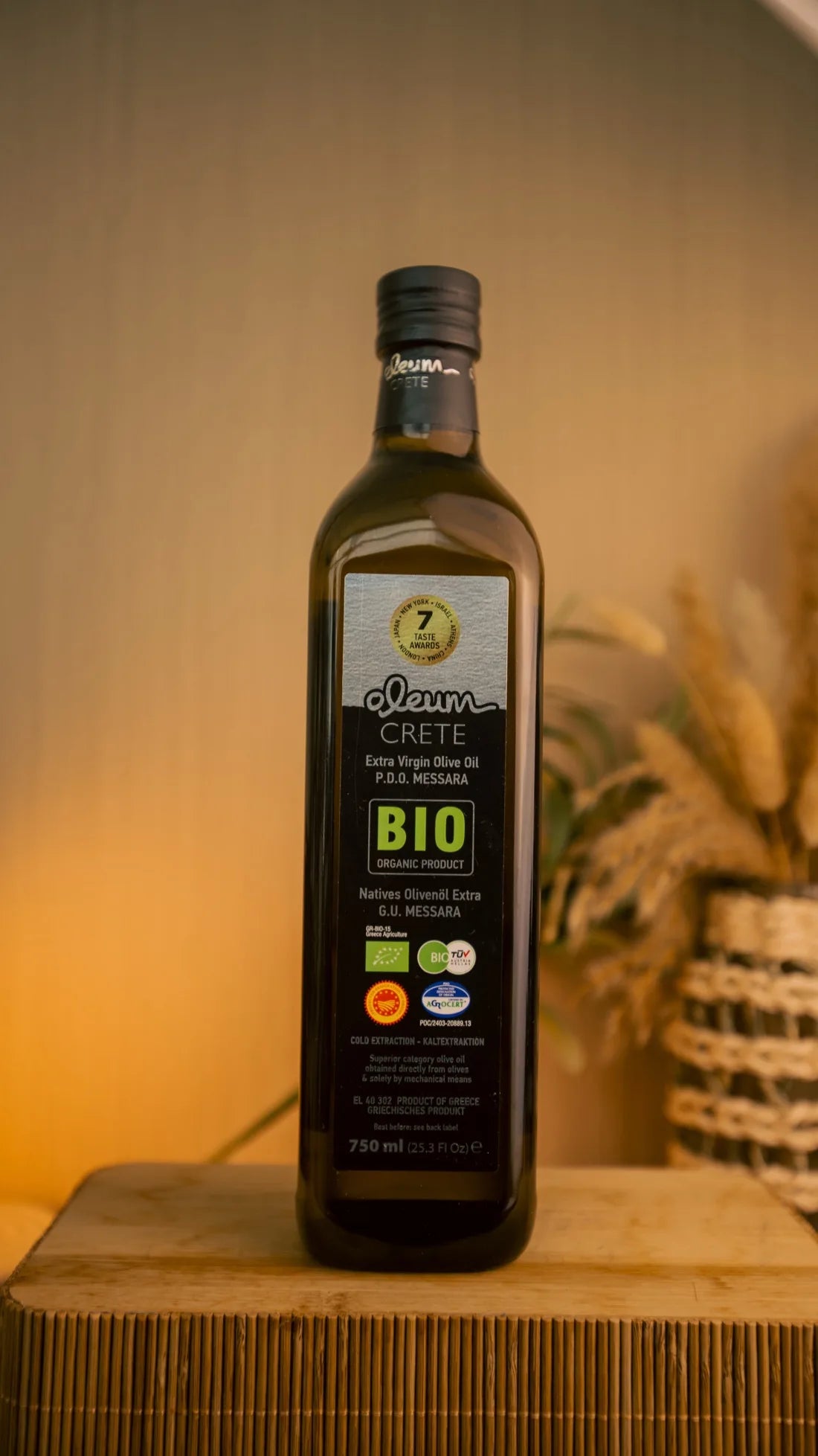
- Delicate dishes like burrata or plain bread want a rounder, buttery oil with a shorter finish, so the oil complements the dish instead of competing with it. Our everyday Organic Extra Virgin 750ml fills that role well.
- A dipping or finishing oil is never heated. The qualities that matter are aroma and polyphenol-driven pungency, not smoke point or stability under heat.
- Once opened, use a finishing oil within a few weeks. Keep it away from light and heat to protect the green tomato and peppery notes that define a fresh Koroneiki.
The Best Olive Oil for Salads and Dipping, Dish by Dish
If you already know what you are serving, this table gives you the match. Every oil listed is single-estate, single-variety and grown in the Messara Plain. The differences come from when the olives were picked and how they taste.
| Dish | Our recommended oil | Character to expect | Why it works |
|---|---|---|---|
| Fattoush, rocket, radicchio, mixed leaves | One Day Extra Virgin or Organic Early Harvest | Intense, peppery, green tomato, garden herb | Bitterness and pepper stand up to sumac, vinegar and raw onion |
| Tabbouleh and herb-led salads | One Day Extra Virgin | Bright, herbaceous, clean peppery finish | Herb notes echo parsley and mint instead of masking them |
| Hummus, moutabal, labneh | Organic Early Harvest | Grassy, artichoke, high pungency | A strong finish sits on top of a creamy, neutral base |
| Burrata, fresh mozzarella, ricotta | Organic Extra Virgin 750ml | Rounder, buttery, balanced | A shorter finish lets the cheese lead |
| Bread dipping, za'atar and oil | Organic Extra Virgin 750ml | Smooth, soft bitterness, gentle pepper | Easy to dip again and again without fatigue |
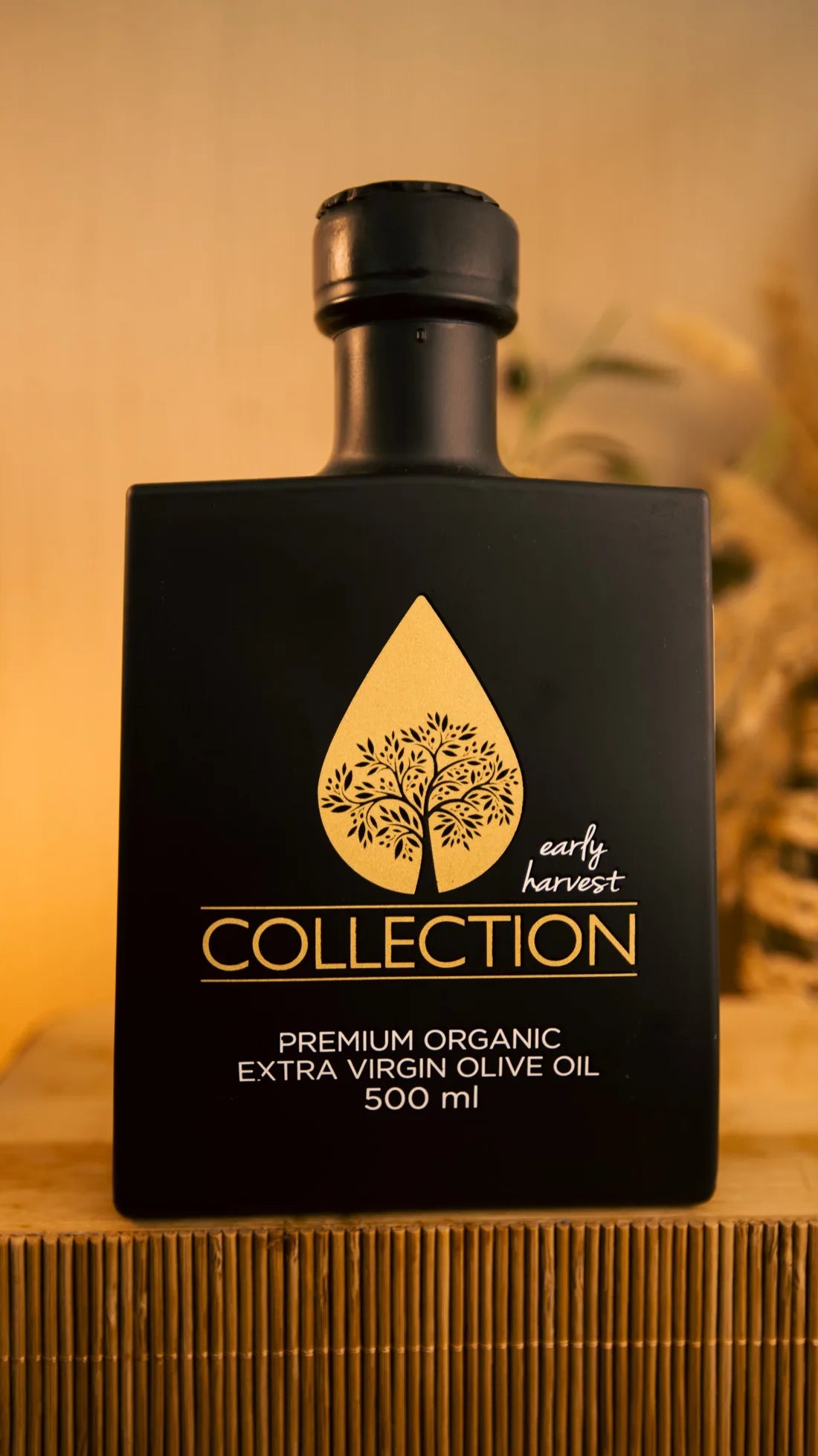
| Cheese boards and gifting | Collection Premium Organic | Premium organic pressing in a black bottle | Presentable on the table and as a gift |
| Large mezze spreads, catering, family kitchens | Extra Virgin Olive Oil 5L Tin | Single-estate Koroneiki in kitchen size | Generous volume for hosts who dress and dip in quantity |
Koroneiki is well suited to this kind of matching. As a dipping oil it naturally leans green and peppery, and the harvest window decides how far it goes in that direction. An early, high-polyphenol pressing gives you the boldest expression. A later, everyday pressing gives you the softest.
What Separates a Finishing Oil From a Cooking Oil
A finishing oil goes onto food at the very end, raw and at room temperature. A cooking oil goes into a hot pan. Those two jobs reward different qualities. That is why this finishing oil guide looks at flavour first and heat second. If you are choosing for the hob or oven instead, our guide to the best olive oil for cooking in the UAE covers smoke point and heat stability in detail.
Aroma and Pungency Over Smoke Point
Heat drives off the volatile compounds that give a fresh extra virgin oil its scent: cut grass, green tomato leaf, artichoke. In a frying pan those aromas disappear within moments. On a salad or a plate of hummus, they reach you intact.
So with a finishing oil, what you smell in the glass is what you taste on the plate. Smoke point is irrelevant when nothing is heated. What matters is how vivid the oil is when it lands on the food, and that depends almost entirely on freshness.
We built our process around that. The One Day range is picked by hand and pressed into the bottle within a single day, so the olives spend as little time as possible waiting between tree and mill. The aromas that make a finishing oil worth buying survive into the bottle instead of fading in storage or in transit.
Why Polyphenol Level Shapes the Taste, Not Just the Health Claim
Polyphenols are usually discussed as a health topic. In the kitchen they matter just as much for flavour. They cause the bitterness on the tongue and the peppery catch at the back of the throat that makes some tasters cough on a sip of good oil. The higher the polyphenol level, the more pronounced both become, and our early harvest pressings are picked specifically to carry that intensity through to the bottle. We make no claim beyond the EU-approved statement that olive oil polyphenols contribute to the protection of blood lipids from oxidative stress, and only for oils that meet the qualifying level.
For the cook, the practical point is this: high-polyphenol oil has the structure to hold up against acidic, salty and bitter ingredients. A flatter, low-polyphenol oil on the same fattoush would simply disappear.
Grade matters too. Genuine extra virgin oil has to meet strict chemical limits: free acidity at or below 0.80%, peroxide value below 20.0 mEq O₂/kg, and UV absorbance within set K232 and K270 limits. Oils that fail any of these are not legally extra virgin, whatever the label says. For buyers in the UAE, the most useful checks at the shelf are a clear harvest date, a named single estate and a taste that is lively and bitter rather than flat.
For readers who also want a daily health shot rather than just a finishing drizzle, it's worth reading about the best olive oil brand in the UAE for drinking straight.
Olive Oil for Fattoush and Mixed Green Salads
Fattoush is one of the most demanding dishes you can dress. It brings sumac's sour, lemony bite, the acidity of lemon juice or vinegar, the sweetness of pomegranate molasses, the sharpness of raw onion and radish, and the crunch of toasted bread. A mild oil gets lost in all of that.
The best olive oil for fattoush is an intense one. Our One Day Extra Virgin is picked at dawn and pressed within hours. It brings green tomato, garden herb and a clean, peppery finish that carries through the sumac instead of retreating behind it. For a bolder, more bitter salad, such as one heavy with rocket, purslane or radicchio, the Organic Early Harvest takes the intensity one step further.
Why a Peppery, High-Polyphenol Oil Works With Sumac and Vinegar
Strong flavours need a counterweight. Acid makes a dressing taste bright, but on its own it reads as sharp. A pungent oil adds bitterness and heat that balance the sourness and give the dressing a backbone. The pepper in a fresh Koroneiki also lifts raw vegetables, so cucumber and tomato taste greener and more vivid.
A few habits make the difference:
- Dress fattoush at the last minute, just before it goes to the table, so the bread stays crisp.
- Whisk the oil and acid together first. Then toss the leaves gently so every piece is coated without bruising.
- Finish with a thin thread of oil over the top after plating. The aroma hits first, before the first forkful.
The same logic applies to any sharp green salad. If the ingredients bite back, choose an oil that can bite too.
Olive Oil for Hummus and Mezze Dips
Hummus is the opposite of fattoush. It is creamy, mild and rich, built on chickpeas, tahini, lemon and garlic. It does not need an oil to fight anything. It needs an oil that adds contrast: a fresh, green edge on top of a soft, nutty base.
The best olive oil for hummus is our Organic Early Harvest. Its grassy, artichoke-like finish stays distinct on the surface of the dip. Each scoop with bread picks up a little of both, and the oil keeps its own voice. The same goes for moutabal, labneh and other mezze, where a clear, pungent finish cuts through the richness of tahini or strained yoghurt.
Drizzling vs Mixing Into the Hummus Itself
These are two separate jobs, and they do not need the same oil.
Oil blended into hummus while it is being made adds smoothness and body. Its aroma is largely muted by the tahini and chickpeas, so the most intense pressing is not essential here. If you make hummus in large batches for family gatherings or entertaining, the Extra Virgin Olive Oil 5L Tin is the sensible kitchen choice.
Oil drizzled on top after plating is where flavour lives. This is the oil the guest sees, smells and tastes first, and it is where the Organic Early Harvest belongs. Make a shallow well in the hummus with the back of a spoon, pour the oil into it and finish with a pinch of paprika or sumac. Serve the hummus at room temperature rather than straight from the fridge, because cold dulls both the dip and the oil.
Olive Oil for Bread, Burrata and Simple Dipping
At the delicate end of the table, the rule flips. When a dish is simple, such as warm bread, fresh burrata or a soft ricotta, a very intense oil can dominate it. Here the best olive oil for salads and dipping is the one that knows when to step back.
Our everyday Organic Extra Virgin 750ml is the natural match. It is a rounder, more buttery pressing with balanced bitterness and a shorter finish. You can keep dipping bread without your palate tiring, and with burrata the milky sweetness of the cheese stays at the centre of the plate.
For a cheese board meant to impress, or for a gift to someone who loves Mediterranean food, the Collection Premium Organic, in its black gift bottle is our limited-edition pressing. It is made to be set on the table and talked about.
Why a Buttery, Balanced Oil Suits Burrata and Fresh Bread
Burrata and fresh bread share a quality: they are mild, soft and slightly sweet. A rounder oil mirrors that softness and adds richness and a gentle green note, with no sharp bitterness to jar against the cream or crumb.
To serve burrata, bring it to room temperature, open it at the table, pour the oil over generously and add flaky salt and cracked pepper. With bread, pour the oil into a shallow dish. Za'atar or a little sea salt alongside is all it needs.
How to Taste and Store a Finishing Oil Once Opened
Choosing a match is easier once you have tasted the oils side by side. Keeping them fresh is what makes that match last from the first pour to the last.
A Simple Tasting Method at Home
- Pour a little into a small glass. A tablespoon is enough. Cup the glass in your hand for a minute to warm it slightly.
- Cover and swirl. Hold your other hand over the top, swirl gently, then uncover and smell. Look for green notes: cut grass, tomato leaf, artichoke, fresh herbs.
- Sip and draw air in. Take a small sip, then breathe in through your teeth over the oil. This spreads the aroma across your palate.
- Notice bitterness and pepper. Bitterness shows on the tongue. Pepper shows as a catch in the throat. A strong, lingering catch points to a high-polyphenol oil.
- Taste with the food. Dip a piece of bread, a cucumber slice or a spoonful of hummus. The oil that tastes best on its own is not always the best match for a particular dish.
Tasting a Koroneiki dipping oil this way shows you the range across our pressings, from the vivid pepper of the early harvest to the softer, buttery profile of the everyday bottle.
Keeping a Finishing Oil Fresh Once the Bottle Is Open
Oxygen, light and heat are what wear down an olive oil once it is open. In UAE kitchens, heat needs particular attention.
- Store it in a closed cupboard, away from the hob, the oven and any sunny windowsill.
- Close the cap firmly after every use to limit contact with air.
- Never leave a bottle in a parked car, even for a short errand.
- Use it within a few weeks of opening. A finishing oil earns its place through freshness, so it belongs in daily use, not saved for occasions.
- If you buy the 5L tin, decant a week or two's worth at a time into a small, dark glass bottle for the table, and keep the tin sealed and cool.
The green tomato and peppery notes that define a fresh Koroneiki are its most fragile qualities. Protect them, and every bowl of fattoush and every plate of hummus will taste the way the oil did on the day it was pressed.
Frequently asked questions
Can you use the same olive oil for cooking and for dipping?
You can, and a good extra virgin oil will do both jobs. Heat drives off the fresh aromas that make a finishing oil special, though, so it makes sense to keep your most intense, high-polyphenol pressing for raw use. Many households keep an everyday bottle or the 5L tin by the hob and a fresher pressing on the table.
Does olive oil go off once you open the bottle?
It does not spoil suddenly, but it loses freshness steadily once air reaches it. Over time the green, peppery notes fade and the oil can turn flat or waxy. Use an opened finishing oil within a few weeks and store it away from light and heat, which matters especially in UAE kitchens.
What is the best olive oil for burrata specifically?
A rounder, buttery oil with a shorter finish, such as our Organic Extra Virgin 750ml. Burrata is mild and creamy, and a very bitter, peppery oil can overpower it. If you are serving burrata to guests or as part of a gift, the Collection Premium Organic is our presentation bottle.
Is Koroneiki a good variety for salad dressing?
Yes. Koroneiki naturally leans green and peppery, with notes of green tomato, herbs and artichoke, so it gives a dressing real character and holds up well against acidic ingredients. Its natural polyphenol richness also gives the bitterness and pungency that balance vinegar and lemon.
How much olive oil should you use on a salad?
Use enough to coat each leaf lightly without pooling at the bottom of the bowl. A classic vinaigrette starts at roughly three parts oil to one part acid. For sharp dishes like fattoush, adjust towards more oil if the dressing tastes too sour. Taste a leaf before serving and add a final drizzle on top if needed.
Ready to match the right pressing to your plate? Shop the Oleum Crete collection and bring Messara Plain freshness to your next salad, dip or cheese board.
More from the Journal
All entriesIs Koroneiki Olive Oil Good for Keto or Low-Carb Diets?
Koroneiki olive oil is one of the cleanest fats a keto or low-carb diet can use: zero carbohydrates, almost entirely monounsaturated fat, and in Oleum Crete's case, polyphenol levels that go well beyond what a supermarket bottle offers. Here's what the macros and the science actually say.

Koroneiki Olive Oil and Heart Health: What Studies Show
Koroneiki olive oil carries some of the highest polyphenol counts of any olive variety, and that matters for heart health. We look at what the research actually shows, what the EU health claim permits us to say, and how much oil delivers it.

Olive Oil Acidity Level: How to Check Before You Buy
Acidity is the one number most shoppers skip past on an olive oil label, yet it decides whether a bottle can legally call itself extra virgin. Here is how to find it, read it and check it against the PDO Messara standard before you buy.
