
Koroneiki Olive Oil and Heart Health: What Studies Show
Koroneiki olive oil carries some of the highest polyphenol counts of any olive variety, and that matters for heart health. We look at what the research actually shows, what the EU health claim permits us to say, and how much oil delivers it.

In this article6 sections
Key takeaways
- The only olive oil health claim authorised in the EU, under Commission Regulation (EU) No 432/2012, states that "Olive oil polyphenols contribute to the protection of blood lipids from oxidative stress." It applies only where the oil supplies at least 5mg of hydroxytyrosol and its derivatives per 20g, taken daily.
- Koroneiki olives tend to give oil with naturally high polyphenol counts, typically 600 to over 1,000 mg/kg, because the small fruit carries a high skin-to-flesh ratio and polyphenols concentrate in the skin and pit.
- Polyphenols fall with time, heat, light and oxygen, so how quickly the fruit reaches the bottle matters as much as the variety.
- The claim covers one effect only, the resistance of LDL particles to oxidation. It says nothing about cholesterol, blood pressure or heart disease.
- The 20g daily intake is written into the EU claim itself. It is a regulatory figure, not a marketing one.
Does Koroneiki Olive Oil Actually Support Heart Health?
Studies show a narrow, specific benefit, not a broad one: olive oil polyphenols help protect blood lipids from oxidative stress, and nothing in the research or the regulation extends that to preventing heart disease itself. European regulators permit exactly one health claim for olive oil, built on that same finding. That claim applies only when an oil carries enough of a specific group of polyphenols, hydroxytyrosol and its derivatives, and only at a daily intake of 20g. Koroneiki, the small Cretan olive we work with at Oleum Crete, tends toward naturally high polyphenol counts, because its chemistry favours phenol production from the start. That does not mean any single bottle has been lab-verified against the EU's 5mg/20g hydroxytyrosol threshold: that figure depends on each batch's own lab analysis, not on the variety alone.
The claim does not say olive oil prevents heart disease, lowers cholesterol or replaces any treatment. If you are managing a heart condition or raised cholesterol, your doctor or a registered dietitian is the right person to advise on your diet. What follows is what the research and the regulation actually say, not what a label might imply.
What the Research Says About Olive Oil Polyphenols
Polyphenols are compounds the olive produces to protect itself from sun, cold and pests. Extra virgin oil retains them because it is extracted mechanically, without the refining that strips most phenols from other olive oils. They are also why a fresh Koroneiki oil tastes green and bitter-edged rather than flat.
How Polyphenols Protect Blood Lipids
LDL particles carry cholesterol through the blood. When LDL oxidises, it changes in ways linked to damage in artery walls. In 2011 the European Food Safety Authority reviewed the evidence on olive oil polyphenols and found a cause-and-effect relationship between these phenols and the protection of blood lipids from oxidative damage (EFSA Journal 2011;9(4):2033). That opinion is the scientific basis for the EU claim authorised the following year.
Later research has looked more broadly at lipid metabolism. A 2023 systematic review and meta-analysis of randomised controlled trials grouped trial oils by polyphenol dose: low (0 to 68 mg/kg), medium (68 to 320 mg/kg) and high (320 to 600 mg/kg). The authors concluded that olive oil polyphenols contribute toward maintaining lipid metabolism, and that food labelling should stress this feature of olive oil. That is a research finding, not an authorised claim, and it does not promise a result for any individual.
Oleocanthal and the Peppery Sting
The catch at the back of the throat when you taste a young oil neat is largely the work of oleocanthal, one of the olive's phenolic compounds. Koroneiki oils are often rich enough in phenols that the sting is pronounced, a peppery rasp following the green tomato and artichoke notes on the palate.
That sting is a useful sign of freshness. It is not, however, the compound the EU claim is written around. The regulation names hydroxytyrosol and its derivatives, such as the oleuropein complex and tyrosol. A peppery finish is a good sign. It is not a lab result.
Why Koroneiki Olives Carry More Polyphenols Than Most Varieties
Variety sets the ceiling for an oil's polyphenol count. Growing conditions and harvest timing decide how close a given year's oil gets to it.
Small Fruit, High Skin-to-Flesh Ratio
Koroneiki is a small olive, and polyphenols concentrate in the skin and pit. A fruit with more skin relative to flesh yields oil with more of them per kilo. Cultivar comparisons list Koroneiki among the naturally high-polyphenol varieties, with a typical range from 600 to over 1,000 mg/kg, well above the roughly 250 mg/kg threshold the EU claim requires.
Why Harvest Date Changes the Count
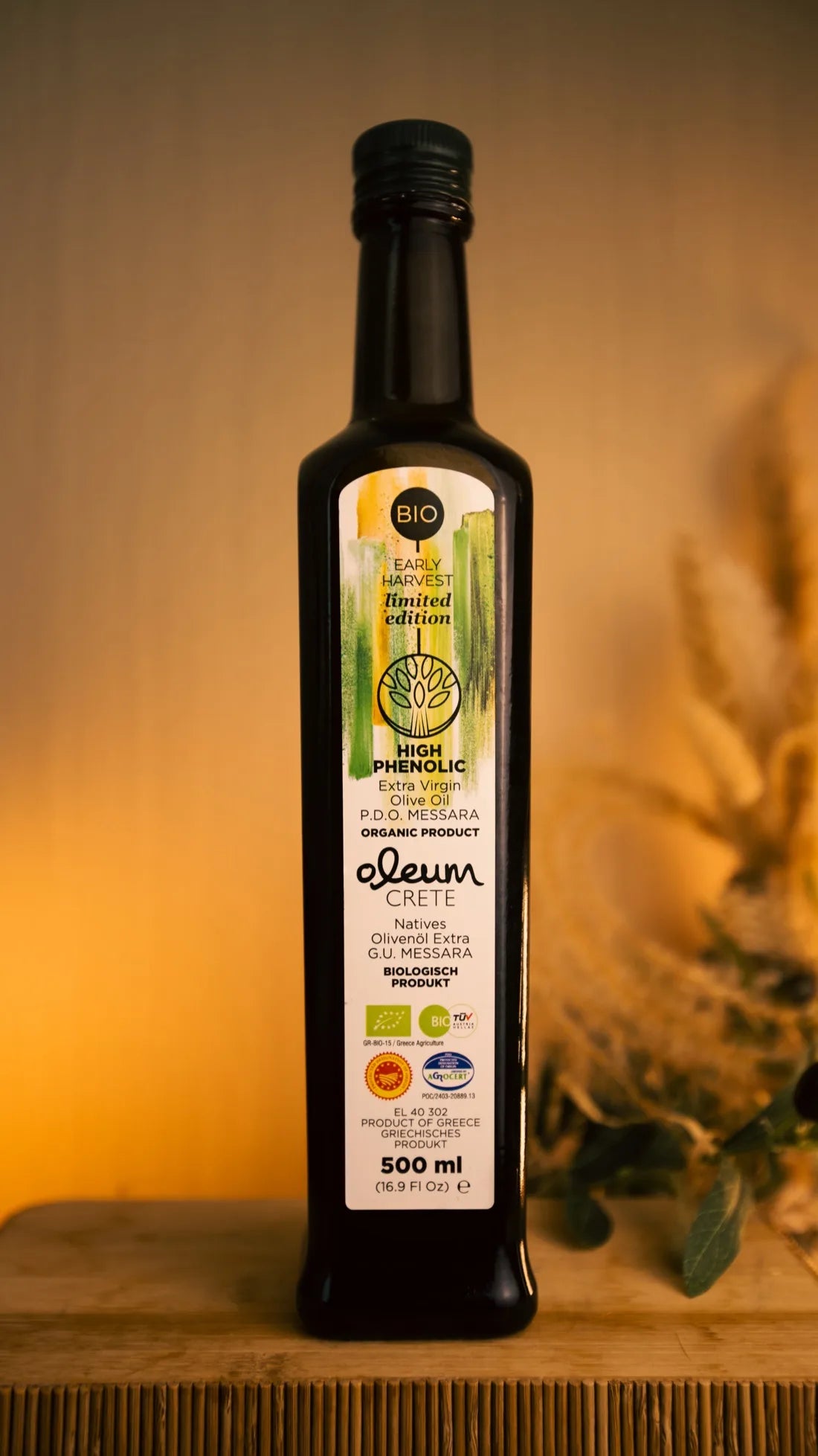
Green, early-season olives give less oil, but that oil is markedly richer in polyphenols than oil from fully ripe, dark fruit. As the olive ripens, oil yield rises and phenol levels fall. This is why early-harvest oils taste more bitter and peppery, and why producing them costs more. Within our range, the Organic Early Harvest Olive Oil is the one picked while the fruit is still green, for that reason.
Time after harvest matters too. Phenol levels are highest in fresh, early-harvest extra virgin oil and decline with heat, light, oxygen and age. You can read more on how harvest date changes the oil's chemistry, including what it means for cooking.
The EU Health Claim: What It Permits and What It Doesn't
If you are comparing olive oil heart health claims, the EU regulation is the clearest reference point available, and its wording has been tested by regulators rather than left to marketing copy.
The 5mg Hydroxytyrosol Threshold
Commission Regulation (EU) No 432/2012 authorises this exact wording: "Olive oil polyphenols contribute to the protection of blood lipids from oxidative stress." To carry it, an oil must contain at least 5mg of hydroxytyrosol and its derivatives per 20g of olive oil, and the label must tell the reader that the effect is obtained with a daily intake of 20g.
Five milligrams per 20g works out to roughly 250 mg/kg. That is a floor for one specific claim, not a quality grade. A "total polyphenols" figure, usually measured by a colorimetric method, is a different number from the hydroxytyrosol fraction the claim relies on, and researchers have noted that no single official method exists for measuring this fraction consistently across laboratories, which makes comparing lab reports from different sources difficult.
What the Claim Does Not Say
The claim covers one effect: the resistance of LDL particles to oxidation. It says nothing about cholesterol levels, blood pressure or heart disease. Any bottle that implies it will lower your cholesterol or protect your heart in general terms is going beyond what has been authorised.
How Much Oil You Need Daily to Meet the Claim
The daily amount is set by the regulation itself, so there is no guesswork here.
The 20g Daily Serving
The claim rests on 20g of olive oil a day. Olive oil is lighter than water, so 20g fills about 22ml, a little under two level tablespoons. That is easy to reach through normal use: dress a salad, finish a bowl of lentils or grilled fish, or dip bread at the table.
Raw use is the most reliable way to keep the polyphenol content you are relying on, since heat reduces it. That does not make cooking with a good extra virgin oil a waste, but your daily 20g counts for most when it is used uncooked. For ideas on keeping flavour and phenols intact while still using the oil in the kitchen, see our guide to cooking with koroneiki without losing flavour.
Choosing and Storing an Oil for Polyphenol Intake
A few practical checks help when you are buying with the EU claim in mind:
- Look for a harvest date on the label, not just a best-before date. Fresher oil holds more phenols.
- Ask for the batch's lab analysis if you want to confirm phenol content, and check whether it measures hydroxytyrosol and derivatives or total polyphenols by a different method.
- Store the bottle away from heat and direct light. Once opened, use it within a reasonable time, since oxygen works on the oil from the moment air reaches it.
- Favour early-harvest, single-variety extra virgin oil over blends where traceability and freshness are harder to verify.
At Oleum Crete, our Organic Early Harvest Olive Oil is the one in the range pressed earliest, while the fruit is still green, which is when polyphenol counts run highest. We will not tell you it treats or prevents anything. What we can say is that it is extra virgin, single-variety Koroneiki, and produced with freshness in mind, which is the condition the EU claim itself depends on.
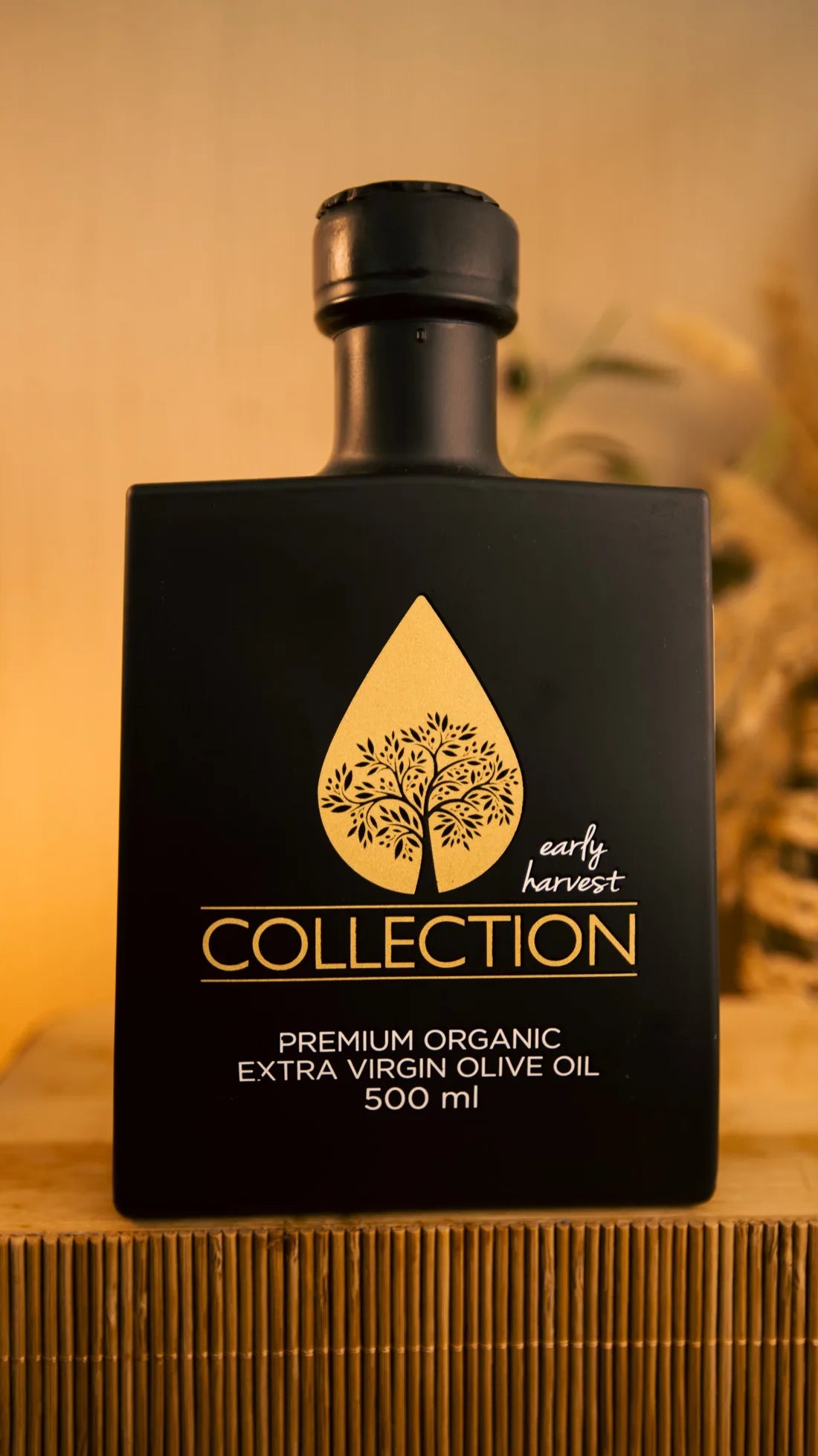
Related: Collection Premium Organic Olive Oil
Frequently asked questions
Can olive oil lower cholesterol on its own?
The EU-authorised claim does not cover cholesterol levels. It covers only the protection of blood lipids from oxidative stress. A 2023 meta-analysis concluded that olive oil polyphenols contribute toward maintaining lipid metabolism, but cholesterol depends on your whole diet, genetics, activity and any medication. Speak to your doctor about managing cholesterol.
Is extra virgin olive oil better for the heart than refined olive oil?
Refining removes most of the polyphenols the EU claim is built on. Only an oil that retains at least 5mg of hydroxytyrosol and its derivatives per 20g can carry the claim, and in practice that means a well-made extra virgin oil. Refined oil is still a source of fat, but it cannot meet the claim.
How do I know if an olive oil's polyphenol count is accurate?
Ask for the batch's lab analysis and check which method was used. "Total polyphenols" and "hydroxytyrosol and its derivatives" are different measurements, and only the second relates directly to the EU claim. Since no single official method exists for this fraction, results from different laboratories may not compare directly. A harvest date on the label also helps, since counts fall as oil ages.
Does cooking with koroneiki olive oil destroy its polyphenols?
Heat reduces polyphenol levels, so some loss happens whenever you cook with the oil. Gentle cooking still leaves a flavourful, good-quality fat, but the most reliable way to reach your 20g is raw, as a dressing or a finishing drizzle. Many households cook with one bottle and keep a fresher, higher-polyphenol oil for the table.
How much olive oil is too much to consume daily?
The EU claim is based on 20g a day and does not set an upper limit. Olive oil is energy-dense, so larger amounts add meaningful calories alongside the rest of your diet. A registered dietitian can advise on the right amount for your health and goals.
Ready to taste a high-polyphenol, single-variety Cretan oil for yourself? Shop the Oleum Crete collection and judge the brightness in the glass.
More from the Journal
All entriesOlive Oil Acidity Level: How to Check Before You Buy
Acidity is the one number most shoppers skip past on an olive oil label, yet it decides whether a bottle can legally call itself extra virgin. Here is how to find it, read it and check it against the PDO Messara standard before you buy.

How Much Olive Oil Should a Family of Four Buy Monthly?
Most households either run out of olive oil mid-month or let a bottle oxidise on the shelf. Here is a concrete monthly estimate for a family of four, broken down by cooking, salads and daily shots, mapped straight onto Oleum Crete's 500ml, 750ml and 5L sizes.

What Drives the Price of Koroneiki Olive Oil in the UAE?
A bottle of Koroneiki olive oil can cost three times as much as the one next to it on the shelf, and the gap is rarely random. Harvest date, certification, shipping method and bottle size each add real cost, and knowing which ones matter helps you tell a fair price from an inflated one.
