
What Drives the Price of Koroneiki Olive Oil in the UAE?
A bottle of Koroneiki olive oil can cost three times as much as the one next to it on the shelf, and the gap is rarely random. Harvest date, certification, shipping method and bottle size each add real cost, and knowing which ones matter helps you tell a fair price from an inflated one.

In this article7 sections
Key takeaways
- Early harvest and single-day pressing raise cost. Green olives give less oil per kilo, and the fruit must be picked and milled within hours, not days.
- PDO Messara and organic certification (TÜV Austria) both add inspection and paperwork costs that show up in the final price.
- Temperature-controlled shipping to the UAE within 24 hours of pressing protects polyphenols and flavour, but it costs more than standard freight.
- Internationally, single-estate PDO Messara/Koroneiki oils typically run from around $1.12 to $3.53 per fluid ounce depending on format and certification, a useful benchmark before UAE landed costs are added.
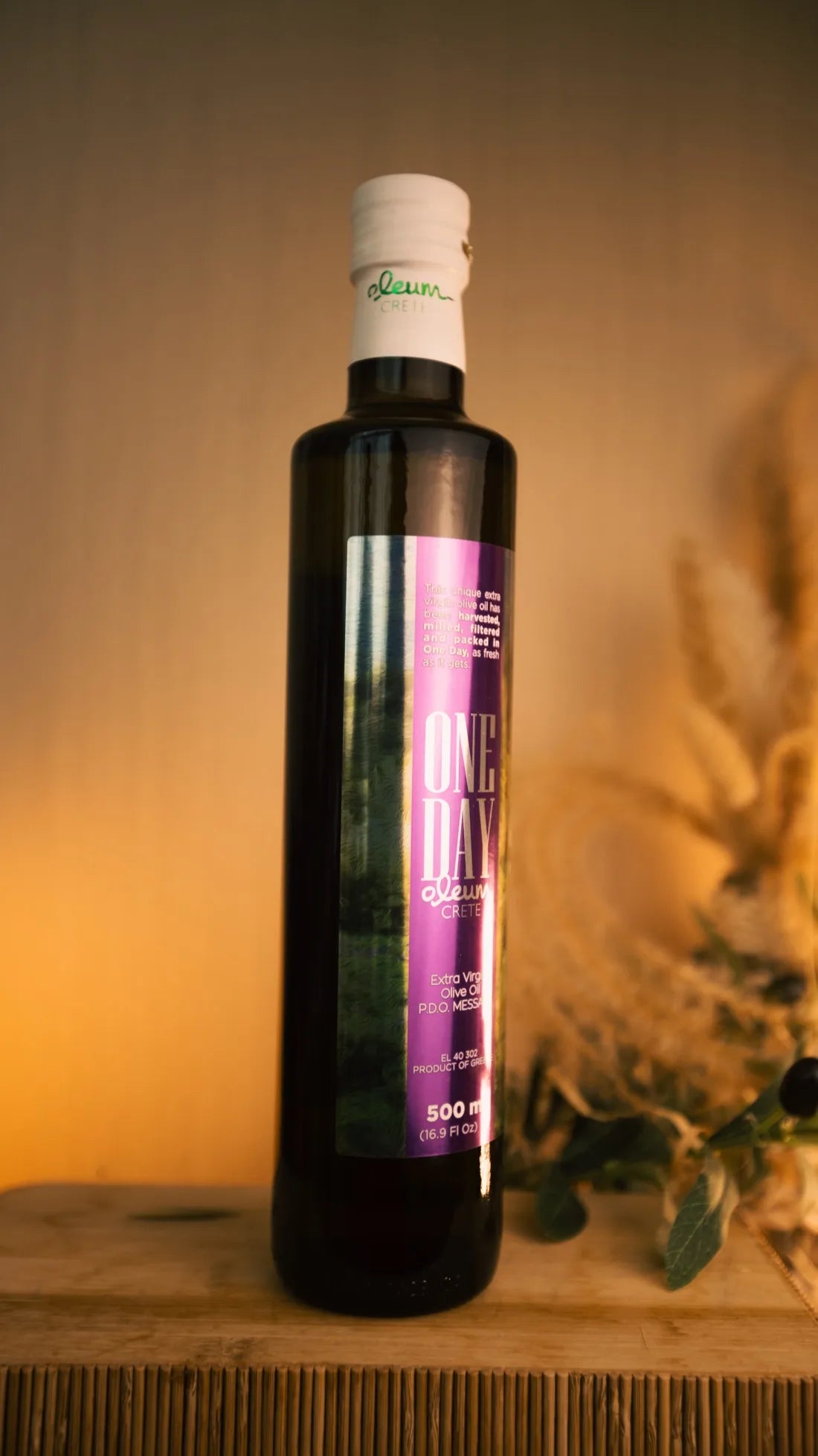
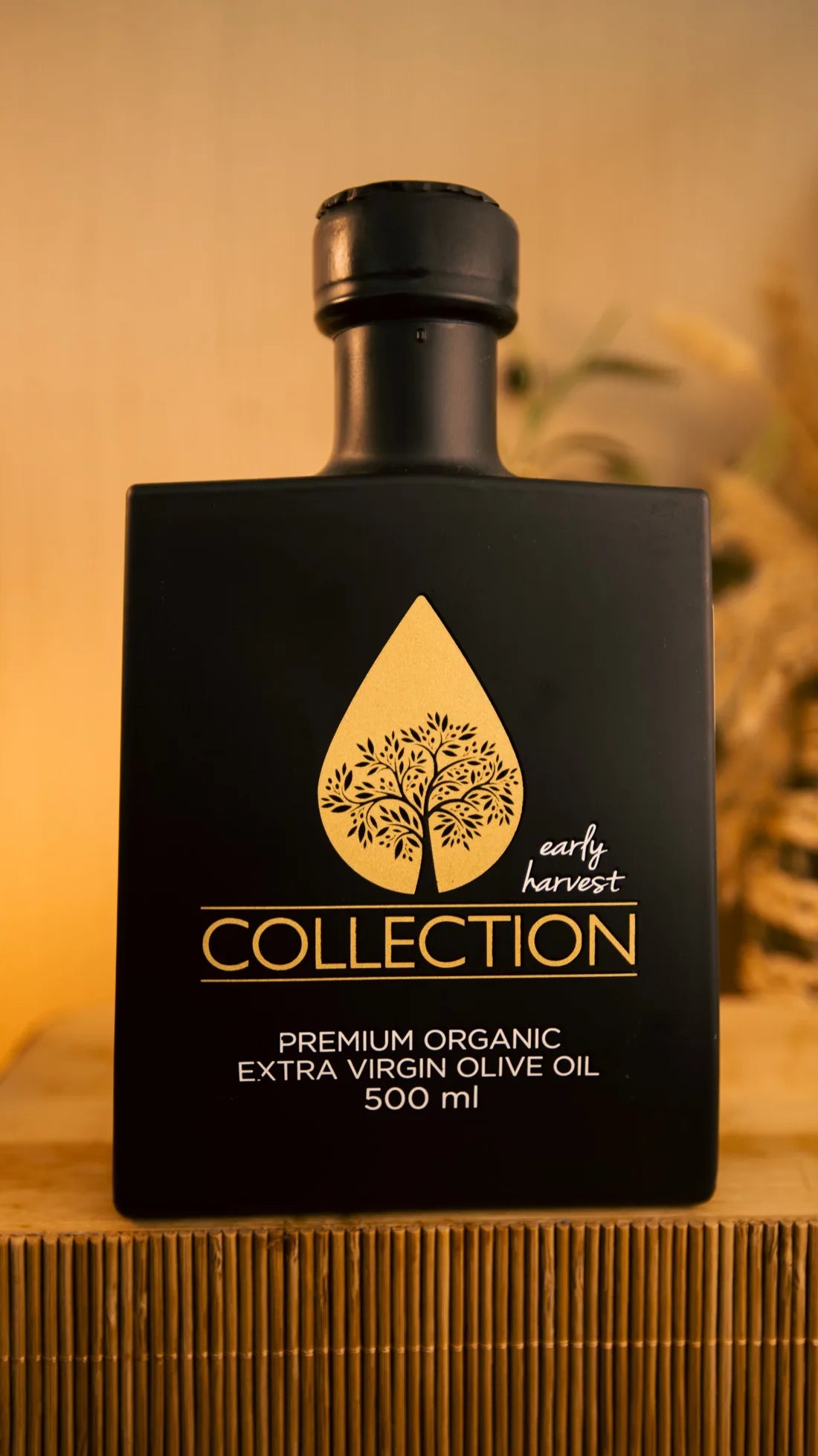
- The Oleum Crete range runs from the 750ml Organic Extra Virgin everyday bottle to the 500ml Collection Premium gift bottle. The One Day 500ml sits between them, defined by freshness.
- Price per litre drops on the 5L tin, which suits kitchens and catering buying in volume rather than gifting. Current prices for every bottle are listed on the Oleum Crete shop page.
What Actually Sets the Price of Koroneiki Olive Oil
The koroneiki olive oil price you pay in the UAE comes down to five things: when the olives were picked, how quickly they were pressed, what certification stands behind the label, how the oil travelled from Greece, and the size of the container. As a benchmark, single-estate PDO Messara/Koroneiki oils sold internationally typically run from roughly $1.12 to $3.53 per fluid ounce, depending on the format and certification level, before any UAE landed costs are added. At Oleum Crete, we import single-estate PDO Messara oil from the Kidonakis family estate on Crete's Messara Plain, and every one of those costs is one we carry and can explain. For current prices on each of our bottles, see the Oleum Crete shop page.
Koroneiki is a small olive. It is the backbone of Cretan oil, prized for its green, peppery character and its naturally high polyphenol content. Small fruit means more picking for every litre, and on the Kidonakis estate that picking is still done fully by hand. The family has worked these groves for generations, and that hands-on approach shapes every stage of the harvest.
On top of the work done on Crete sit the costs of bringing extra virgin olive oil to the UAE. Standard GCC import duty is 5% of customs value, with relief for many basic staples, and VAT of 5% applies to most food supplies. Each of these layers adds a little. The sections below take them one at a time, so you can judge any bottle on the shelf, ours included.
Harvest Timing and Yield: Why Earlier Picking Costs More
The single biggest lever on cost is the date the olives leave the tree. Pick early and you get less oil but a brighter, more intense one. Pick late and the mill runs longer on the same fruit.
Early Harvest vs Full Ripeness
An olive picked green, at the start of the season, holds less oil than one left to darken on the branch. The trade is flavour and chemistry. Early fruit gives oil with more bitterness, more pepper at the back of the throat and a higher concentration of polyphenols, the compounds behind that bite.
Our Organic Early Harvest Olive Oil is where that trade shows most clearly. Oleum Crete oil measures over 800mg/kg polyphenols, meeting the EU health claim set out in Regulation 432/2012. We state that figure because it is tested, and we leave the claim exactly where the regulation leaves it.
Full-ripeness oil is softer, rounder and cheaper to produce because each kilo of fruit returns more oil. Neither is wrong. They are different products at different costs.
Why Single-Day Harvest-to-Bottle Adds Cost
Our One Day range is picked and bottled within a single day. Olives begin to oxidise and ferment from the moment they are cut from the branch. Every hour they wait in crates before milling dulls the aroma and wears down the polyphenols.
Holding to a single day changes how the whole harvest is run:
- Picking crews work only as much fruit as the mill can take that same day.
- Milling slots are booked around the grove, not the other way round.
- Nothing is stockpiled to make a larger, more efficient batch later in the week.
- Bottling follows pressing directly, rather than after a long settling period in bulk tanks.
Each step costs more than the slower alternative. Producers who wait several days for a full truckload save on labour and mill time. We have written in more detail about what the One Day harvest actually costs to produce, if you want the full breakdown.
Certification: PDO, Organic and What Each One Costs to Prove
Certification is not decoration. Each mark on the label means someone outside the estate has inspected, tested or audited the oil, and that work is paid for.
PDO Messara: A Protected Origin, Not a Marketing Word
PDO stands for Protected Designation of Origin. Under EU law it ties a product to a defined place and a defined method. PDO Messara oil must come from olives grown and milled within the Messara area, and producers who use the name are subject to inspection against the product specification.
That brings real costs. The estate keeps traceability records from grove to bottle. Batches are documented so any bottle can be followed back to where its oil came from. Inspections take time away from the harvest. A blended oil from several countries carries none of this, which is part of why it can sit lower on price.
For you, PDO Messara means the origin on the label has been checked by someone other than the seller. Ours is single-estate, single-variety and single valley: 100% Koroneiki from the Kidonakis groves, with no blending.
Organic Certification and Lab Testing
Our organic pressings are certified by TÜV Austria. Organic status covers how the groves are farmed and how the oil is handled, and it is verified by independent inspection rather than self-declared.
Then there is the laboratory. Measuring polyphenols to confirm an oil meets the EU health claim is a paid analysis, repeated for each harvest. So is the chemical testing that confirms an oil qualifies as extra virgin in the first place. A producer who skips the lab saves money. A producer who publishes the results has paid for them.
International competition entries add another layer of cost. They put the oil in front of panels who taste blind, and that scrutiny costs money to enter.
Shipping From Crete to Dubai: The Cost of Keeping Oil Fresh
Olive oil has three enemies: heat, light and air. A summer journey in an unrefrigerated container can undo much of what an early, single-day harvest achieved. That matters more in the UAE than almost anywhere, given the heat oil faces between port and kitchen.
We ship under temperature control within 24 hours, which costs more than standard bulk freight. Refrigerated space is priced at a premium, and speed costs more than waiting for the cheapest consolidated load.
Freight does not only add its own cost. UAE duty is calculated on the CIF value, which is the invoice price plus transport and insurance to the UAE port. VAT on imports is then charged at 5% on that value plus any duty. A more careful, more expensive journey therefore raises the dutiable value too.
Regulation adds its own layer. The UAE enforces strict rules for importing cooking oils through MOCCAE, Dubai Municipality and the Emirates Authority for Standardization and Metrology. Every food product entering Dubai must be registered in the Dubai Municipality FIRS system before the shipment arrives, with a separate registration for each product. Unregistered goods are held at the port. Product registration approvals normally take 5 to 15 working days.
Distance from the Mediterranean, smaller estates and hand harvesting all help explain why Greek olive oil tends to cost more than Italian or Spanish oil once it reaches the Gulf. Once the oil arrives, delivery within the UAE adds comparatively little to the total cost compared with the journey from Crete.
Bottle Size and Format: Comparing Price Across the Range
Format shapes price as much as the oil inside. Glass, closures and labels cost roughly the same whether a bottle holds a little or a lot, so smaller bottles carry more packaging cost per litre. Gift presentation adds more again. A tin brings the per-litre cost down.
Here is how our five pressings compare. All are single-day-harvest, 100% Koroneiki oils from the Kidonakis estate. Current prices for each bottle are listed on the Oleum Crete shop page, and the 5L tin has the lowest price per litre of the range.
| Oil | Size | What sets it apart | Best for | Price |
|---|---|---|---|---|
| Organic Extra Virgin Olive Oil | 750ml | Everyday PDO organic oil in a larger bottle | Daily cooking, dressing and drizzling | [See current price](https://oleumcrete.ae/collections) |
| One Day Extra Virgin Olive Oil | 500ml | Picked and bottled within a single day, built around freshness | Finishing dishes, tasting, bread and salads | [See current price](https://oleumcrete.ae/collections) |
| Organic Early Harvest Olive Oil | 500ml | Green, early-picked fruit and high polyphenols | Those who want the most intense, peppery oil | [See current price](https://oleumcrete.ae/collections) |
| Collection Premium Organic Olive Oil | 500ml | Limited-edition black gift bottle | Gifting to Mediterranean food lovers | [See current price](https://oleumcrete.ae/collections) |
| Extra Virgin Olive Oil 5L Tin | 5L | Lowest cost per litre, light-proof tin | Busy kitchens, catering, bulk buyers | [See current price](https://oleumcrete.ae/collections) |
If you want one bottle that shows what a single day from grove to glass tastes like, start with the One Day Extra Virgin Olive Oil. Expect green tomato, cut herbs and a clean peppery finish.
For a gift, the Collection Premium Organic Olive Oil comes in a black bottle that protects the oil from light and looks right on any table. Its price reflects both the pressing and the presentation.
The 750ml Organic Extra Virgin is the bottle to keep by the hob. It is certified PDO and organic, and generous enough for daily use.
How to Tell a Fair Price From an Inflated or Suspiciously Cheap One
With the cost drivers in mind, you can read a label and a price tag together. The question is not whether an oil is cheap or expensive. It is whether the price matches what the label proves.
Signs a Low Price Means a Blend, Not Koroneiki
- No variety named. Genuine Koroneiki olive oil says so. "Extra virgin olive oil" alone tells you nothing about the olive.
- A vague origin line. Phrases such as "blend of EU oils" or "packed in Greece" describe where oil was bottled, not where it was grown.
- No harvest date. A best-before date alone hides how old the oil already was when it was bottled.
- Clear glass or plastic. Light degrades oil, and producers who have invested in freshness rarely bottle it this way.
- No certification number. A PDO or organic claim without a visible certifier gives you nothing to check.
An olive oil blend is not automatically poor. But blending lets a packer buy oil from wherever it is cheapest that season, and the price reflects that. Our guide on how to tell real Koroneiki oil from a blend walks through the label line by line.
Signs a High Price Is Justified
- A named estate and a named valley, such as the Messara Plain.
- A single variety, stated plainly.
- A harvest date, ideally from the most recent season.
- PDO and organic marks you can trace to a named certifier.
- Published polyphenol figures, backed by lab testing.
- Dark glass or tin, and a supplier who can tell you how the oil was shipped.
- Results from blind-tasted international competitions.
A high price with none of these is packaging, not provenance. A high price with all of them is paying for work you can verify.
Frequently asked questions
Is more expensive olive oil always higher quality?
No. Price can reflect a fancy bottle or a strong brand as easily as a careful harvest. Check for a named variety, a harvest date, PDO or organic certification and published polyphenol levels. If those are present, the price is likely paying for the oil itself.
Why is early harvest olive oil pricier than regular extra virgin?
Green, early-picked olives hold less oil, so each litre needs more fruit and more picking time. In return, the oil carries more polyphenols and a sharper, greener flavour. Our Organic Early Harvest Olive Oil is made this way, and its price reflects the lower yield.
Does PDO certification itself add to the price, or just the production behind it?
Both. Certification brings its own costs: inspections, traceability records and the documentation needed to keep using the PDO Messara name. It also requires production within a defined area and to a set specification, which rules out cheaper shortcuts such as buying in oil from elsewhere.
How much should genuine single-estate Koroneiki oil cost in the UAE?
Use the international market as your starting point: single-estate PDO Messara/Koroneiki oils typically sell for roughly $1.12 to $3.53 per fluid ounce, depending on format and certification level, before UAE landed costs. In the UAE, that landed cost adds hand harvesting, certification, temperature-controlled freight, 5% import duty on the customs value where it applies, and 5% VAT. Compare oils by price per litre against that benchmark, then check whether the label shows estate, variety, harvest date and certification to justify the difference. Current prices for Oleum Crete's own bottles are on the shop page.
Why does the 5L tin cost less per litre than the 500ml bottles?
Packaging, labelling and handling cost roughly the same per container, so spreading them over five litres lowers the cost of each litre. The tin also keeps out light completely. It suits kitchens and catering that will use the oil steadily, while 500ml bottles stay fresher once opened in a smaller household.
Ready to taste the difference provenance makes? Shop the Oleum Crete collection, delivered across the UAE.
Read next: How to Cook With Koroneiki Olive Oil Without Losing Flavour
More from the Journal
All entriesKoroneiki Olive Oil and Heart Health: What Studies Show
Koroneiki olive oil carries some of the highest polyphenol counts of any olive variety, and that matters for heart health. We look at what the research actually shows, what the EU health claim permits us to say, and how much oil delivers it.

Olive Oil Acidity Level: How to Check Before You Buy
Acidity is the one number most shoppers skip past on an olive oil label, yet it decides whether a bottle can legally call itself extra virgin. Here is how to find it, read it and check it against the PDO Messara standard before you buy.

How Much Olive Oil Should a Family of Four Buy Monthly?
Most households either run out of olive oil mid-month or let a bottle oxidise on the shelf. Here is a concrete monthly estimate for a family of four, broken down by cooking, salads and daily shots, mapped straight onto Oleum Crete's 500ml, 750ml and 5L sizes.
