
How to Cook With Koroneiki Olive Oil Without Losing Flavour
Koroneiki extra virgin olive oil can take real heat, but its peppery, grassy character fades if you use it the wrong way. Here's how to cook with it so the flavour survives the pan.

In this article7 sections
Key takeaways
- Koroneiki extra virgin olive oil has a smoke point of around 190 to 210°C, comfortably above most home cooking, searing and roasting included.
- Flavour goes before smoke does. Long spells of high heat flatten the peppery, grassy notes well before the oil reaches its smoke point.
- Keep a high-polyphenol bottle such as Oleum Crete's Organic Early Harvest for raw finishing, and cook with a milder everyday PDO oil such as our Organic Extra Virgin 750ml.
- Oil added at the end of cooking, off the heat or at the table, keeps far more of its character than oil poured into a hot pan at the start.
- One Day Extra Virgin Olive Oil holds its bright, peppery finish through light sautéing and raw use, which makes it the most flexible bottle for everyday cooking.
Does Heat Destroy Koroneiki Olive Oil's Flavour?
No. Heat does not destroy Koroneiki oil outright, but careless heat strips its flavour long before the pan starts to smoke. Cooking with Koroneiki olive oil is safe at almost every temperature a home kitchen reaches. What you lose, if you treat it like a neutral frying fat, is the green, peppery character that makes a fresh Messara oil worth buying in the first place. At Oleum Crete we bottle 100% Koroneiki olives from the Kidonakis family estate on Crete's Messara Plain, hand-harvested and pressed within a day, so the aromatics in the bottle are as intact as we can make them. The real question is how much of that reaches your plate.
Two things happen when olive oil meets heat. The lightest aroma compounds, the ones that give a fresh oil its smell of cut grass and green fruit, evaporate first and fastest. Then, more slowly, the polyphenols that give Koroneiki its bitterness and its catch at the back of the throat begin to break down. A laboratory study that heated extra virgin olive oil at 98, 120, 140, 160 and 180°C found that polyphenol degradation speeds up sharply as the temperature rises.
Real kitchens are kinder than laboratories. In a study of domestic sautéing, researchers found that hydroxytyrosol fell but the overall polyphenol content stayed largely unaltered, and the high-phenol oil still carried enough polyphenols afterwards to meet the European health claim threshold. The oil survives the pan. Its top notes are what need protecting.
The Smoke Point of Koroneiki Extra Virgin Olive Oil
Extra virgin olive oil generally begins to smoke at 190 to 210°C. That is the point at which the oil visibly smokes and starts to break down into compounds that taste acrid and bitter. Below it, the oil is stable enough for sautéing, roasting, grilling and light frying.
Extraction temperature is a separate question. How gently and how quickly the olives are processed decides how much aroma and polyphenol the oil starts life with. What you do at the stove decides how much of it stays. If you want the detail on freshness, we have looked at whether harvest date actually changes an oil's smoke point in a separate piece.
Here is how common cooking methods compare with that smoke point, and what each does to flavour rather than safety.
| Cooking method | How hot the oil gets | Below smoke point? | What happens to flavour |
|---|---|---|---|
| Simmering and braising | Around 100°C, held by the water in the pot | Yes, comfortably | Slow, steady loss over long cooking times |
| Gentle sautéing | Medium heat, short contact | Yes | Some top notes fade; pepper largely holds |
| Roasting vegetables or fish | Oven around 180 to 200°C; oil on food stays cooler while moisture evaporates | Yes | Fruit softens into a rounder, nuttier taste |
| Searing meat | High heat, brief contact | Yes, if the pan is never left empty and smoking | Green notes fade quickly; use a modest amount |
| Shallow or light frying | Close to the lower end of the range | Usually, with care | Freshness largely gone; oil acts as a cooking fat |
| Raw finishing | Room temperature | Not applicable | Full aroma, bitterness and pepper intact |
Time matters as much as temperature. A controlled study that held monovarietal extra virgin oils at 180°C for 36 hours found significant losses of tocopherols and polyphenols, with the rate varying by cultivar. No home cook holds oil at heat for that long, but the lesson scales down. Ten minutes at moderate heat costs you less than an hour.
When to Cook With It and When to Finish With It
Koroneiki does two jobs in the kitchen. As a cooking fat it carries heat, browns food and builds the base of a dish. As a finishing oil it is a seasoning in its own right. Most people get more from their bottle once they treat these as different jobs.
Searing and Roasting: What Survives the Heat
High, dry heat is where Koroneiki changes most. Its grassy, green-tomato brightness fades within minutes, and what remains is a rounder fruitiness that browns well and tastes richer than a refined oil. That is a fair trade for roast potatoes, aubergine or a piece of lamb. Use enough oil to coat, not to pool, and keep the pan moving so no patch sits empty and overheats. For roasting, toss vegetables in oil before they go into the oven rather than drizzling it onto a hot tray.
Sauces and Braises: Adding Oil at the Right Moment
Wet cooking feels gentle, but long simmering is quietly expensive. In domestic boiling tests, extra virgin olive oil simmered with water lost 27% of its polyphenols at 15 minutes and 53% at 60 minutes. The fix is simple: split the oil. Use a spoonful at the start to soften onions and garlic, then stir in fresh oil off the heat just before serving. A tomato sauce, a pot of beans or a slow-cooked okra dish tastes noticeably greener and more peppery when finished this way.
Raw Finishing: Where the Flavour Shows Most
Raw oil is where Koroneiki speaks loudest. Over grilled fish, labneh, ripe tomatoes, warm bread or a bowl of hummus, a fresh pressing gives aroma first, then a light bitterness, then the pepper that tells you the polyphenols are there. This is the use for your most expressive bottle. Pour it at the table, not in the kitchen, so nothing has a chance to warm it.
Five Rules for Cooking With Koroneiki Olive Oil
These cooking tips preserve flavour without changing what you cook.
- Add oil to a warm pan, never a smoking one. An empty pan left on high heat can overshoot the smoke point in seconds. Warm the pan, add the oil, then the food.
- Keep two bottles open. One milder oil for the stove, one expressive oil for finishing. It costs less over a month than cooking with your best bottle, and both get used for what they do well.
- Shorten the time at high heat. Brown quickly, then lower the flame or add liquid. Duration does more damage than a brief burst of heat.
- Finish off the heat. A tablespoon of fresh oil stirred in after the pan comes off the burner restores much of what cooking took out.
- Store the bottle away from the stove. Heat and light age oil in the cupboard as surely as in the pan. Keep it closed, cool and dark, and finish it while it is fresh.
Matching Each Oleum Crete Bottle to the Right Use
Every bottle we sell is single-estate, single-variety Koroneiki from the same valley, so the difference between them is harvest timing, intensity and format rather than origin. Under EU Regulation 432/2012, the olive oil polyphenols health claim may only be used for oil containing at least 5 mg of hydroxytyrosol and its derivatives per 20 g, with the benefit tied to a daily intake of 20 g. That benchmark matters even for oil heading into the pan, because a higher starting level leaves more behind after cooking.
| Bottle | Size | Best use | Why |
|---|---|---|---|
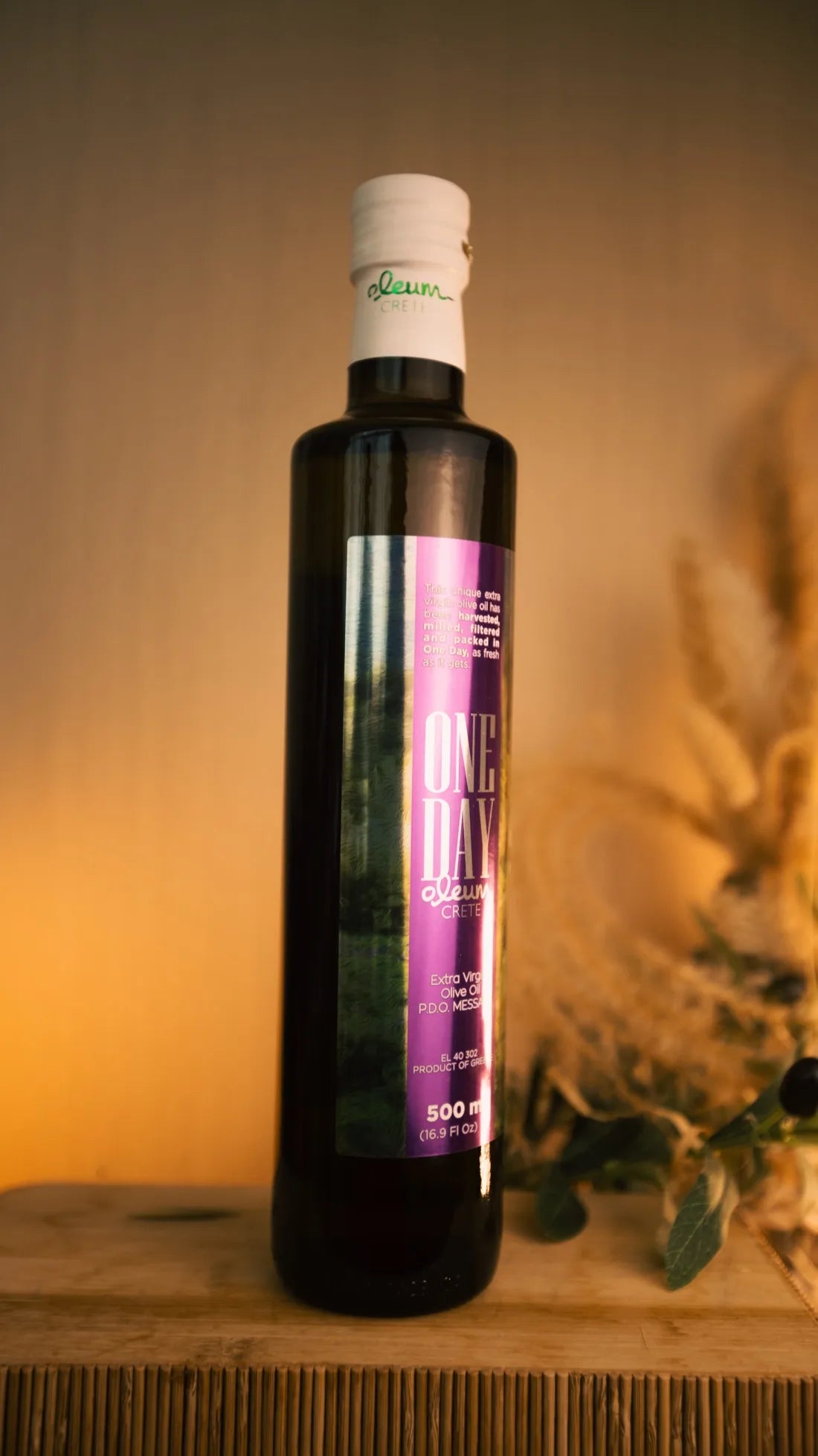
| One Day Extra Virgin Olive Oil | 500ml | Light sautéing and raw use | Harvest to bottle within a day; bright, peppery finish holds through gentle heat |
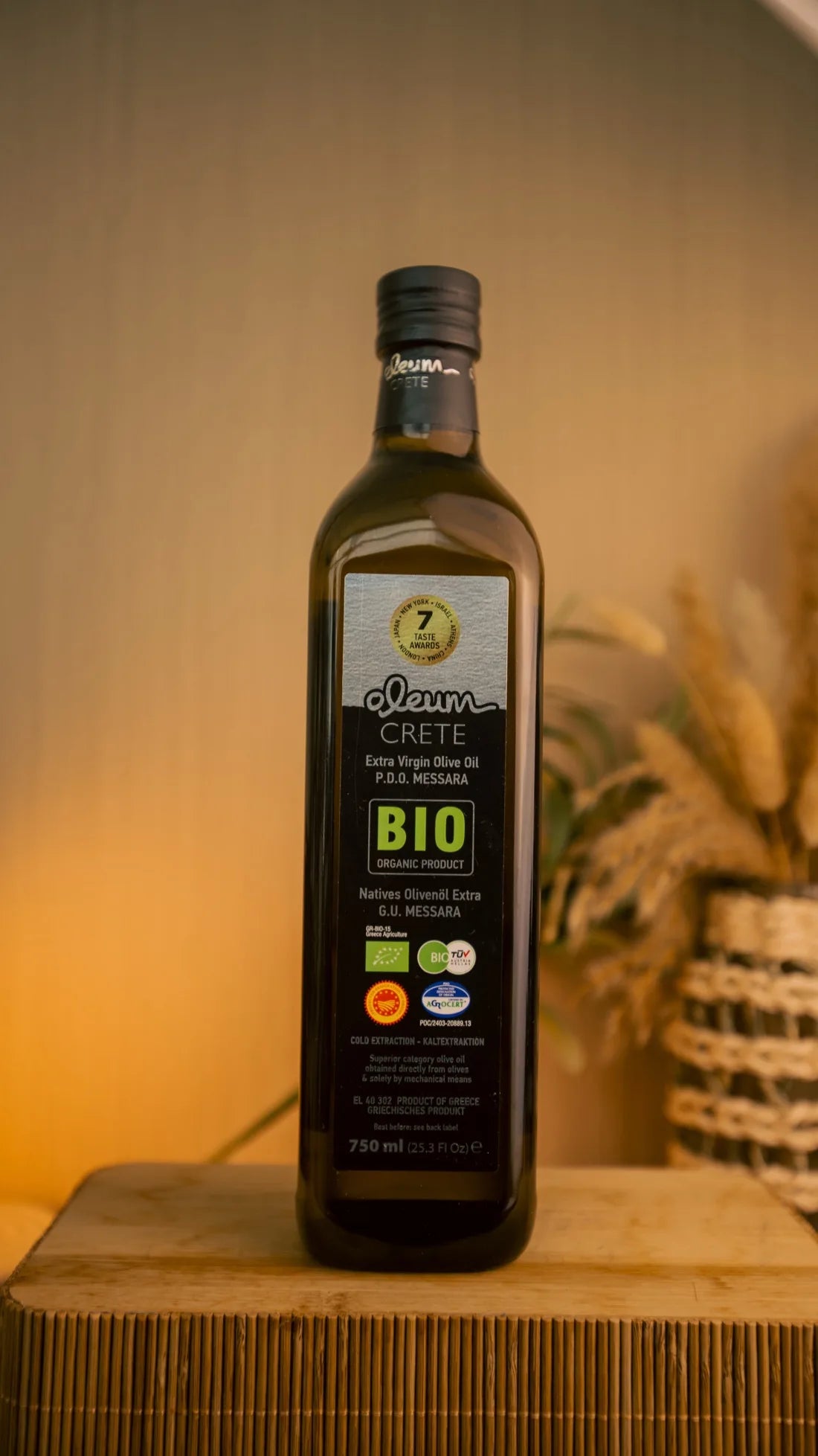
| Organic Extra Virgin Olive Oil | 750ml | Everyday cooking | PDO Messara, organic, milder and generous in size |
| Organic Early Harvest Olive Oil | 500ml | Raw finishing | High-polyphenol, the most intense in the range |
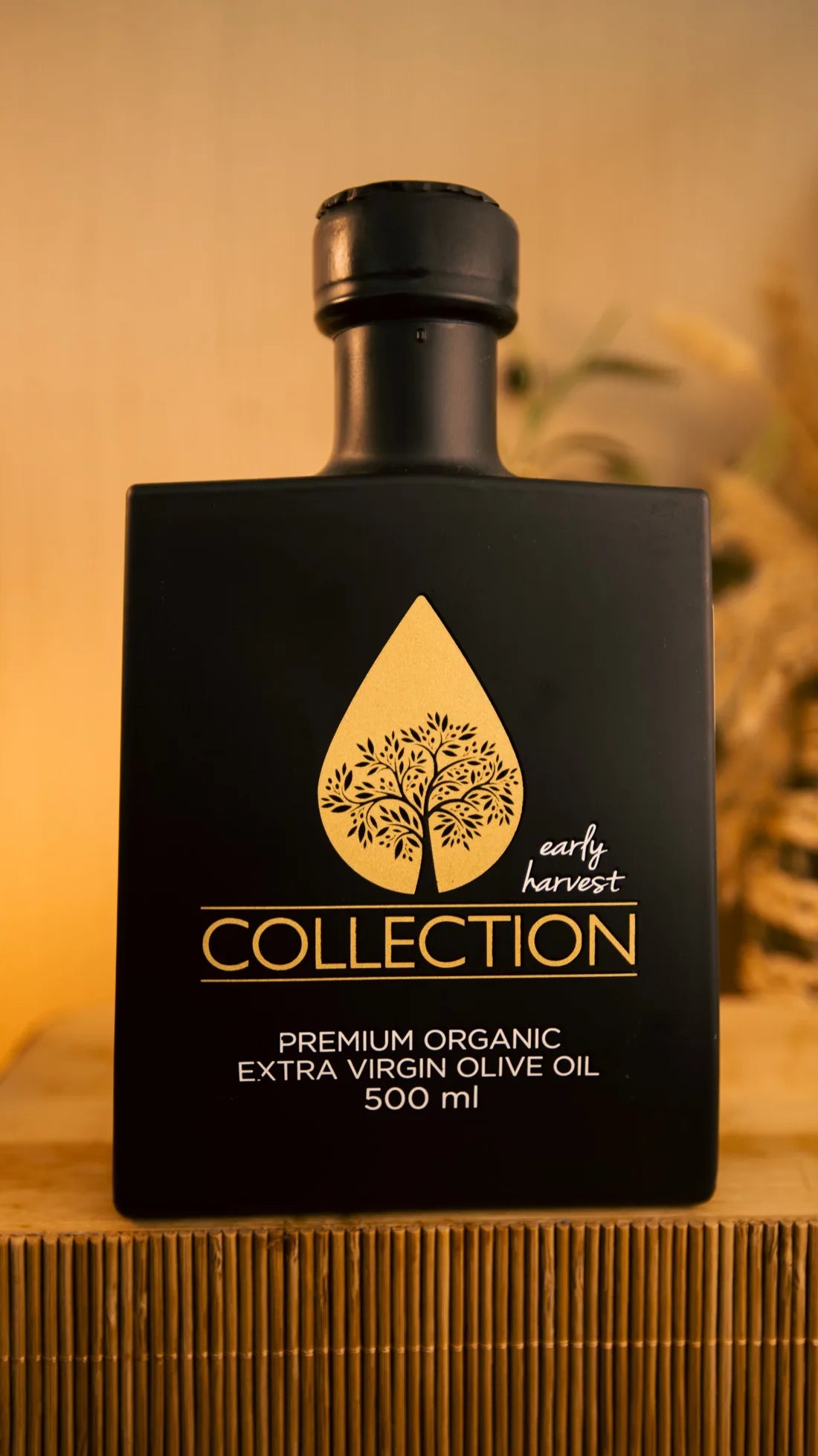
| Collection Premium Organic Olive Oil | 500ml | Table use and gifting | Black bottle, made to be poured raw and given |
| Extra Virgin Olive Oil 5L Tin | 5L | Batch cooking, catering, frying | Kitchen size; the tin keeps out light |
If you want a single bottle that does most things well, start with our One Day Extra Virgin Olive Oil. It is picked and pressed within a single day, and that freshness gives it enough brightness to survive a quick sauté and still taste lively when poured raw over a salad.
For the daily work of onions, roast vegetables and braises, the Organic Extra Virgin Olive Oil 750ml is the bottle to keep beside the hob, though not too close to it. It carries the PDO Messara certification and organic status, with a gentler profile that suits cooking.
When the oil is the point of the dish, or the point of the gift, the Collection Premium Organic Olive Oil belongs on the table. Its black bottle protects the oil from light and looks the part for anyone who loves Mediterranean food. Keep the Organic Early Harvest alongside it for raw finishing when you want the most pepper.
Mistakes That Flatten Koroneiki's Flavour
Most flavour loss happens without any smoke at all. These are the common mistakes worth avoiding.
- Reusing frying oil for finishing. Once oil has fried, its aroma is spent and it carries the taste of whatever was cooked in it. Keep used oil, if you keep it at all, for more frying only.
- Heating an empty pan. The pan reaches its highest temperature with nothing to absorb the heat. Oil poured into it starts to break down before the food goes in.
- Storing the bottle beside the stove or on a sunny worktop. Constant warmth and light age the oil between meals. A cool, dark cupboard away from the oven is the right place.
- Decanting into a clear bottle. Light oxidises olive oil, and a high-polyphenol oil has the most to lose. Dark glass and tin exist for a reason.
- Cooking with the most expressive bottle. An early harvest oil poured into a hot pan spends its best qualities where you cannot taste them.
- Leaving the cap off. Air works steadily on an open bottle. Close it after every pour.
- Buying more than you will use while fresh. A large tin suits a busy kitchen. For a small household, a 500ml bottle finished promptly tastes better from first pour to last.
Frequently asked questions
Can you fry with extra virgin olive oil without ruining it?
Yes. Extra virgin olive oil smokes at around 190 to 210°C, which is above the temperature of shallow and light frying. The oil stays stable, but its fresh, grassy notes will not survive, so fry with a milder everyday oil or the 5L tin and keep your expressive bottles for the table.
Does heating olive oil destroy its polyphenols?
Heat reduces them rather than destroying them, and the loss depends on time and temperature. In a domestic sautéing study, overall polyphenol content stayed largely unaltered while hydroxytyrosol fell. Long simmering costs more, and microwave heating for 10 minutes caused only minor losses.
Is it better to cook with a high-polyphenol oil or save it for raw use?
Save it for raw use if you want to taste what you paid for. The bitterness and pepper of a high-polyphenol oil like our Organic Early Harvest show best uncooked. Cooking with a high-polyphenol oil still leaves more behind than cooking with a low one, but a milder PDO oil does the job in the pan perfectly well.
How many times can you reuse olive oil after frying?
There is no fixed number, because it depends on the temperature, the time and what you fried. Strain the oil after cooling, store it sealed in a cool, dark place and use it only for more frying. Discard it once it darkens, smells stale, foams or starts smoking at a lower heat than before.
Does a fresher harvest oil taste different once it's cooked?
Yes, though the gap narrows with heat. A fresh oil such as our One Day starts with more aroma and pepper, so more of it survives a quick sauté. After long, high-heat cooking most oils converge, which is why freshness pays off most when you finish raw.
Ready to taste the difference for yourself? Shop the Oleum Crete collection and find the bottle from the Messara Plain suited to your kitchen.
More from the Journal
All entriesKoroneiki Olive Oil and Heart Health: What Studies Show
Koroneiki olive oil carries some of the highest polyphenol counts of any olive variety, and that matters for heart health. We look at what the research actually shows, what the EU health claim permits us to say, and how much oil delivers it.

Olive Oil Acidity Level: How to Check Before You Buy
Acidity is the one number most shoppers skip past on an olive oil label, yet it decides whether a bottle can legally call itself extra virgin. Here is how to find it, read it and check it against the PDO Messara standard before you buy.

How Much Olive Oil Should a Family of Four Buy Monthly?
Most households either run out of olive oil mid-month or let a bottle oxidise on the shelf. Here is a concrete monthly estimate for a family of four, broken down by cooking, salads and daily shots, mapped straight onto Oleum Crete's 500ml, 750ml and 5L sizes.
