
Does Harvest Date Change Olive Oil's Smoke Point for Cooking?
Harvest date changes an olive oil's flavour, colour and polyphenol count, but it doesn't set the smoke point. We explain what actually controls heat tolerance in extra virgin olive oil, and which Oleum Crete bottle to reach for at the stove.

In this article7 sections
Key takeaways
- Smoke point is set mainly by free fatty acid content and how refined the oil is, not by the date the olives were picked.
- Extra virgin olive oil typically starts to smoke between about 190°C and 215°C when acidity is low. Oleum Crete's One Day oil is pressed fast to keep acidity low, well inside the 0.8% extra virgin limit.
- Early harvest oil carries more polyphenols and chlorophyll than late harvest oil. That changes bitterness, colour and shelf stability. It does not change how hot the oil can get before it smokes.
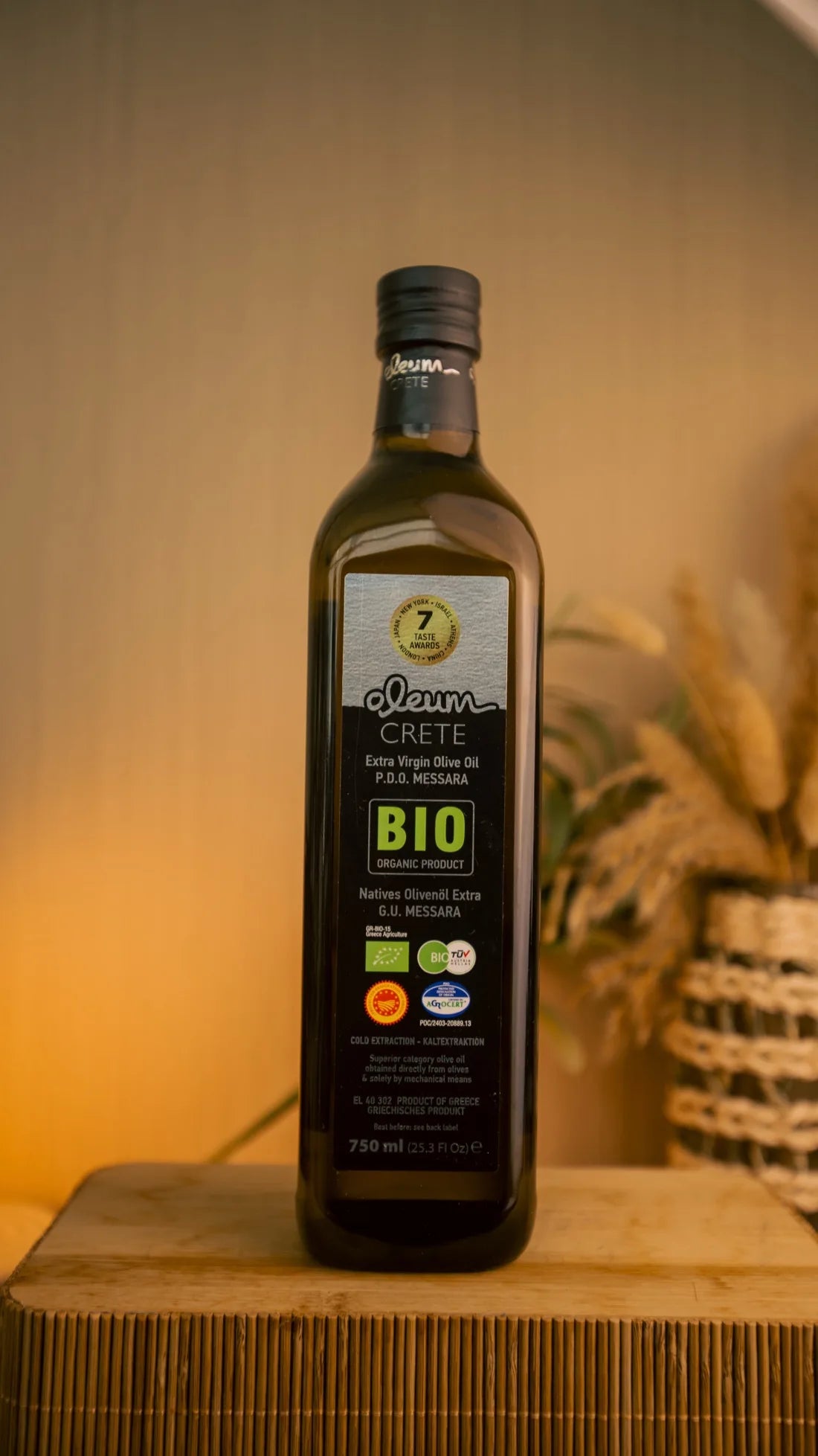
- For pan-frying and roasting, our Organic Extra Virgin Olive Oil 750ml or the 5L tin are the practical everyday choices. Keep One Day and the Collection Premium bottle for raw drizzling and finishing.
- A fresh, unrefined PDO Messara extra virgin oil will outperform a tired or adulterated "extra virgin" with the same printed smoke point, because oxidised oil smokes sooner whatever its label says.
Does Harvest Date Change the Smoke Point? The Short Answer
Not directly. A lot of olive oil harvest date cooking advice blurs two different things: flavour and heat tolerance. Harvest date shapes the first. Free fatty acid content, refinement and freshness govern the second. An oil pressed from green October fruit and one pressed from riper fruit later in the season can start to smoke at much the same temperature, provided both are genuine, low-acidity extra virgin oils kept away from air, heat and light.
At Oleum Crete we work with a single estate, the Kidonakis family groves on Crete's Messara Plain. Every bottle is 100% Koroneiki and carries PDO Messara certification. Our One Day range goes from tree to bottle within a single day. That speed matters for smoke point, though not because of the calendar date. It matters because fruit pressed quickly has less time to break down, so the oil starts life with low acidity.
So harvest date is not the lever that controls smoke point. Its effect is indirect: harvest timing and handling influence acidity, and acidity does affect smoke point. The rest of this article explains how those pieces fit together, and which bottle suits which job in your kitchen.
What Actually Determines an Olive Oil's Smoke Point
Smoke point is the temperature at which an oil begins to give off visible smoke as its components break down. Three things move that number up or down.
Free Fatty Acids and Acidity
When olives are bruised, left in sacks or held too long before pressing, the fats in the fruit begin to split. That produces free fatty acids. Those acids volatilise at lower temperatures than intact fats, so the more an oil contains, the sooner it smokes.
The extra virgin grade allows no more than 0.8% free acidity, and extra virgin olive oil's smoke point is listed at 190°C to 215°C. A fresh oil well below that ceiling tends to sit at the upper end of the range. An oil that only just scrapes under the limit tends to smoke earlier. Our One Day oil is pressed quickly enough to keep acidity well below that limit. That low acidity owes far more to the speed from grove to press than to the date on the harvest calendar.
Refined vs Unrefined Oil
Refining strips out free fatty acids, minerals and enzymes through filtering and bleaching. With fewer of those compounds left, refined oils smoke at higher temperatures. They also lose most of their aroma, colour and polyphenols along the way.
Extra virgin oil is unrefined. It keeps the natural compounds that give it flavour, and those same compounds lower its smoke point compared with a refined oil. If you want to understand the distinction properly, we have written about the difference between extra virgin and virgin grades and how acidity limits separate them.
Impurities and Oxidation
Fine particles of fruit tissue and water left in an oil burn first. Once extra virgin oil is heated beyond roughly 210°C to 216°C, depending on its free fatty acid content, these unrefined particles start to burn.
Oxidation is the other factor. Oil that has sat open on a sunny counter, travelled in a hot van or been reused several times has already started to degrade, and it will smoke sooner. This is why freshness and careful storage matter more than any figure printed on a label.
Olive Oil Harvest Date and Cooking: What Early vs Late Harvest Really Changes
Picking date transforms an olive oil. It just transforms the parts you taste and see, not the temperature at which the oil smokes.
Polyphenol Content
Green, early-season olives are richer in polyphenols, the natural antioxidant compounds behind olive oil's bitterness and pepper. As fruit ripens on the tree, those levels fall. Early harvest oils like ours are picked specifically to capture that higher polyphenol content. We go into more detail on how harvest date changes polyphenol levels across the Messara season.
Polyphenols do affect how an oil holds up over time. They help protect the oil against oxidation in the bottle, so a high-polyphenol oil generally keeps its character longer once opened. Shelf stability and smoke point are separate measures, though. A longer shelf life does not mean a higher smoking temperature.
Colour and Chlorophyll
Early harvest oil is often a vivid green, coloured by chlorophyll from unripe fruit. Later harvests run more golden. Chlorophyll reacts to light, which is one reason good oil belongs in dark glass or a tin and away from the window. Colour tells you something about picking time. It tells you nothing reliable about smoke point or quality.
Flavour Intensity
On the palate, early harvest Koroneiki speaks loudly: cut grass, green tomato leaf, artichoke and a catch of pepper at the back of the throat. Late harvest oil is softer and rounder, with riper fruit notes. These are the differences that should guide how you use each oil. Heat tolerance should not, because between two fresh extra virgin oils it barely moves.
Smoke Point by Oil Type: Where Extra Virgin Sits
Exact smoke points vary between batches and testing methods, so the table compares typical positions rather than fixed numbers wherever a reliable figure is not available.
| Oil type | Processing | Typical smoke point | What it means in the kitchen |
|---|---|---|---|
| Fresh extra virgin olive oil, low acidity (for example under 0.3%) | Unrefined | Upper end of [190°C to 215°C](https://en.wikipedia.org/wiki/Olive_oil) | Comfortable for pan-frying, sautéing and roasting |
| Extra virgin olive oil close to the 0.8% limit | Unrefined | Lower end of that range | Smokes sooner, with less margin in a hot pan |
| Virgin olive oil | Unrefined, higher acidity permitted | Generally below good extra virgin | Less flavour, less heat headroom |
| Refined olive oil | Refined | Higher than extra virgin | [Suited to deep frying](https://en.wikipedia.org/wiki/Olive_oil), with a milder flavour |
| Refined seed oils (such as canola or grapeseed) | Refined | Generally higher than extra virgin | High smoke point, but less stable under long heating |
| Any oil that is oxidised or reused | Degraded | Lower than when fresh | Smokes early regardless of grade |
Two points put this table in perspective. First, the International Olive Council notes that 180°C is the ideal frying temperature, well below the smoking range of a fresh extra virgin oil. Second, smoke point is not the same as stability. Smoke point does not track when an oil begins to break down, and olive oil's resilience under heat may come from its antioxidants and monounsaturated fats. A 2018 study at De Montfort University heated common cooking oils for hours and found extra virgin olive oil produced the fewest polar compounds and aldehydes, while canola and grapeseed produced more.
Cooking With High-Polyphenol Early Harvest Oil: What to Expect
A green, peppery early harvest oil will behave in a hot pan much as any fresh extra virgin oil does. The difference lies in what you get from it, and what heat takes away.
Frying and Sauteing
For sautéing vegetables, searing fish or shallow-frying, a fresh extra virgin oil gives you a sensible margin below its smoke point. Heat the pan over medium-high, add the oil and cook before it shimmers into smoke. If it starts smoking, lower the heat. Very hot techniques such as wok cooking at full flame or deep frying sit closer to the limit. That is where refined oils are conventionally used.
Frying with a high-polyphenol oil is perfectly possible. It is simply less rewarding than using it raw, because the qualities you paid for are its aroma and bite.
Roasting and Baking
Roasting at typical oven temperatures suits extra virgin oil well. Toss potatoes, aubergine or a tray of tomatoes in it and the oil carries flavour into the food. In baking, a softer oil is usually the better choice. A strongly bitter early harvest oil can dominate a delicate cake, while it can work beautifully in a savoury focaccia or a rich chocolate loaf.
When to Keep It Raw Instead
Heat softens the pepper and bitterness of a high-polyphenol oil, and its more delicate aromatic notes fade in the pan. If you want the full character of an early harvest pressing, add it at the end. Spoon it over grilled lamb, white beans, labneh, a bowl of lentil soup or ripe tomatoes with sea salt. That is where an oil picked young and pressed within hours shows what it is.
Choosing the Right Oleum Crete Bottle for Your Kitchen
Every oil we sell is single-estate, single-variety Koroneiki from the Messara Plain. The real choice is about job and size, not about which oil can survive the heat.
For Everyday Cooking
For daily sautéing, roasting and shallow-frying, the Organic Extra Virgin Olive Oil 750ml is our everyday PDO bottle. It is organic, rounded enough to suit most dishes, and generous enough to cook with freely. Households that cook every day, and catering kitchens, will find the Extra Virgin Olive Oil 5L Tin more practical. The tin keeps light out, and you can decant a small bottle for the stovetop while the rest stays sealed in a cool cupboard.
For Raw Drizzling and Gifting
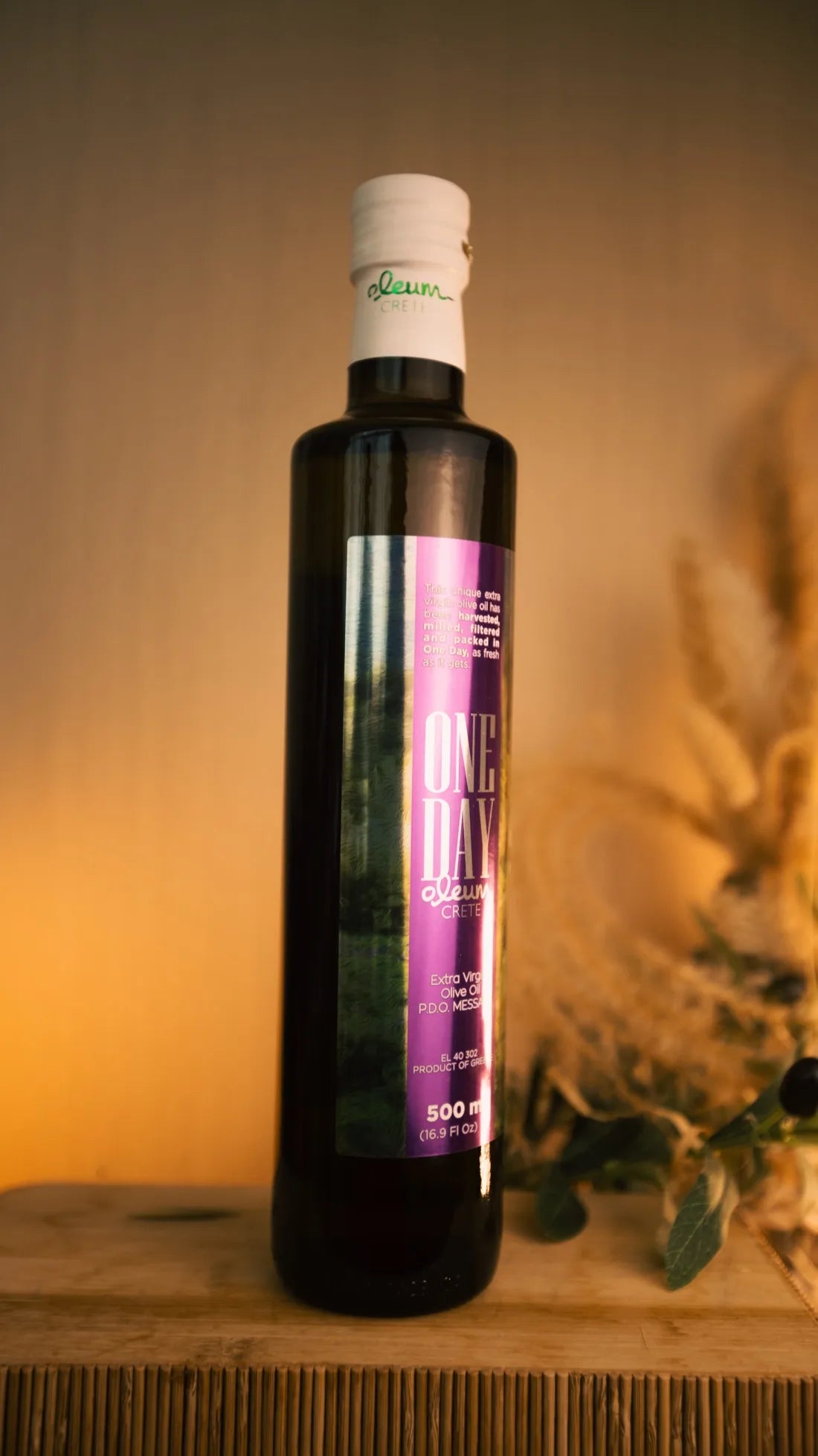
Keep the One Day Extra Virgin Olive Oil for the table. Picked and pressed within a single day, it holds a brightness of green tomato, garden herb and a clean peppery finish that is best tasted raw. The Organic Early Harvest Olive Oil, our high-polyphenol pressing, belongs in the same place: over finished dishes, where its intensity stays intact.
For gifting, the Collection Premium Organic Olive Oil arrives in a black bottle that looks right on any table and shields the oil from light. It is a gift for someone who loves Mediterranean food, and like One Day, it shows best uncooked.
We ship across the UAE in temperature-controlled delivery, so the oil reaches you in the condition it left the estate. You can browse the full Oleum Crete range to compare all five pressings side by side.
Frequently asked questions
What is the smoke point of extra virgin olive oil?
Extra virgin olive oil's smoke point is listed at 190°C to 215°C. Where a particular oil falls within that range depends mostly on its free fatty acid content and freshness. Low-acidity, fresh oils sit towards the upper end.
Is it safe to fry food in extra virgin olive oil?
Fresh extra virgin olive oil is widely used for pan-frying and sautéing, and typical frying temperatures sit below its smoking range. Heating studies have found it forms fewer breakdown compounds than several seed oils. For deep frying at very high heat, refined oils are the conventional choice. If you have a specific dietary or medical concern, ask a qualified professional.
Does high-polyphenol olive oil turn bitter when it's heated?
No, heat tends to do the opposite. The bitterness and pepper of a high-polyphenol oil soften in the pan, and some of its fresher aromas fade. That is why we suggest adding these oils at the end of cooking if you want their full character.
Should early harvest or high-polyphenol oil be kept for raw use only?
It does not have to be, because it handles normal cooking heat as well as any fresh extra virgin oil. Raw use simply makes the most of what sets it apart, its aroma and bite. Many cooks keep an everyday extra virgin oil for the pan and an early harvest bottle for the table.
Does PDO certification say anything about an oil's smoke point?
Not directly. PDO Messara certification confirms where the oil comes from and that it was produced under the rules for that designation. Smoke point depends on acidity, refinement and freshness. Genuine PDO extra virgin oil is unrefined, so it sits in the extra virgin range.
Why does supermarket olive oil sometimes smoke sooner than expected?
Oil that has been exposed to air, heat or light oxidises, and oxidised oil smokes at lower temperatures. Long supply chains, clear bottles and hot storage all speed this up. Reusing oil has the same effect. Higher acidity close to the 0.8% limit, or blending with lower-grade oil, can also lower the point at which it starts to smoke.
Ready to cook and drizzle with genuine single-estate PDO Messara oil? Shop the Oleum Crete collection and choose the bottle built for your kitchen.
More from the Journal
All entriesKoroneiki Olive Oil and Heart Health: What Studies Show
Koroneiki olive oil carries some of the highest polyphenol counts of any olive variety, and that matters for heart health. We look at what the research actually shows, what the EU health claim permits us to say, and how much oil delivers it.

Olive Oil Acidity Level: How to Check Before You Buy
Acidity is the one number most shoppers skip past on an olive oil label, yet it decides whether a bottle can legally call itself extra virgin. Here is how to find it, read it and check it against the PDO Messara standard before you buy.

How Much Olive Oil Should a Family of Four Buy Monthly?
Most households either run out of olive oil mid-month or let a bottle oxidise on the shelf. Here is a concrete monthly estimate for a family of four, broken down by cooking, salads and daily shots, mapped straight onto Oleum Crete's 500ml, 750ml and 5L sizes.
