Why Greek Olive Oil Costs More Than Italian or Spanish
Greek extra virgin olive oil, especially single-estate PDO oil from Crete, usually costs more per bottle than Italian or Spanish equivalents. The gap comes down to yield, hand-harvesting, certification and how fast the olives reach the press, not marketing. Here is what each of those actually adds t

In this article8 sections
Key takeaways
- Cretan single-estate oil costs more than bulk Italian or Spanish oil because Greek groves tend to be smaller and lower-yield, and many are still picked by hand rather than by machine. Origin alone does not set the price: a European retail snapshot found Italian oil dearer per litre than Greek.
- PDO Messara certification ties the oil to one defined valley and a documented chain from grove to mill. Choosing a single estate and refusing to blend adds further cost compared with unlabelled blends.
- Oleum Crete's oil comes from the Kidonakis family's single estate on the Messara Plain, picked by hand.
- Pressing within a day of picking protects the polyphenols that earn extra virgin oil the EU's approved health claim. That speed costs more than batch milling olives that sit for days before pressing.
- Free UAE-wide delivery with no minimum spend offsets part of the premium on single-estate PDO oil bought online in the UAE.
Greek Olive Oil Price Comparison: The Short Answer
A fair Greek olive oil price comparison starts with a correction. Greek oil is not always the most expensive on the shelf. In a November 2024 retail price snapshot reported by Il Sole 24 Ore, Italian extra virgin olive oil was quoted at €9.17 per litre, Greek at €7.15 and Spanish at €6.80. The premium shows up when you compare how oil is made, not where. Single-estate, hand-harvested, PDO-certified Cretan oil pressed within a day costs more to produce than bulk oil from any country.
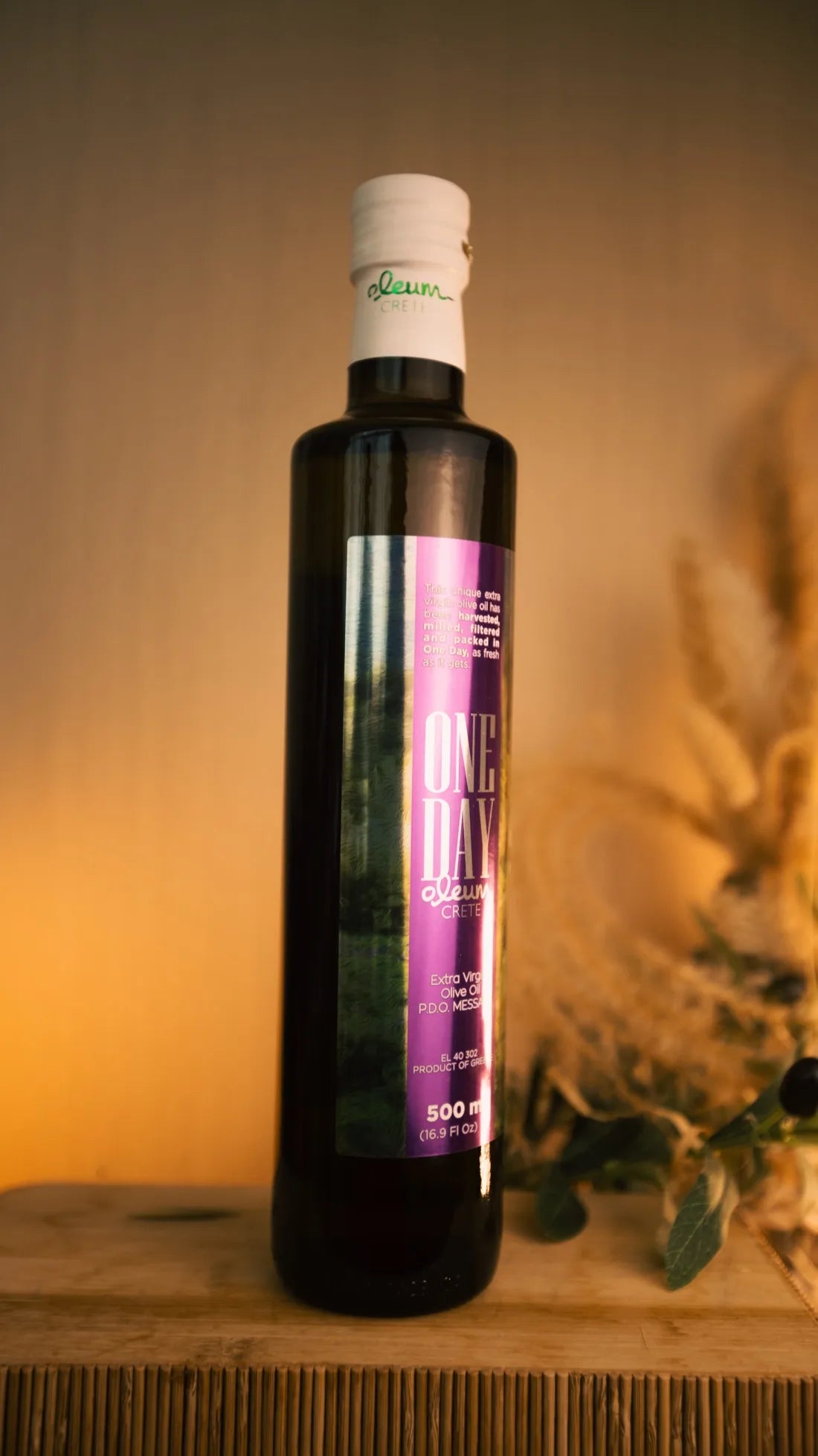
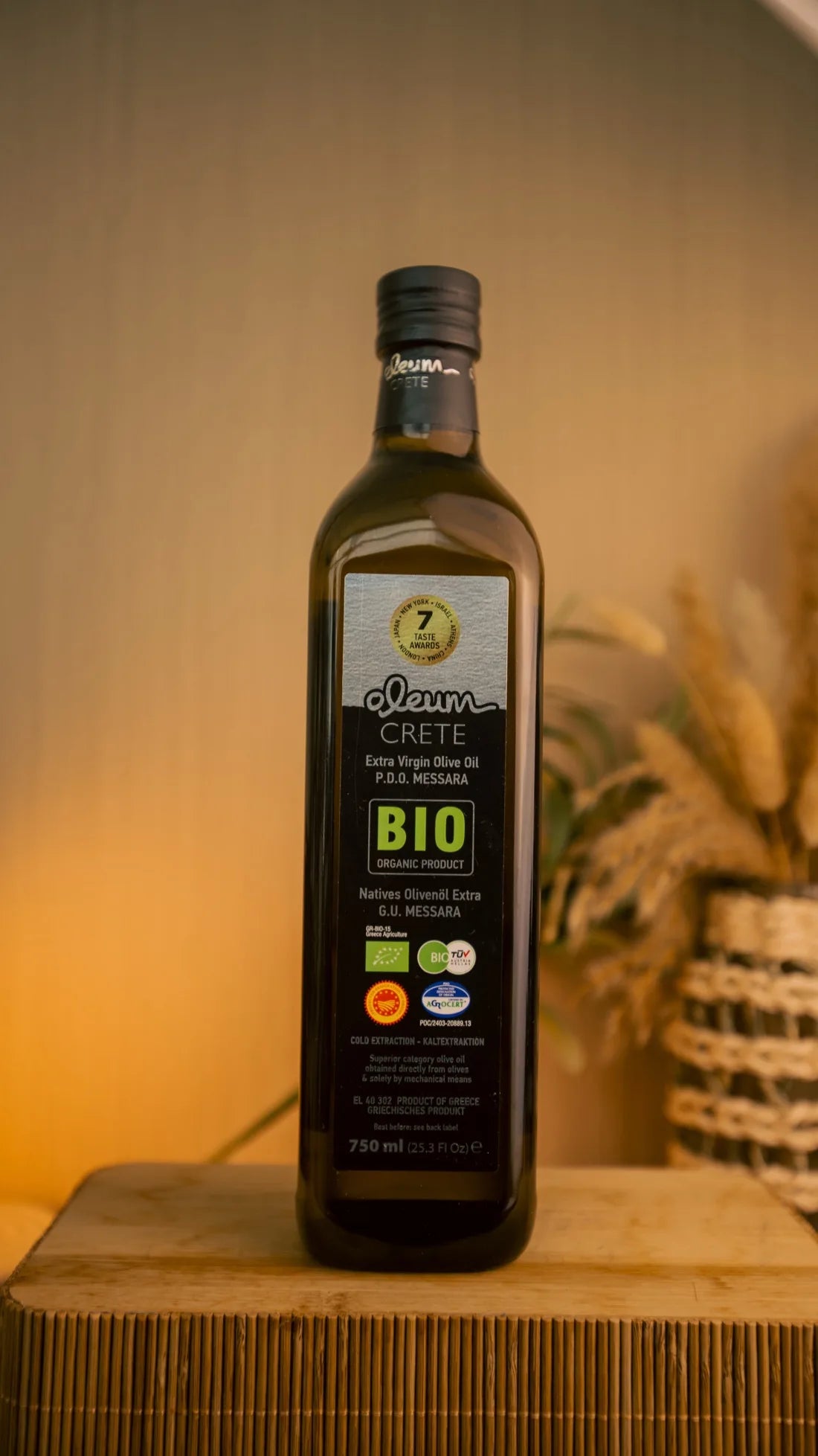
At Oleum Crete, that is the oil we sell: Koroneiki from the Kidonakis family estate on the Messara Plain, picked and pressed on a single day. Within our own range, the Organic Extra Virgin Olive Oil (750ml) is the everyday PDO bottle, built for the table and daily cooking. The One Day Extra Virgin Olive Oil (500ml) sits above it, pressed within a day of picking for the freshest, highest-polyphenol result. The Collection Premium Organic Olive Oil (500ml), in its black gift bottle, sits at the top of the range and is built for gifting. For catering or volume cooking, the Extra Virgin Olive Oil 5L Tin carries the same single-estate oil at a lower cost per litre. All five bottles ship free across the UAE, with no minimum spend. The rest of this article explains each cost line behind them.
Greek, Italian and Spanish Olive Oil at a Glance
Spain is the world's largest producer, with extensive mechanised groves that bring the cost per litre down. Italy has a strong premium reputation, yet the same report ranked it only the fifth-largest producer that year. Greece sits between them on commodity price but has a high share of small family holdings, especially on Crete. For the flavour side of the story, see the taste and origin differences between Greek, Italian and Spanish oil.
Why Price Alone Doesn't Tell the Full Story
The Greek olive oil vs Italian question has no single answer, because two bottles from the same country can differ in four ways that drive cost: grove size, harvest method, certification and the time between picking and pressing. A cheap "Greek" oil and an estate PDO oil share a flag on the label and very little else.
The Real Cost of Growing Olives on the Messara Plain vs Mainland Groves
Smaller Groves, Lower Yields in Crete
Cretan olive farming is built on family plots, many on uneven ground where trees are spaced as they were planted generations ago. Old trees produce intensely flavoured fruit, though not the volume a modern hedgerow grove delivers. Fewer kilos of olives per hectare means every litre carries a larger share of the land, water and care that went into the grove.
Mainland Spanish and some Italian operations have replanted on flat land at high density, built for scale. That model produces good everyday oil at a low cost per litre. It is a different product from estate oil.
Hand-Harvesting vs Mechanical Picking
The Kidonakis estate is hand-harvested. Pickers work tree by tree, which protects the fruit from bruising and lets them choose the moment each section of the grove is ready. Bruised olives start to oxidise and ferment before they reach the mill, so careful picking is a quality decision as much as a tradition.
Mechanical harvesters shake or straddle the trees and can clear a grove in a fraction of the time. For high-volume production, that efficiency is the whole point, and it is one of the main reasons unlabelled "Greek" oils on UAE shelves vary so much in price.
Labour Costs Across Greece, Italy and Spain
Wages differ between the three countries, yet the bigger difference is how much labour each litre needs. A mechanised grove spreads a small crew across a large harvest. A hand-picked estate needs many more hours per tonne of fruit. That labour is a large part of the gap between a single-estate olive oil and a supermarket blend.
PDO Certification and Single-Estate Sourcing: What You're Paying For
What PDO Messara Actually Requires
Protected Designation of Origin status links an oil to a defined geographical area and to the production rules written into its specification. For PDO Messara, the oil must come from the Messara area of southern Crete, be made from the valley's traditional variety, Koroneiki, and follow a chain from grove to mill that can be documented and checked. Producers pay for that record-keeping and oversight, and they give up the option of topping up a poor harvest with cheaper oil from elsewhere. That is the core of what PDO certification adds to cost: rules that remove the shortcuts.
Single-Estate vs Blended Oil: Why Blending Is Cheaper
Blending lets a bottler buy oil wherever it is cheapest that season, mix lots from different regions or countries, and correct flavour and chemistry to hit a consistent house style at a target price. It is efficient, and it is why many large brands can hold their prices steady.
Single-estate oil cannot do that. If the harvest is small, there is less oil. If the season is hot or wet, the producer works with what the trees gave. We bottle Koroneiki from one estate in one valley, with no blending, so our cost follows the grove, not the global bulk market.
Traceability Costs Money
Every bottle we sell traces back to the Kidonakis estate, through harvest records, milling records and certification. Keeping those records, separating lots and paying for audits all add cost. A blended oil labelled only by the country where it was bottled carries none of that cost, and gives you none of that information.
Greek vs Italian vs Spanish Olive Oil: Where the Costs Differ
The table below compares the factors that drive cost, not per-bottle prices, because retail prices move with each harvest.
| Cost factor | Single-estate Cretan PDO (Messara) | Typical Italian oil | Typical Spanish oil |
|---|---|---|---|
| Grove scale | Small family estates, older trees | Mix of small hillside groves and larger farms | Large share of extensive, high-density groves |
| Harvest method | Hand-harvested on our estate | Hand and mechanical, varies by region | Largely mechanised at scale |
| Blending | None: one estate, one variety | Common in mass-market bottles, which can include imported oil | Common in mass-market bottles |
| Certification | PDO Messara, plus organic on our organic range | PDO and PGI exist; many bottles carry neither | PDO exists; many bottles carry neither |
| Harvest-to-press speed | Within a day for our One Day range | Varies widely | Varies widely |
| Main effect on price | Higher cost per litre | Brand reputation can raise shelf price | Scale lowers cost per litre |
Yield and Scale
Scale is the biggest single lever. Spain's large-scale production keeps its commodity price low. Small Cretan estates cannot compete on that volume, so they compete on character instead.
Certification and Labelling
PDO and organic certification exist in all three countries, so the label matters more than the flag. In the Greek olive oil vs Italian debate, a certified estate oil from either country will cost more than an uncertified blend from either.
Harvest-to-Press Speed
Fast pressing needs a mill close to the grove and a harvest schedule built around it. Large operations often collect fruit over several days before milling a full batch. The faster route is harder to organise and costs more per litre.
Why Single-Day Harvest Pressing Costs More Than Bulk Milling
The Window Between Picking and Pressing
Once an olive leaves the tree, the clock starts. The fruit begins to warm, and enzymes and oxygen break down the compounds that give fresh oil its bitterness, pepper and green aroma. Bulk milling waits until there is enough fruit to justify a full run. Single-day pressing runs smaller batches, more often, so the mill works around the harvest rather than the other way round.
What Delay Does to Flavour
Olives that sit before milling lose freshness and can gain flat, sometimes fusty notes. The oil may still pass as extra virgin, yet the green tomato, artichoke and peppery finish that mark a fresh Koroneiki oil fade first. Quick pressing protects both the chemistry and the taste, and that protection is part of what you are paying for with a fresh, single-estate PDO bottle.
Why Oleum Crete Presses Within a Day
Picked at dawn on the Messara Plain and pressed within hours, our One Day oil captures a brightness (green tomato, garden herb, a clean peppery finish) that most oils lose long before they reach the bottle. Organising pickers, transport and mill time around a single day costs more than collecting fruit for a weekly run. We think the glass in your hand explains why we do it.
Is the Extra Cost Worth It?
The EU Health Claim
Fresh extra virgin oil with a high polyphenol count can carry the EU's approved health claim about olive oil polyphenols. That is the only health statement we make, a measurable, regulated one rather than a vague promise. Pressing within a day of picking is what keeps polyphenols high enough on the Messara Plain to earn that claim.
Flavour You Can Taste
Fresh, single-variety Koroneiki has a profile you can identify on a spoon: cut grass and green tomato on the nose, artichoke and herb on the palate, a peppery catch at the back of the throat. That pepper is a sign of polyphenols. A flat, buttery-only oil with no bitterness or bite is often older or heavily blended.
A Bottle You Can Trace to One Estate
Single-estate olive oil buys certainty. You know the valley, the family, the variety and how quickly the fruit was pressed. For a gift, that story matters as much as the oil itself, which is why our Collection Premium Organic Olive Oil (500ml) is packaged for giving rather than daily cooking.
How to Spot Overpriced or Underpriced 'Greek' Olive Oil in the UAE
Red Flags on the Label
- "Packed in" or "bottled in" Greece with no statement of where the olives were grown.
- "Blend of EU and non-EU oils" or similar wording, meaning the oil was sourced from several origins.
- No harvest date, only a best-before date.
- Clear glass or plastic, which lets light degrade the oil.
- "Premium" or "Mediterranean" wording with no PDO, PGI or organic certification to back it.
When a Low Price Means Blended or Old Stock
Genuine estate oil cannot be produced at bulk-blend prices, so a very low price for "Greek extra virgin" usually points to blending, older stock or mass production. The reverse also happens: heavy branding and gift packaging can push up the price of an ordinary oil. Any honest Greek olive oil price comparison should weigh the label details, not the packaging. Our own range gives you a fixed reference point: the Organic Extra Virgin (750ml) for everyday use, the One Day (500ml) for maximum freshness, and the Collection Premium (500ml) for gifting, each traceable to the same single estate.
What to Check Before You Buy
- Look for the grove or estate name and the region, such as Messara.
- Check for PDO certification and, if it matters to you, organic certification.
- Find the harvest date and choose the most recent season.
- Confirm the variety. Single-variety Koroneiki tells you no blending took place.
- Ask how the oil reached you. Heat damages olive oil, so temperature-controlled shipping matters in the UAE climate.
For a fuller walk-through, use our label checklist for choosing Greek olive oil in the UAE. Oleum Crete ships free across the UAE with no minimum spend, temperature-controlled, so the oil arrives as fresh as it left the estate.
Related: One Day Extra Virgin Olive Oil, pressed within a day of picking · Everyday PDO Messara Organic Extra Virgin Olive Oil
Frequently asked questions
Is Greek olive oil always more expensive than Italian or Spanish?
No. In a November 2024 retail snapshot, Greek extra virgin olive oil averaged €7.15 per litre against €9.17 for Italian and €6.80 for Spanish. The premium applies to how oil is made: single-estate, hand-harvested, certified and quickly pressed oil costs more than bulk oil from any of the three countries.
Why is PDO olive oil more expensive than non-PDO olive oil?
PDO oil must come from a defined area under a written specification, with documented production and inspections. Producers pay for that oversight and cannot top up a short harvest with cheaper oil from elsewhere. That combination of compliance cost and limited supply raises the price per bottle.
Does organic certification add to the price of olive oil?
Yes. Organic groves are managed without synthetic pesticides and fertilisers, which usually means more manual work and sometimes lower yields. Certification also brings its own audits and paperwork. Our organic range carries that cost.
How much should I expect to pay for genuine extra virgin olive oil in the UAE?
There is no official UAE benchmark for olive oil retail prices. Expect genuine single-estate, certified oil to cost noticeably more than supermarket blends, because it carries the costs of hand-harvesting, certification, fast pressing and careful shipping. Oleum Crete's own range spans an everyday entry point (Organic Extra Virgin, 750ml), a fresher premium tier (One Day, 500ml) and a gifting tier (Collection Premium, 500ml), with current prices shown on the product pages. Judge value by harvest date, origin, certification and freshness rather than by price alone.
Why do some oils labelled 'Greek' sold in the UAE cost much less than single-estate PDO oil?
Many lower-priced bottles are blends, mass-produced, or bottled in Greece from oil of mixed origin. Some are older stock, or oil from fruit that waited days before milling. None of those carry the cost of a single estate, a single valley and pressing within a day, so they can sell for far less.
If you want to taste what single-estate PDO Messara oil actually costs to make, compare the Organic Extra Virgin (750ml), One Day (500ml) and Collection Premium (500ml) bottles for yourself: shop the Oleum Crete collection and bring the Messara Plain to your own kitchen.
Read next: Why Climate Changes Greek, Italian and Spanish Olive Oil Taste
More from the Journal
All entriesKoroneiki Olive Oil and Heart Health: What Studies Show
Koroneiki olive oil carries some of the highest polyphenol counts of any olive variety, and that matters for heart health. We look at what the research actually shows, what the EU health claim permits us to say, and how much oil delivers it.

Olive Oil Acidity Level: How to Check Before You Buy
Acidity is the one number most shoppers skip past on an olive oil label, yet it decides whether a bottle can legally call itself extra virgin. Here is how to find it, read it and check it against the PDO Messara standard before you buy.

How Much Olive Oil Should a Family of Four Buy Monthly?
Most households either run out of olive oil mid-month or let a bottle oxidise on the shelf. Here is a concrete monthly estimate for a family of four, broken down by cooking, salads and daily shots, mapped straight onto Oleum Crete's 500ml, 750ml and 5L sizes.
