
Why Climate Changes Greek, Italian and Spanish Olive Oil Taste
Sun, rainfall and altitude shape an olive oil's flavour long before it reaches a bottle. Here's how climate sets Greek, Italian and Spanish extra virgin oils apart, and what that means for the oil on your table.

In this article7 sections
Key takeaways
- Climate and olive oil taste are linked long before harvest. Heat, rain and sun set an olive's ripeness, oil yield and polyphenol content, which is why the same variety can taste completely different from one valley to the next.
- Crete's Messara Plain gives Koroneiki olives long, dry summers and mild winters. These are the conditions behind the peppery, green-tomato character of Oleum Crete's PDO Messara oils.
- Italian regions such as Tuscany and Puglia tend to see more rainfall and more variable temperatures. That can soften pungency, but it raises the risk of disease and higher acidity if olives wait too long for the press.
- Spain's hotter, drier growing areas favour high-yield varieties such as Picual. Their oils are often fuller and more bitter, but they can lose freshness when harvest is delayed or stretched over weeks.
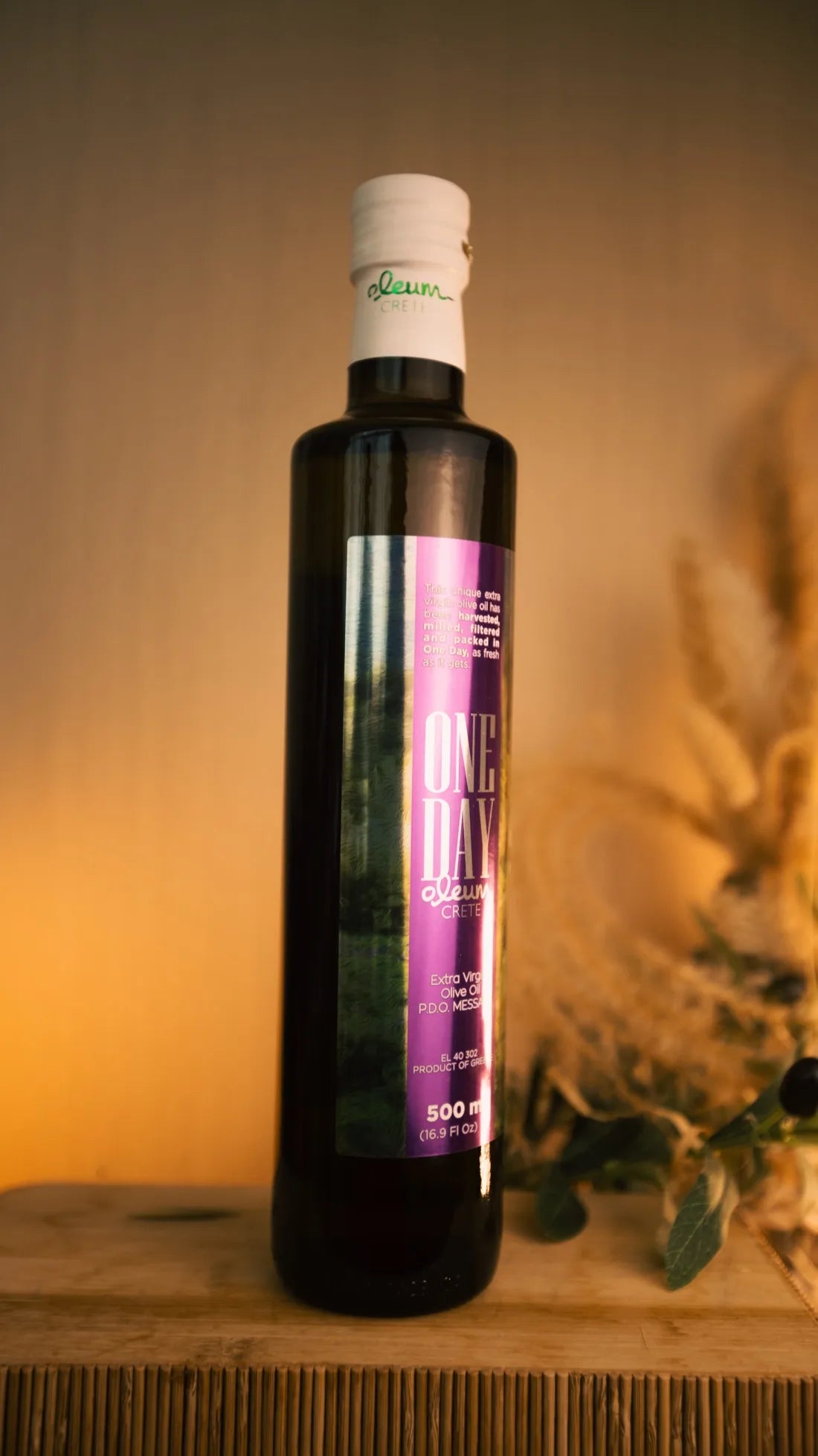
- A single-day harvest, the method behind our One Day Extra Virgin Olive Oil, limits the damage heat and time do to polyphenols and flavour, whatever the climate.
How Climate and Olive Oil Taste Are Linked, Long Before Harvest
Climate decides what an olive becomes before anyone picks it. Temperature sets how fast the fruit ripens. Rainfall sets how much water dilutes its oil and phenolic compounds. Altitude, sun and wind adjust both.
A label tells you the country and, if you are lucky, the variety. It rarely tells you what kind of summer the trees had. At Oleum Crete we press only Koroneiki from one estate on the Messara Plain, so we watch the relationship between climate and olive oil taste closely. No mill can correct it after the fact.
Heat and Ripening: Why Warmer Summers Mean Softer Oil
An olive turns from green to violet to black as it ripens. Along the way, oil builds up in the fruit while its bitter and pungent phenolic compounds decline. Heat speeds up the whole process. In a warm autumn, fruit can tip from green to fully ripe in a matter of weeks. Oil pressed from riper fruit is softer, rounder and more buttery, with less bitterness and less pepper at the back of the throat.
Ripe-fruit oils have their place. Heat does, however, shorten the window in which a grower can pick for a green, peppery style. If the harvest falls behind, the oil drifts towards mild whether anyone intends it or not.
Rainfall and Polyphenols: Why Dry Years Taste Sharper
Water stress concentrates flavour. In a dry year, trees produce smaller fruit with less water in the flesh. The phenolic compounds that give bitterness and pungency are present in higher concentration, so oils from dry seasons tend to taste sharper. You get more green leaf, more bitterness and a stronger catch in the throat.
A wet autumn does the opposite. Fruit swells and yield per tree can look generous, but flavour dilutes.
Too little water carries its own cost. Greece's 2025/26 production was forecast down 15% to around 210,000 tonnes, which the USDA attributes to a dry, warm summer, limited rainfall and olive fruit fly. Drought can sharpen flavour and shrink the crop in the same season.
Altitude and Wind: The Overlooked Variable
Hillside groves sit in cooler air, especially at night. Cooler nights slow ripening, which gives growers a longer window to pick fruit at the green, aromatic stage.
Wind matters too. A steady, dry wind keeps leaves and fruit free of the damp that encourages fungal disease. Hot wind during flowering, on the other hand, can cost a grower part of the crop.
Variety still sets the baseline. Koroneiki is a small-fruited Greek olive that is naturally rich in phenolic compounds. You can read more about Koroneiki's pepper, grass and throat-catch profile in our tasting guide. Climate decides how loudly that character speaks in any given year.
Crete's Messara Plain: Dry Summers, Mild Winters, Peppery Oil
The Messara Plain lies in south-central Crete. It is a broad valley between the Psiloritis massif and the Asterousia mountains, opening towards the Libyan Sea. Summers are long, hot and dry, and winters are mild, with most rain falling in the cooler months.
Messara is one of the largest agricultural zones on the island. It is known for its warmer climate and consistent olive yields, which contribute to fuller and more structured profiles.
The Kidonakis family has farmed here since 1983. Four generations on, every olive on the estate is still picked by hand. Every bottle we sell carries the PDO Messara designation, which ties the oil to this valley and no other.
Why Koroneiki Thrives in Messara's Microclimate
Koroneiki tolerates drought well. Its fruit is small, with a high proportion of skin and stone to flesh. Messara's dry summers keep that fruit compact and concentrated, and mild winters spare the trees frost damage.
In the glass, the result is green tomato, fresh-cut grass, artichoke and a clean peppery finish. The valley's warmth gives the oil its structure.
Climate is also part of what separates Crete from the rest of Greece. Cretan groves face hotter, drier summers than many mainland regions. We explain how Cretan olive oil differs from mainland Greek oil in more detail in our journal.
The Single-Day Harvest Advantage in a Hot Climate
Heat helps the fruit develop on the tree, then works against it once it is picked. Harvested olives keep respiring. In warm air they bruise, heat through and begin to ferment, and the phenolic compounds that carry bitterness and pepper start to break down.
One Greek study used Koroneiki from the same trees, tested across five harvest periods and a range of malaxation temperatures and times, to map how timing and processing change phenol levels. The point for any grower is that both when you pick and how you press shape what ends up in the bottle.
Our answer is simple. For the One Day range, olives are picked at dawn, then pressed and bottled within a day, before the heat of a Messara afternoon can work on them. The climate builds the flavour, and speed keeps it.
Italy's Wetter, Cooler Olive Regions: What Changes in the Oil
Italy grows olives from the northern lakes to Sicily, so "Italian olive oil" covers a wide spread of climates. In general, its central and northern regions see more rainfall and more temperature swings through autumn than Crete or southern Spain do.
That tends to produce oils with gentler bitterness and a softer, more herbal profile. It also puts pressure on growers to move quickly from tree to mill.
Tuscany vs Puglia: Two Climates, Two Styles
Tuscany's groves sit largely on hills, where cool autumns and the threat of early frost push many growers to pick early. Varieties such as Frantoio, Leccino and Moraiolo give oils that range from artichoke and almond to grassy and peppery. Fruit picked early has a fresh, green character.
Puglia, in the heel of Italy, is flatter and warmer, and produces a large share of the country's oil. Its varieties run from mild Ogliarola to the intensely bitter Coratina.
Puglia is not immune to drought. In the 2025/26 season, trees there entered autumn under considerable hydric stress from prolonged summer drought, causing unusual fruit drop. This happened even as national output was forecast to rebound to roughly 280,000 to 300,000 tonnes.
Rain, Disease Pressure and Why Speed to Press Matters
Damp weather invites trouble. Wet autumns encourage fungal disease on leaves and fruit, and they favour pests such as the olive fruit fly.
Damaged fruit oxidises faster after picking. If it sits in crates waiting for the mill, free acidity rises and fruity, green aromas fade. In wetter regions, the hours between tree and press often decide whether an oil is fine or flat.
Spain's Hotter, Drier Groves: Why Picual Tastes So Different
Spain dominates world olive oil. The EU accounts for around 60% of global production, and Spain alone represents about 45% of the global market and 65% of EU output. Most of that comes from the south, where summers are hot and rain is scarce.
Why Andalusia's Heat Suits High-Yield Varieties
Andalusia, and the province of Jaén in particular, is planted heavily with Picual, a vigorous, high-yielding variety. Picual oil is typically full-bodied and bitter, with notes of tomato leaf, fig leaf and green wood, and it stands up well to cooking. Irrigated, intensive plantings let growers harvest large volumes, often by machine.
The climate is a risk as well as an asset. Spain's 2025/26 harvest was estimated at about 1.37 million tonnes, broadly flat to down on the previous season. Prolonged summer heatwaves and a lack of autumn rain hit traditional, non-irrigated groves, and Andalusia's output was expected to fall by 5%.
The Trade-Off Between Volume and Freshness
Scale is both Spain's strength and its challenge. When a region harvests across a vast area, picking can stretch over weeks or months. Fruit picked late in a hot season is riper and softer, and fruit that waits for the mill loses freshness.
The best Spanish producers pick early and mill fast. Across a harvest that large and varied, though, the character in the bottle can shift a great deal from one lot to the next.
Greek, Italian and Spanish Climates Compared
| Region | Typical growing climate | Main varieties | Typical taste | Main climate risk |
|---|---|---|---|---|
| Crete, Messara Plain (Greece) | Long, hot, dry summers; mild winters; rain mostly in winter | Koroneiki | Green tomato, grass, artichoke, clean peppery finish, structured | Drought and olive fruit fly in dry years |
| Tuscany (Italy) | Hilly; cooler autumns; more rainfall; frost risk | Frantoio, Leccino, Moraiolo | Artichoke, almond, green herbs; peppery when picked early | Early frost, damp, fungal disease |
| Puglia (Italy) | Flatter and warmer than central Italy | Coratina, Ogliarola | From mild and almond-like to intensely bitter, by variety | Summer drought, fruit drop, pest pressure |
| Andalusia (Spain) | Very hot, dry summers; low rainfall; often irrigated | Picual, Hojiblanca, Arbequina | Full-bodied, bitter, tomato leaf, fig leaf | Heatwaves, drought, long harvests |
Climate explains much of the taste in each bottle, but not all of the price. Hand-harvesting, estate size and certification all play a part. We look at why Greek olive oil often costs more than Italian or Spanish oil in a separate guide.
What Climate Means for the Bottle You Choose
You cannot control the weather on a Cretan hillside or an Andalusian plain. You can, however, choose an oil whose origin and handling you can trace. That is the surest way to know what the climate did to it.
Why Single-Estate, Single-Day Oils Are More Predictable
Blended oils average out many climates, many varieties and many harvest dates. You might find a fine bottle, but you cannot tell why it tastes the way it does, or whether the next one will match.
A single-estate oil narrows the variables to one valley, one variety and one family's decisions about when to pick. Our oils are 100% Koroneiki from the Kidonakis estate, never blended. They carry PDO Messara, EU Organic and TÜV Austria certification, and have earned international taste awards, including NYIOOC, TerraOlivo, London IOOC and Great Taste.
Polyphenols tell the same story. Our Messara oils carry polyphenol levels that meet the EU-approved polyphenol health claim, a reflection of the dry Messara climate and the speed of our harvest.
Heat matters at your end too. Summer in the UAE is no kinder to olive oil than summer in Messara, so we ship it temperature-controlled to protect the flavour the climate built in the first place.
Matching an Oil's Intensity to How You'll Use It
- One Day Extra Virgin Olive Oil (500ml): picked and pressed within a day for a bright green-tomato, herb and pepper character. Use it raw, over tomatoes, labneh, grilled fish or warm bread.
- Organic Early Harvest Olive Oil (500ml): our most intense, high-polyphenol pressing, for those who want the full bitterness and throat-catch of green fruit.
- Organic Extra Virgin Olive Oil (750ml): our everyday PDO bottle for dressing, roasting and finishing.
- Collection Premium Organic Olive Oil (500ml): the black bottle, made for gifting to anyone who loves Mediterranean food.
- Extra Virgin Olive Oil 5L Tin: for busy home kitchens and catering, with the same single-estate oil in a larger format.
Frequently asked questions
Does a hotter climate always mean a more intense olive oil?
No. Heat speeds up ripening, and riper fruit gives softer, more buttery oil. Intensity comes from dry conditions combined with an early harvest, when the fruit is still green and rich in phenolic compounds. A hot climate only produces a peppery oil if the olives are picked and pressed before the heat ripens them too far.
Why do some years produce better olive oil than others?
Each season brings a different mix of rainfall, temperature and pest pressure. A dry year can concentrate flavour but also shrink the crop and encourage olive fruit fly. A wet autumn can raise yields while diluting taste and inviting disease. Growers who adjust their harvest timing to the season protect quality best.
Can climate change affect how long an olive harvest lasts?
Yes. Hotter autumns ripen fruit faster, which shortens the window for picking at the green, aromatic stage. In large regions where harvest already stretches over weeks, that pressure grows, and late-picked fruit becomes riper and softer. A single-day harvest sidesteps much of this by picking and pressing each lot quickly.
Is Greek olive oil always more peppery than Italian or Spanish oil?
No. Variety and harvest timing matter as much as country. Koroneiki from a dry region like Messara is naturally peppery, but Italy's Coratina and Spain's Picual can be just as bitter or pungent. A late-harvest Greek oil from ripe fruit can be quite mild.
Does altitude make more difference than rainfall to olive oil taste?
It depends on the grove. Altitude brings cooler nights that slow ripening and preserve green aromas, while rainfall directly changes how concentrated the fruit's phenolic compounds are. In most growing areas, a very dry or very wet year shifts flavour more noticeably than a few hundred metres of elevation.
Taste the difference a single-day Messara harvest makes. Shop the Collection at Oleum Crete and bring home oil pressed within hours of picking.
More from the Journal
All entriesHow Olive Oil Purity Is Lab Tested in the UAE
Supermarket shelves in the UAE are full of oil labelled 'extra virgin', but the label alone proves nothing. We look at how purity is actually verified, from chemical lab tests to sensory panels, and where PDO certification fits in.

Olive Oil for Skin and Hair: What Works, What to Skip
Olive oil earns its place on the Messara table because of oleic acid and polyphenols, not folklore. On skin and hair the picture is mixed: some uses hold up, others don't, and some skin types should leave the bottle in the kitchen. Oleum Crete separates the two before pointing to the oil worth using

Koroneiki vs Other Olives: Why It Wins on Crete
Koroneiki isn't the only olive variety that makes extra virgin oil, but on Crete's Messara Plain it outperforms Picual, Coratina, Leccino and Arbequina on acidity, polyphenol content and resilience to a hot, dry climate. Here's what the comparison actually shows.
