
Is Koroneiki Olive Oil Good for Keto or Low-Carb Diets?
Koroneiki olive oil is one of the cleanest fats a keto or low-carb diet can use: zero carbohydrates, almost entirely monounsaturated fat, and in Oleum Crete's case, polyphenol levels that go well beyond what a supermarket bottle offers. Here's what the macros and the science actually say.

In this article8 sections
Key takeaways
- Koroneiki extra virgin olive oil has zero carbohydrate and zero sugar per serving, so it fits strict keto and low-carb eating.
- A tablespoon (about 13.5g) gives roughly 119 calories, almost all from monounsaturated fat. That suits the high-fat, moderate-protein shape of a keto plate.
- Early harvest Koroneiki can carry over 800mg/kg of polyphenols, well above the threshold the EU sets for its approved health claim on blood lipids (Regulation 432/2012).
- Olive oil does break a strict water fast because it contains calories and fat. It can still fit within an eating window on an intermittent fasting plan.
- Heat changes the flavour of the oil far more than its keto suitability. Within normal cooking ranges, the fat and carbohydrate content stay the same.
Is Koroneiki Olive Oil Keto-Friendly?
Yes. For anyone weighing up Koroneiki olive oil for keto, the rules are easy to meet: the oil has no carbohydrate, no sugar and no protein, and most of its fat is monounsaturated. Nothing in it counts against a daily carb limit, and nearly every calorie comes from the macronutrient keto is built on.
At Oleum Crete we work with 100% Koroneiki oil from a single estate in Crete, pressed close to harvest to keep the flavour and polyphenols intact. Speed to the press doesn't change the macros, because all extra virgin olive oil is pure fat. What it changes is everything else in the bottle: the green, peppery freshness, and the polyphenols that fade as an oil ages.
So the short answer is that any genuine Koroneiki olive oil keto diet works for your carb count. The longer answer, below, is why the type of fat and the freshness of the oil matter more once fat makes up most of your plate.
The Macros Behind Koroneiki Extra Virgin Olive Oil
If you track macros, olive oil is one of the simplest foods to log. It has one macronutrient and no carbohydrate.
Calories and Fat Per Tablespoon
A standard tablespoon (15ml, about 13.5g) of extra virgin olive oil contains 119 calories, 0g protein, 0g carbohydrate and 13.5g of fat. Scaled up, that comes to 884 calories per 100g, with 0g net carbs.
The fat inside that tablespoon breaks down roughly as follows, according to a full nutrition breakdown of extra virgin olive oil:
| Fat type | Per tablespoon | Share of total fat |
|---|---|---|
| Monounsaturated (mainly oleic acid) | 9.9g | 73% |
| Saturated (mainly palmitic acid) | 1.9g | 14% |
| Polyunsaturated | 1.4g | 10% |
For a keto dieter, that monounsaturated majority is the key figure. It adds fat to your day without leaning heavily on saturated fat, unlike most other fats in a keto kitchen.
Why Zero Carbs Doesn't Mean Zero Calories
Ketogenic diets are commonly described as allowing around 20 to 50g of net carbs a day. Olive oil uses none of that allowance, but it does count towards your energy intake. Two generous tablespoons over a salad come to about 238 calories, roughly the same as a small meal.
This is the trap many low-carb eaters fall into: they treat carb-free foods as free. If your goal involves weight, measure your oil with a spoon rather than pouring it, and let it do real work in the dish rather than disappearing into it.
Why Polyphenol Levels Matter More on a Low-Carb Diet
On keto, fat often supplies most of the day's calories, which makes the choice of fat a bigger decision than it is on a standard diet. Every fat delivers energy, but not every fat brings anything else with it. High-polyphenol olive oil is one of the few that does, and it is the only fat with an approved EU health claim attached to its polyphenols.
The EU Health Claim and What It Permits
Under Commission Regulation (EU) No 432/2012, the authorised wording is: "Olive oil polyphenols contribute to the protection of blood lipids from oxidative stress."
The claim comes with strict conditions. It may only be used for olive oil containing at least 5mg of hydroxytyrosol and its derivatives (such as the oleuropein complex and tyrosol) per 20g of oil. The consumer must also be told that the beneficial effect is obtained with a daily intake of 20g of olive oil. Researchers estimate that this works out at roughly above 250mg/kg of these phenols, and the levels must hold through the oil's shelf life.
That is the full extent of the claim. It does not promise weight loss or ketosis, and it says nothing about any disease. If you have a heart condition, high cholesterol or a medical reason for following keto, talk to your doctor or a registered dietitian about how fat should fit your plan.
How Early Harvest Raises Polyphenol Content
Polyphenols are highest in olives picked green, before they ripen and soften. Independent analyses of Koroneiki put early harvest oil at 800 to 1,400+ mg/kg, mid-season at 600 to 900 mg/kg and late harvest at 350 to 600 mg/kg.
You can taste the difference. Early harvest oil catches at the back of the throat with a peppery sting, and it carries a green bitterness that recalls raw artichoke and cut grass. Riper oils are rounder and more buttery, but quieter.
Freshness protects that figure too: polyphenols decline with time, light and heat, so an oil pressed and bottled quickly after harvest keeps more of what it started with than one that has sat in a tank for months.
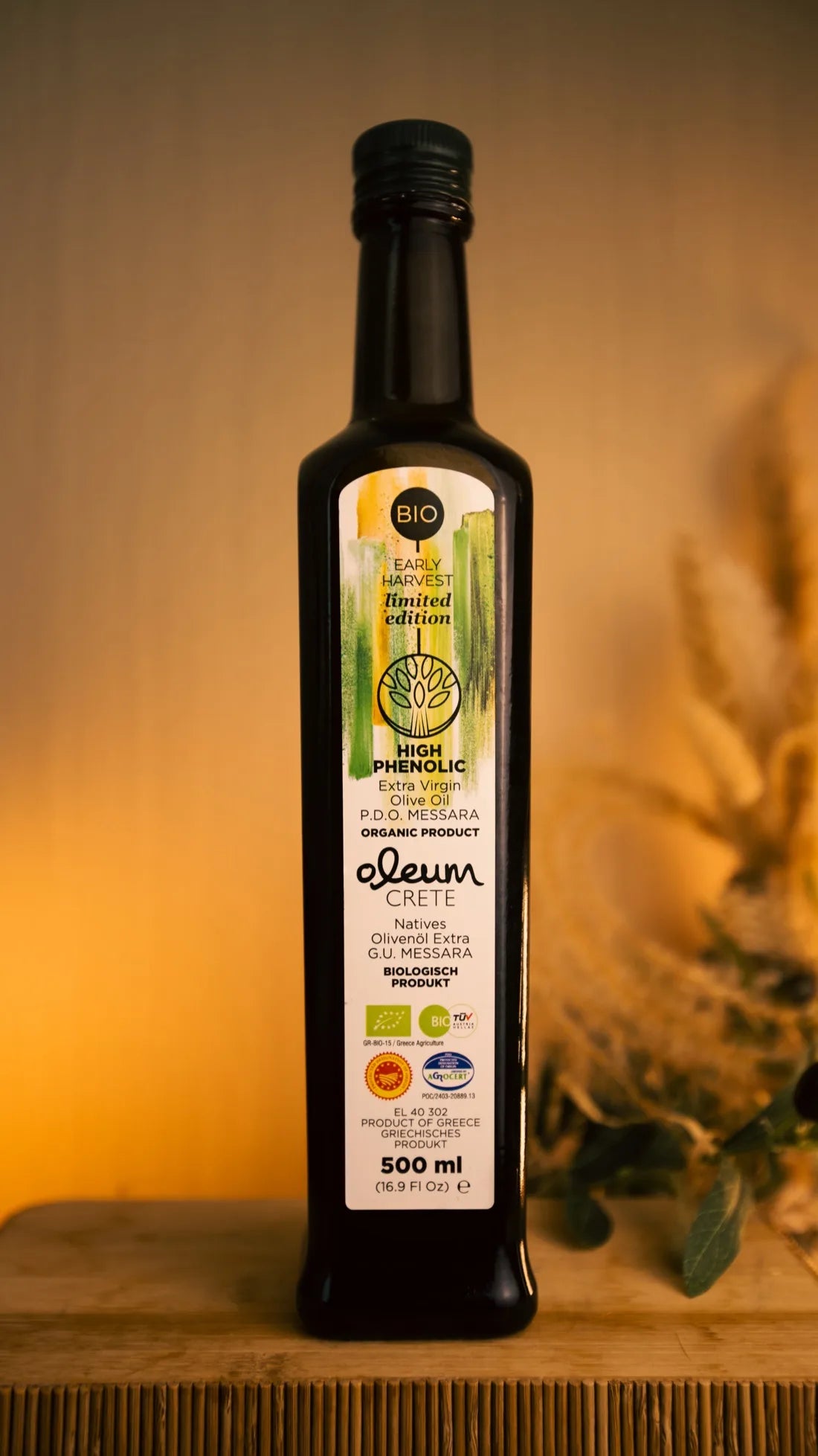
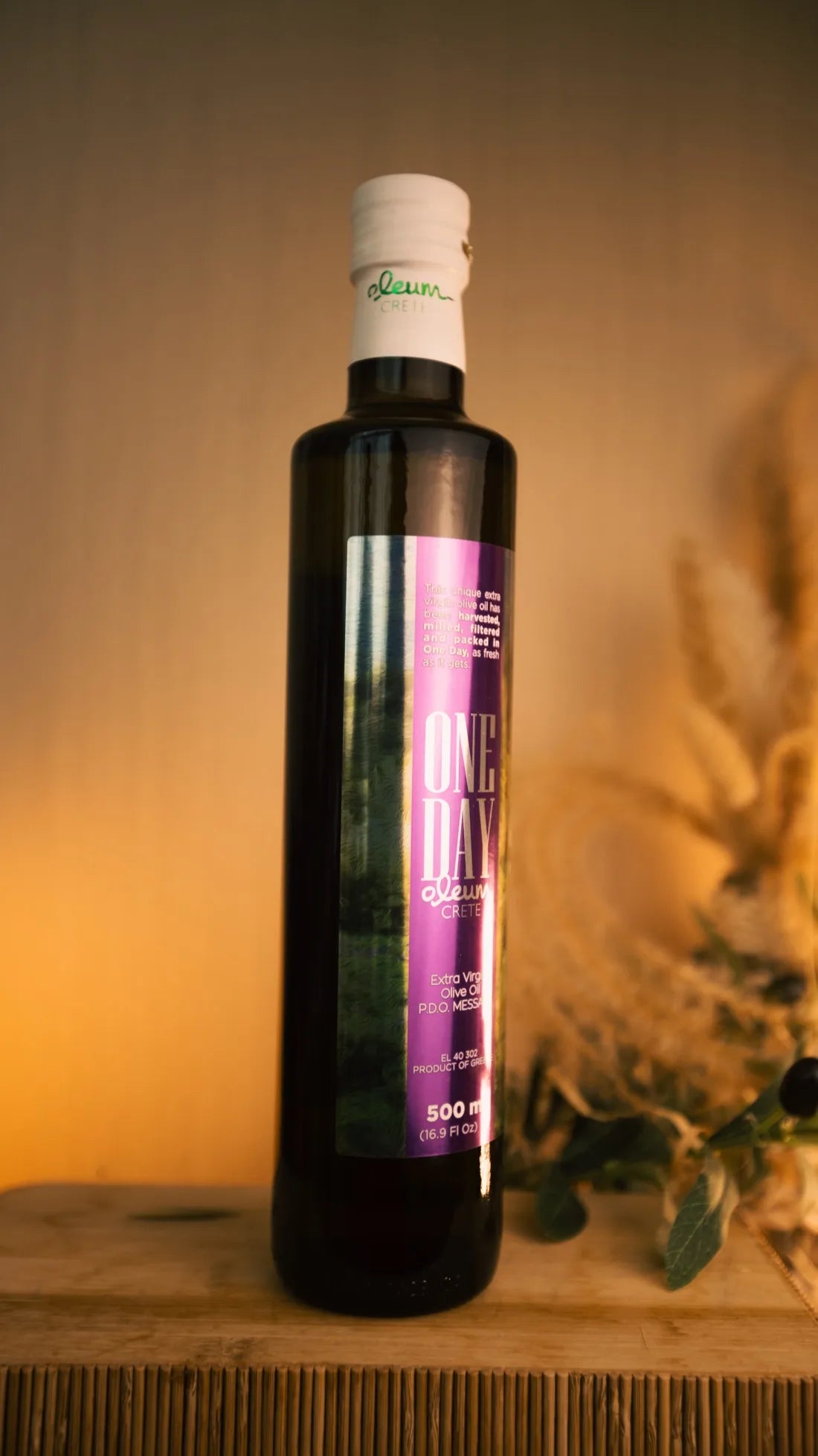
Oleum Crete's Organic Early Harvest Olive Oil and One Day Extra Virgin Olive Oil both measure over 800mg/kg polyphenols, well clear of the roughly 250mg/kg threshold research ties to the EU's olive oil health claim.
Koroneiki Oil Compared to Other Keto Fats
Most keto kitchens rotate between a handful of fats. All of them are carb-free or close to it, so the real differences lie in fat type, polyphenols and how each one behaves in the pan.
| Fat | Carbohydrate | Main fat type | Polyphenols | Flavour | Best keto use |
|---|---|---|---|---|---|
| Koroneiki extra virgin olive oil | 0g | Monounsaturated (about 73%) | High, especially early harvest | Green, peppery, fruity | Dressings, finishing, low to medium heat cooking |
| Coconut oil | 0g | Saturated (about 82%) | Minimal | Sweet, nutty or neutral | Baking, fat-boosted drinks |
On calories, the oils are almost even. Coconut oil comes in at 121 calories per tablespoon against olive oil's 119, but it is around 82% saturated fat with minimal micronutrients. Extra virgin olive oil is mainly monounsaturated and rich in polyphenols.
In the olive oil versus coconut oil debate for keto, both keep you in ketosis, but only one adds polyphenols to your plate. Against butter or ghee, olive oil simply does a different job: those dairy fats bring richness to a sauce or a sear, while olive oil adds variety to a diet that can easily become dominated by saturated fat. Many keto cooks keep more than one fat on hand and use each for what it does best.
Does Olive Oil Break a Fast?
Keto and intermittent fasting often go together, so this question comes up a lot. The answer depends on what kind of fast you mean.
Why Fat Technically Ends a Strict Fast
A strict fast, such as a water fast, means taking in no calories at all. A tablespoon of olive oil carries about 119 calories, all from fat, so by that definition it ends the fast. There is no way around the arithmetic.
Where Olive Oil Fits in Fasting Windows
Most intermittent fasting plans are built around eating windows rather than total abstinence. Olive oil fits naturally into the eating window and can be part of a low-carb first meal.
Some people also talk about "fat fasting", taking small amounts of fat during a fasting period. This is general information, not a recommendation, and whether any variation on fasting suits you depends on your own health and goals. Fasting is not appropriate for everyone, including people with diabetes, a history of disordered eating, or anyone who is pregnant. Speak to your doctor before changing how you fast.
Using Koroneiki Oil in a Low-Carb Kitchen
A keto diet can feel repetitive: eggs, meat, leafy greens, cheese. A well-chosen oil gives those plates flavour as well as fat.
Finishing Oil for Salads and Vegetables
Raw use is where Koroneiki shows its full character and keeps all of its polyphenols. Some low-carb pairings to try:
- A thread over grilled halloumi or feta with dried oregano
- Spooned over roasted cauliflower, courgette or aubergine just before serving
- Whisked with lemon and garlic as a dressing for rocket and cucumber
- Drizzled over a soft-boiled egg or a bowl of labneh
- Finished over grilled fish or lamb, where the peppery note cuts through the richness
These are the moments to use your freshest, greenest bottle. A spoonful of oil on a plain plate of vegetables changes the whole meal.
Cooking With It Without Losing the Point
Extra virgin olive oil has a practical heat range of about 350 to 410°F, roughly 177 to 210°C, and is best suited to salads and low to medium heat. Within that range, heating does not change the macros. The fat and carbohydrate figures in your tracking app stay the same, so the oil remains just as keto-compatible.
What heat does change is flavour. Some of the delicate green aromas and part of the polyphenol content are lost in the pan. A sensible approach is to cook with an everyday bottle and finish with a fresher, more intense one.
Choosing an Oleum Crete Oil for a Low-Carb Kitchen
Every oil in the Oleum Crete range is single-estate, single-variety Koroneiki, with no blending, so the keto arithmetic is the same bottle to bottle: zero carbs, almost entirely fat. The choice between them comes down to how green and peppery you want your oil, and whether you plan to use it mainly for cooking or for finishing a plate at the table.
- For finishing, salads and raw drizzling, the Organic Early Harvest Olive Oil carries the highest polyphenol levels and the sharpest, peppery bite.
- For everyday cooking, the Organic Extra Virgin Olive Oil (750ml) is the practical, PDO-certified choice for pans, roasting and daily meals.
- For a single-day-harvest bottle to keep on the table, the One Day Extra Virgin Olive Oil captures the flavour and polyphenols at their peak.
- For gifting to a Mediterranean food lover, the Collection Premium Organic Olive Oil comes in a presentation black bottle.
- For a kitchen or small catering operation going through oil quickly, the Extra Virgin Olive Oil 5L Tin covers cooking in bulk.
Related: What the research shows on Koroneiki oil and heart health · How to cook with Koroneiki oil without losing flavour · One Day Extra Virgin Olive Oil
Frequently asked questions
How many net carbs are in olive oil?
None. Extra virgin olive oil contains 0g of carbohydrate, 0g of fibre and 0g of sugar, so its net carb count is zero per tablespoon and per 100g. It is pure fat, which is why it fits within even the strictest keto carb limits.
Can you drink olive oil straight on a keto diet?
Some people take a spoonful on its own, and it will not affect your carb count. Remember that each tablespoon adds about 119 calories, so it counts towards your energy intake. If you are adding oil to reach a fat target for a medical reason, agree the amount with your doctor or dietitian.
Is extra virgin olive oil better than coconut oil for keto?
Both have zero carbs and similar calories, so either keeps you within keto limits. The difference lies in the fat itself. Extra virgin olive oil is mainly monounsaturated and contains polyphenols, while coconut oil is around 82% saturated fat with minimal micronutrients. Many keto cooks use olive oil as their main fat and coconut oil for specific recipes.
What's the best olive oil for intermittent fasting?
Any olive oil will end a strict fast, because it contains calories. Within your eating window, a fresh, high-polyphenol extra virgin oil adds the most flavour and character to a low-carb meal.
Does heating olive oil change its fat content?
Within normal cooking temperatures, no. The fat, calorie and carbohydrate content stay the same whether the oil is raw or heated. What heat does change is flavour and some of the polyphenol content, which is why raw use shows a fine oil at its best.
Whether you track every gram or simply cook low-carb, a fresh, single-estate oil makes the fat on your plate work harder. Shop the Oleum Crete collection for a Koroneiki oil that fits a keto or low-carb kitchen without compromise.
More from the Journal
All entriesKoroneiki Olive Oil and Heart Health: What Studies Show
Koroneiki olive oil carries some of the highest polyphenol counts of any olive variety, and that matters for heart health. We look at what the research actually shows, what the EU health claim permits us to say, and how much oil delivers it.

Olive Oil Acidity Level: How to Check Before You Buy
Acidity is the one number most shoppers skip past on an olive oil label, yet it decides whether a bottle can legally call itself extra virgin. Here is how to find it, read it and check it against the PDO Messara standard before you buy.

How Much Olive Oil Should a Family of Four Buy Monthly?
Most households either run out of olive oil mid-month or let a bottle oxidise on the shelf. Here is a concrete monthly estimate for a family of four, broken down by cooking, salads and daily shots, mapped straight onto Oleum Crete's 500ml, 750ml and 5L sizes.
