
Olive Oil Drinking Shots: Raw, Chilled or With Lemon?
Raw at room temperature is the method that protects the polyphenols and the taste. Chilling mutes the pepper and the bitterness; lemon can mask a poor oil rather than improve a good one. Here is what changes each way, and how to take your daily shot properly.

In this article8 sections
Key takeaways
- Raw, room-temperature oil keeps the peppery catch at the back of the throat, the clearest sensory sign of active polyphenols. Chilling the shot or adding citrus mutes that signal. It does not remove the compounds.
- Lemon juice does not destroy polyphenols. It does change the taste enough for a lower-grade oil to hide behind it, while a genuine single-estate oil needs no disguise.
- No clinical trial has tested the drinking shot itself. The research figures in circulation describe daily intakes within a diet or dosing used in specific studies, not a single-shot standard, and taking oil on an empty stomach is ritual rather than requirement.
- Refrigerating the bottle between shots protects freshness. Refrigerating the shot itself is a taste choice, not a health requirement.
How Should You Drink an Olive Oil Shot? The Short Answer
If you want to know how to drink an olive oil shot, the traditional answer is the simplest: raw, at room temperature, on its own. Pour a modest measure into a small glass or spoon, sip it slowly and let it rest on the tongue before you swallow. The bitterness and the peppery sting in the throat are the oil showing you what it holds.
At Oleum Crete, we suggest tasting any new bottle this way first. Chilled shots and lemon shots are both fine if you prefer them, but each one changes what you taste. Lemon in particular can make a tired oil seem acceptable. Start neat, judge the oil honestly, then adjust to your palate.
The rest of this guide explains what each method changes, what it leaves alone, and how to build the habit without wasting good oil.
Raw at Room Temperature: Why This Is the Traditional Method
A raw olive oil shot is how oil has always been judged on Crete. Millers, growers and professional tasting panels taste extra virgin oil neat. They warm the glass in the palm, breathe in the aroma, sip, then draw air across the tongue to open the flavour. Nothing is added, because anything added would get in the way of the judgement.
Raw oil also avoids heat entirely. Olive oil polyphenols are heat-sensitive, which is one reason the raw shot format has become popular: it keeps the oil uncooked. A spoonful drizzled over hot food is still good oil. A shot simply guarantees nothing has been cooked off.
The Peppery Throat Catch as a Freshness Signal
That tickle at the back of the throat, sometimes strong enough to make you cough, comes from phenolic compounds in fresh extra virgin oil. In formal grading, bitterness and pungency count as positive attributes, not faults. A peppery olive oil is usually a young, well-made one.
The intensity varies enormously from bottle to bottle. One study of extra virgin oils found total phenolic content ranging from 0.02 to 600 mg/kg, depending on cultivar and harvest timing. An oil that slides down like butter with no catch at all has either very few polyphenols to begin with, or has lost them to age, heat or light.
Koroneiki, the single variety we press on the Messara Plain, is known for a vivid, green style: cut grass, green tomato, artichoke leaf and a clean, peppery finish. Taken raw, those notes arrive intact.
When Raw Oil Tastes Too Intense
A fresh, young oil can be a shock the first time. These steps make it easier without masking the oil:
- Take a smaller sip and let it coat the tongue before swallowing, rather than tipping it straight back.
- Breathe out through the nose after swallowing. It softens the sting.
- Follow with a sip of water or a bite of plain bread.
- Try the shot with breakfast rather than first thing.
Most people find the bitterness becomes pleasant once they know what it signals.
Which Oleum Crete Oil Suits a Drinking Shot
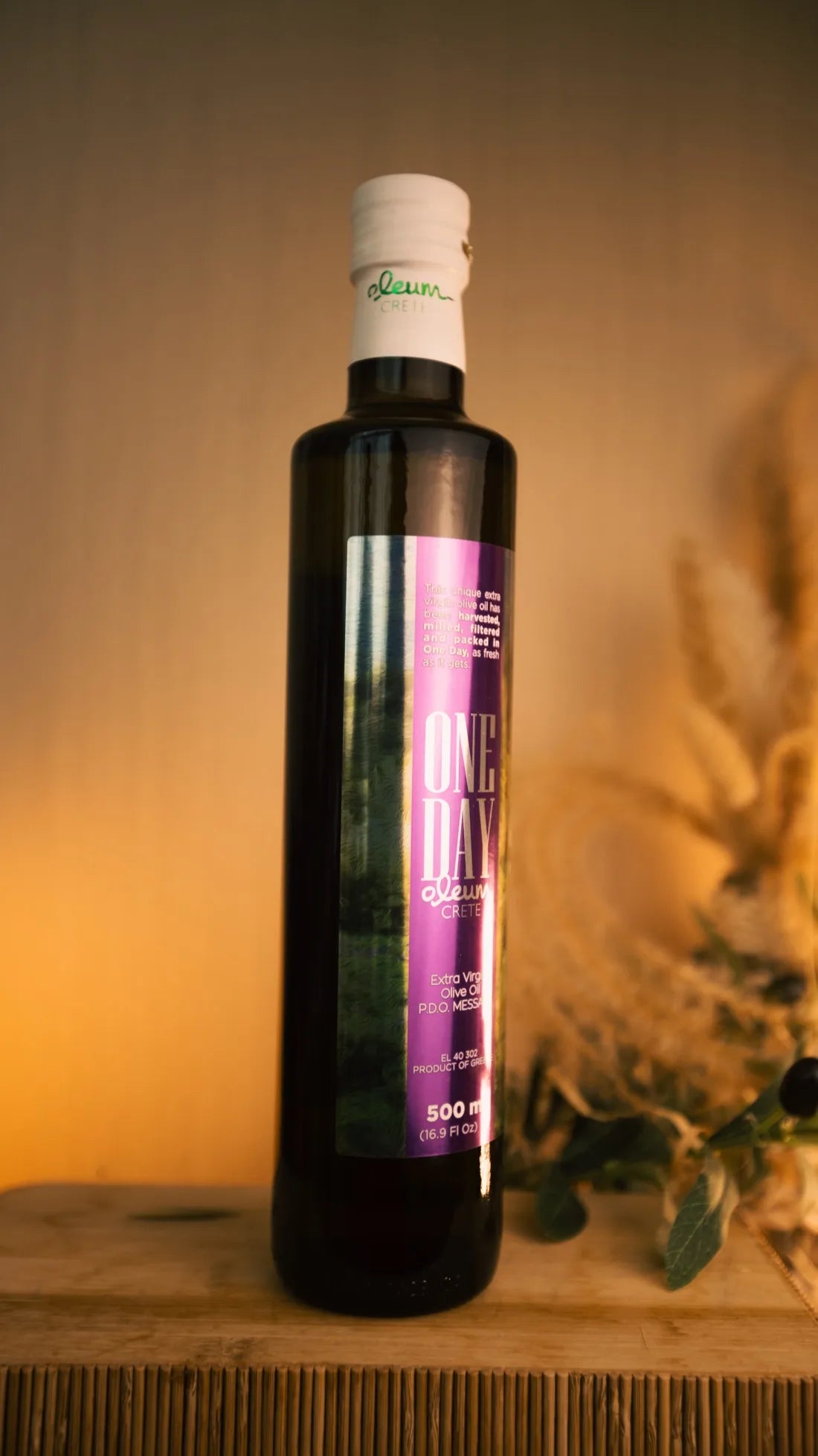
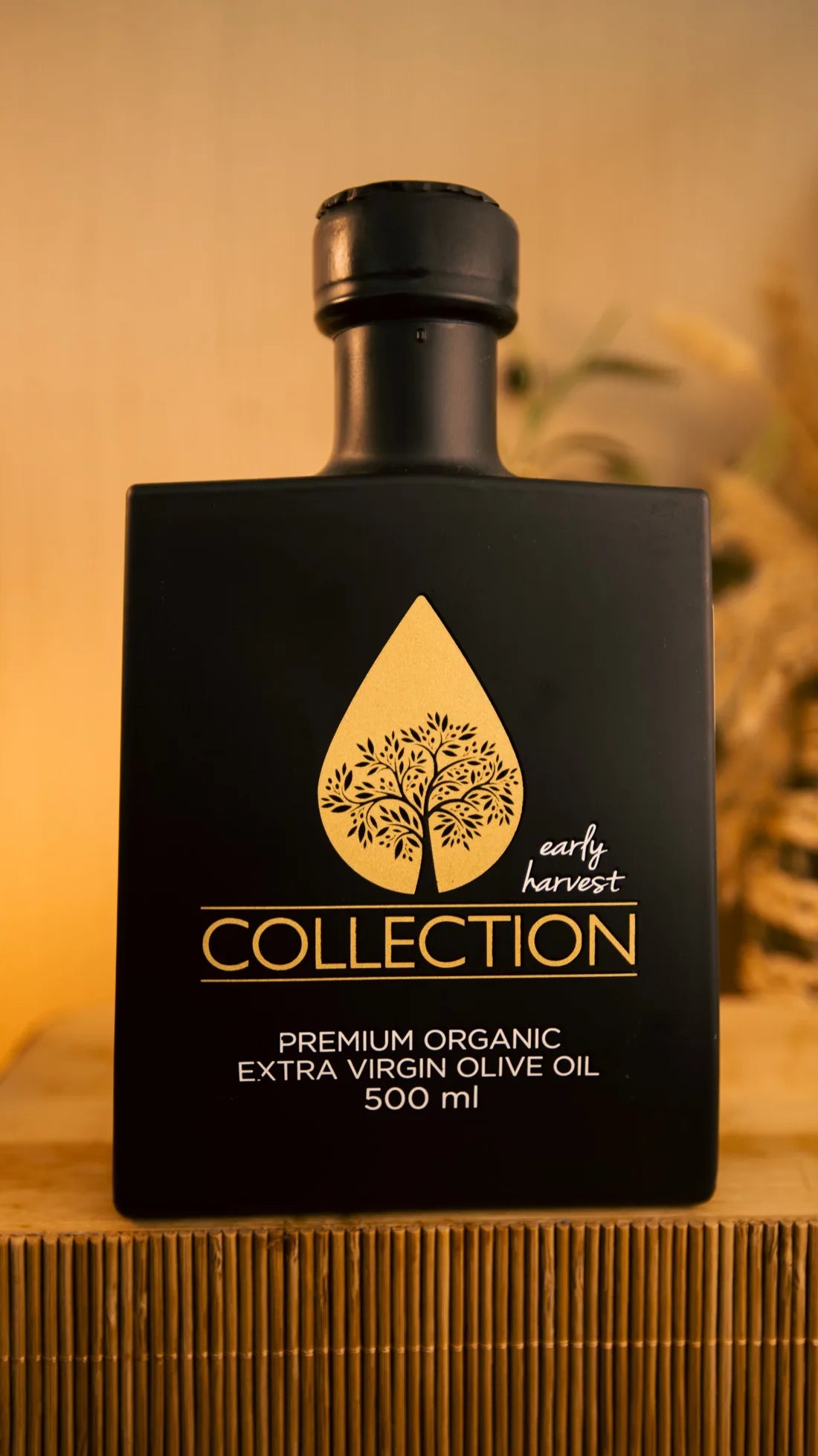
Not every bottle in a range is meant for drinking neat, but ours are built for it. The One Day Extra Virgin Olive Oil is pressed and bottled within a day of harvest, so it carries the freshest, most intense flavour and the clearest throat catch, a good choice if you want the full raw experience. The Organic Early Harvest Olive Oil is picked earlier in the season and made for higher polyphenol content, which suits anyone choosing a shot specifically for its phenolic compounds. Either works well on its own; try both and see which style you prefer before settling into a routine.
Chilled From the Fridge: Does Cold Change the Taste or the Polyphenols?
A chilled olive oil shot is popular in warm climates, and in the UAE the appeal is obvious. Cold does change the experience in the glass. It does not change the chemistry in the way people sometimes fear.
What Cold Does to Flavour
Cold oil thickens. In the fridge it may turn cloudy or form waxy flecks as some natural components firm up. This is harmless and reverses once the oil warms.
Cold also mutes flavour. Aroma compounds escape the glass less readily, so the grassy, herbal top notes fade. Bitterness and pungency feel softer too. For a beginner, that can be a relief. For anyone who wants to judge an oil's freshness, it hides the very signals worth noticing.
Do not rely on the old "fridge test" to check whether an oil is genuine. How oil behaves in the cold depends on its composition and the temperature, and it says little about authenticity or quality.
What Cold Does Not Do to Polyphenols
Cold does not break polyphenols down. Heat, light and oxygen are what degrade them over time. A chilled shot from a fresh bottle carries the same compounds as the same oil poured at room temperature. You simply feel less of the throat catch.
So the choice between raw and chilled is about taste. If chilling the shot is what makes a daily habit stick, chill it.
With Lemon or Other Additions: Help or Disguise?
The olive oil with lemon shot has spread widely as a morning ritual. Lemon is a pleasant pairing, as any Cretan salad shows. It is worth being clear about what it adds and what it hides.
What Lemon Changes in the Glass
Acidity brightens the oil, cuts the sense of fattiness and covers much of the bitterness. It makes the shot easier to drink.
Nutritionally, the addition is modest. A tablespoon of lemon juice provides only around 6% of the 75mg of vitamin C needed daily. Lemon does not destroy the oil's polyphenols, but it does not multiply their effect either. No clinical trial has tested the olive oil and lemon shot as a morning ritual. Any benefit comes from the oil and the lemon separately, not from combining them.
Why a Genuine Single-Estate Oil Rarely Needs It
Lemon covers faults as well as bitterness. An oil that is flat, stale or slightly rancid can taste acceptable under a squeeze of citrus. That is why lemon shots suit lower-grade oil: they make it hard to notice what is missing.
A single-estate, single-variety oil from one harvest has nothing to hide. Picked by hand on the Kidonakis family estate on the Messara Plain and certified PDO Messara, our oil is built to be tasted neat. If you enjoy lemon, add it. Taste the oil neat first, though, so you know what you are paying for.
Raw vs Chilled vs With Lemon: A Side-by-Side Comparison
For anyone weighing raw versus chilled olive oil, or wondering whether lemon is worth adding, this table sets the three methods side by side.
| Method | Taste in the glass | Polyphenol experience | Shows the oil's quality? | Best for |
|---|---|---|---|---|
| Raw, room temperature | Full aroma, clear bitterness, strong peppery finish | Throat catch fully perceptible | Yes, nothing is masked | Judging a new bottle; those who enjoy robust oil |
| Chilled shot | Thicker, muted aroma, softer bitterness | Compounds unchanged, sensation reduced | Partly, top notes are dulled | Beginners; hot days; building a habit |
| With lemon | Bright, sharp, bitterness largely covered | Compounds unchanged, sensation largely masked | No, faults can hide behind the acidity | Those who dislike bitterness; variety in a routine |
The polyphenols are the same in all three. What changes is how much of the oil you can taste.
Choosing the Right Oil for a Drinking Shot
The best olive oil for a drinking shot is one you would happily taste on its own. That narrows the field quickly. Look for these points on the label:
- A single origin and, ideally, a protected designation such as PDO.
- A single variety, not a blend of unnamed oils.
- A harvest date, not only a best-before date.
- A stated polyphenol figure, if high-polyphenol content matters to you.
- Dark glass or a tin, which protects the oil from light.
Research trials that study polyphenol effects have used specific oils, for example 320 mg/kg versus 86 mg/kg, to compare high- and low-polyphenol oils under controlled study conditions. Those figures describe the dosing used in that particular trial, not a shopping benchmark. When buying, it is more useful simply to check that a label states a polyphenol figure at all, alongside the certification, origin and harvest date that back it up. Our Koroneiki oil is single-estate, PDO Messara certified, and carries a stated harvest date, pressed on the Messara Plain.
If a measured polyphenol level and an EU health claim matter to you, look for oils that state they meet the threshold set out in Regulation 432/2012: at least 5 mg of hydroxytyrosol and its derivatives per 20 g of olive oil. The claim itself reads exactly: "Olive oil polyphenols contribute to the protection of blood lipids from oxidative stress." It says nothing beyond that, and neither do we.
How to Take Your Daily Shot Without Wasting the Oil
A good daily olive oil shot routine is simple. Here is the sequence.
- Store the bottle somewhere cool and dark, or in the fridge.
- If refrigerated, take it out a few minutes early so the oil flows and loses any cloudiness. Skip this if you prefer it chilled.
- Pour a modest measure into a small glass or spoon. Do not pour back any excess.
- Taste it neat first. Add lemon only if you choose to.
- Close the bottle straight away. Oxygen is the oil's slow enemy.
- Use what remains in cooking and dressings, so the bottle is finished while fresh.
The Measure and the Timing
There is no officially set shot size. Research quotes daily intakes, not single shots. Mediterranean-diet studies commonly cite 25 to 30 g of extra virgin olive oil a day as the main source of fat in the diet. One controlled trial gave participants 60 ml a day for three weeks under study conditions, comparing a high-polyphenol oil against a low-polyphenol one. Neither figure is a recommendation for you personally.
A shot is best counted as part of the olive oil you already eat, not on top of it. Olive oil is calorie-dense. If you have a medical condition, take medication or are watching your intake, ask your doctor or a registered dietitian first.
As for timing, there is no evidence that taking the oil on an empty stomach changes anything. Morning is popular because it is easy to remember.
Storing the Bottle Between Shots
UAE heat is hard on olive oil. A shelf near the hob, a sunny window or a hot car will age a bottle quickly. Keeping it in the fridge between shots slows that decline, and any clouding clears at room temperature.
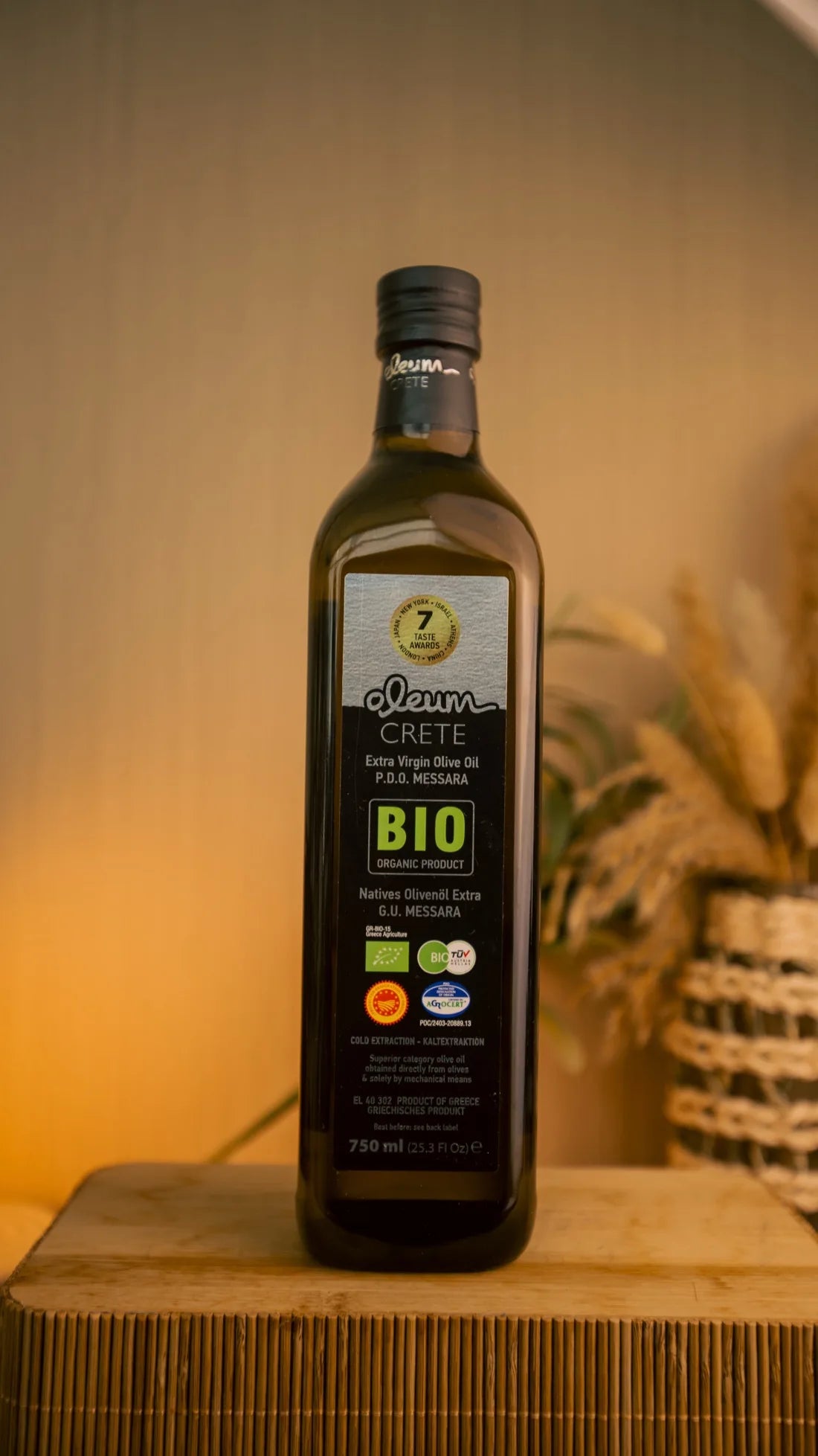
Related: Collection Premium Organic Olive Oil · Organic Extra Virgin Olive Oil 750ml · How much olive oil to drink daily
Frequently asked questions
Can you drink olive oil on an empty stomach?
Most people can. There is no evidence that an empty stomach improves the effect, so timing is ritual rather than requirement. If neat oil first thing unsettles your stomach, take it with breakfast instead. Anyone with a digestive condition should check with their doctor.
Does drinking olive oil raw taste too strong for beginners?
A fresh, well-made oil can be intense at first, with real bitterness and a peppery sting that may make you cough. Start with a smaller sip, let it coat the tongue and follow with water or bread. A chilled shot is softer if you need an easier start.
How much olive oil should I drink as a shot each day?
There is no official shot size. Mediterranean-diet research cites 25 to 30 g of extra virgin olive oil a day as the main dietary fat, and that is total daily intake, not one shot. Count your shot within the oil you already eat, and ask a doctor or dietitian if you are unsure.
Can lemon juice reduce olive oil's polyphenol content?
No. Lemon does not destroy the polyphenols in your shot. It masks the bitterness and peppery catch that let you taste them. That masking can also hide a stale or low-grade oil.
Is it better to take the shot in the morning or evening?
There is no evidence that one time of day works better. Choose whichever you will keep up consistently. Many people take it in the morning simply because a routine is easier to remember.
Which Oleum Crete oil is best for drinking as a shot?
The One Day Extra Virgin Olive Oil and the Organic Early Harvest Olive Oil are the two in our range best suited to drinking neat. The One Day oil is bottled within a day of harvest for maximum freshness, while the Early Harvest oil is picked earlier in the season for higher polyphenol content. Both are 100% single-variety Koroneiki from the Kidonakis family estate.
Ready to take your shot seriously? Shop the Collection at Oleum Crete and choose the single-estate Cretan oil that suits your routine.
More from the Journal
All entriesKoroneiki Olive Oil and Heart Health: What Studies Show
Koroneiki olive oil carries some of the highest polyphenol counts of any olive variety, and that matters for heart health. We look at what the research actually shows, what the EU health claim permits us to say, and how much oil delivers it.

Olive Oil Acidity Level: How to Check Before You Buy
Acidity is the one number most shoppers skip past on an olive oil label, yet it decides whether a bottle can legally call itself extra virgin. Here is how to find it, read it and check it against the PDO Messara standard before you buy.

How Much Olive Oil Should a Family of Four Buy Monthly?
Most households either run out of olive oil mid-month or let a bottle oxidise on the shelf. Here is a concrete monthly estimate for a family of four, broken down by cooking, salads and daily shots, mapped straight onto Oleum Crete's 500ml, 750ml and 5L sizes.
