
How Much Olive Oil Should You Drink Daily? A Dosage Guide
The EU's health claim for olive polyphenols sets a clear daily amount: 20g, roughly two tablespoons, of oil rich enough in polyphenols to qualify. Here's how to size your own shot, when to take it, and which Oleum Crete bottle gets you there without guesswork.

In this article7 sections
Key takeaways
- The EU health claim for olive oil polyphenols is tied to a daily intake of 20g of olive oil, roughly one and a half tablespoons. It only applies to oils supplying at least 5mg of hydroxytyrosol and its derivatives per 20g.
- A daily shot of 15 to 30ml, taken once a day, is the practical range most nutrition guidance points to.
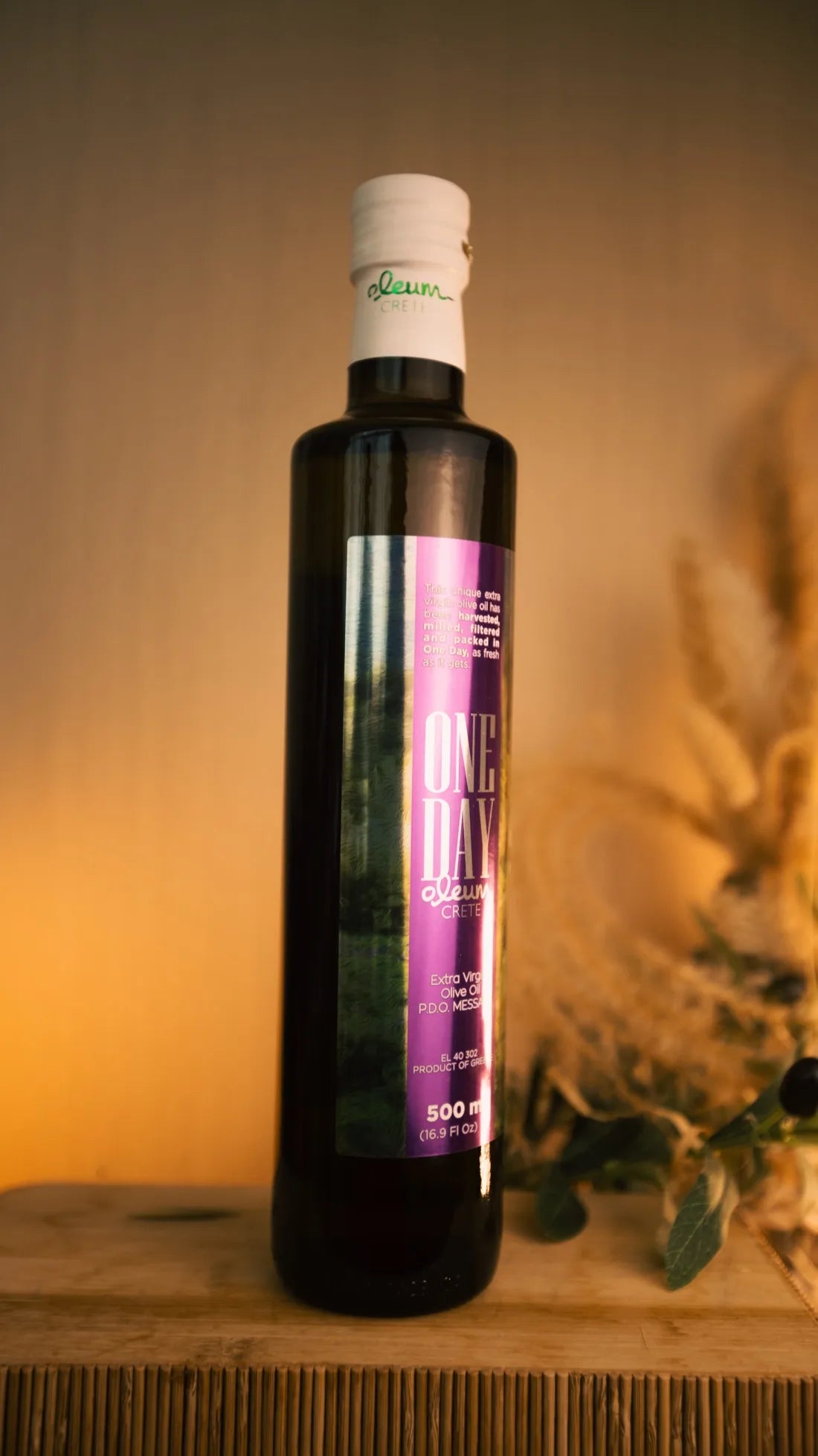
- Oleum Crete's One Day Extra Virgin Olive Oil is pressed within a day of hand-harvest on the Messara Plain, which is why it suits a daily shot.
- Drinking more than the recommended amount does not strengthen the authorised benefit. It mostly adds calories.
- A 500ml bottle, taken as a 15ml daily shot, lasts roughly a month before you need to reorder.
What Is the Olive Oil Dosage Per Day? The Short Answer
The olive oil dosage per day behind the EU health claim is 20g, a little over 20ml. General nutrition guidance lands in the same place: 1 to 2 tablespoons (15 to 30ml) of extra virgin olive oil daily. As an olive oil shot dosage, that means one measured shot, once a day.
At Oleum Crete, we press single-estate, PDO Messara oil from the Kidonakis family groves on Crete, and we size our bottles around that daily amount. The figure is only half the answer, though. Twenty grams of a tired, low-polyphenol oil will not meet the claim. Twenty grams of a fresh, early-pressed Koroneiki oil can.
The EU Health Claim Threshold Explained
Under EU Regulation 432/2012, one health claim is authorised for olive oil, in this exact wording: "Olive oil polyphenols contribute to the protection of blood lipids from oxidative stress."
The conditions are strict. The claim may only be used for oils containing at least 5mg of hydroxytyrosol and its derivatives, such as the oleuropein complex and tyrosol, per 20g of olive oil. Consumers must also be told the benefit comes with a daily intake of 20g. In concentration terms, that threshold works out at roughly 250mg/kg of those specific polyphenols, a bar EFSA considers high and many standard oils fail to clear.
Be clear about what the claim does not say. It does not say olive oil treats, prevents or cures any condition, and it does not say more oil brings more protection. If you have a heart condition, take cholesterol-lowering medication, or follow a prescribed diet, speak to your doctor or a registered dietitian before adding a daily shot.
What Counts as High Polyphenol Olive Oil
A high polyphenol olive oil daily is one that clears the EU threshold in a normal serving. For a deeper look at the research beyond the claim itself, read our guide on is high polyphenol olive oil healthy. Here, the simpler question: why two bottles both labelled "extra virgin" can taste and test so differently.
Why Polyphenol Content Varies So Much Between Oils
Four things decide how many polyphenols end up in the bottle.
- Cultivar. Early-harvest, single-origin oils from cultivars such as Koroneiki are widely regarded as among the highest scoring.
- Ripeness at harvest. Green, early fruit carries more polyphenols than ripe, black fruit. It also yields less oil, which is why early-harvest oil costs more to make.
- Time from tree to mill. An olive begins to oxidise the moment it is picked. Every hour waiting in a crate costs freshness. Our One Day range is picked by hand and pressed within a day for this reason.
- Storage and heat. This matters most in the UAE climate. In laboratory storage trials, practically no sample kept at 50°C and 60°C maintained the level of hydroxytyrosol, tyrosol and derivatives required to retain the EFSA health claim. A bottle left in a hot car, or in an uncooled warehouse, can lose what made it worth buying.
You can often taste the difference. Fresh, polyphenol-rich Koroneiki oil opens green, with cut grass, green tomato and artichoke, then builds to a bitter edge and a peppery catch at the back of the throat. Flat, buttery oil with no bite has usually lost much of that character on the way to the shelf.
Reading Polyphenol Figures on a Label
Look for these on the bottle or product page:
- A polyphenol figure in mg/kg, with a test date. A figure with no date tells you about the oil at one point in time, not today.
- Whether the figure is total polyphenols or hydroxytyrosol and derivatives. The EU claim rests on the second group, so a high total figure alone does not confirm the claim is met.
- A harvest date, not just a best-before date.
- Origin certification. PDO status ties the oil to a defined area and set production rules. Ours is PDO Messara.
- A single cultivar and single estate. Blended oils can mix old and new harvests, diluting both flavour and polyphenol content.
Our oils test at over 800mg/kg total polyphenols, well above the roughly 250mg/kg level EFSA treats as high. That total-polyphenol figure is not the same measure the EU health claim is built on, since the claim is defined specifically by hydroxytyrosol and its derivatives rather than total polyphenol count.
When and How to Take Your Daily Olive Oil Shot
The olive oil shot dosage is simple: one measured shot of 15 to 30ml, once a day. How you take it is mostly a matter of comfort and consistency.
Morning on an Empty Stomach, or Before a Meal?
Most people take their shot first thing in the morning, before breakfast, because it's easy to remember. The EU claim sets a daily amount, not a time of day, so a shot before lunch or with a meal counts just the same towards the 20g.
Some find oil on an empty stomach heavy. If that's you, take it with food instead. If you have a digestive condition, gallbladder problems, or take medication that needs an empty stomach, check with your doctor or pharmacist first.
Neat, or Mixed With Lemon and Water?
Neat is the purest way to taste the oil. Pour a measured shot into a small glass, let it sit a moment, then drink it in one or two sips. A cough at the end is the peppery finish of a fresh oil, not a sign that something is wrong.
If the bitterness is too much at first, a squeeze of fresh lemon softens it, and a glass of room-temperature water afterwards helps. Avoid stirring the oil into hot drinks. Heat is the enemy of the very compounds you are drinking it for.
Is More Olive Oil Better?
No. The authorised claim is tied to a daily intake of 20g of a qualifying oil. Drinking two or three times that does not extend the claim and does not strengthen the protection it describes. The right olive oil dosage per day is the one the evidence is built on, taken consistently, not increased for effect.
What extra oil reliably adds is energy. Olive oil is pure fat and one of the most calorie-dense foods in any kitchen, so several extra shots a day, on top of the oil already in your cooking and dressings, add up quickly.
Some larger studies have looked at around 4 tablespoons (60ml) of high-quality extra virgin olive oil per day as part of an overall eating pattern. That's a whole-diet decision, not a reason to quadruple a morning shot, and it belongs in a conversation with a doctor or dietitian who knows your health.
Choosing the Best Olive Oil for a Daily Drinking Shot in the UAE
The best olive oil for drinking in the UAE meets three tests: high enough in polyphenols to meet the claim in one serving, fresh enough to taste of the grove, and kept cool on its way to you. All of our oils are 100% Koroneiki from a single estate on the Messara Plain, run by four generations of the Kidonakis family since 1983 and harvested entirely by hand.
One Day Extra Virgin: Built for the Daily Shot
Our One Day Extra Virgin Olive Oil is designed around freshness. The fruit is picked at dawn on the Messara Plain and pressed within the same day, capturing green tomato, garden herb and a clean, peppery finish before oxidation can dull them. It's bright enough to enjoy neat, which matters when you're drinking it every morning.
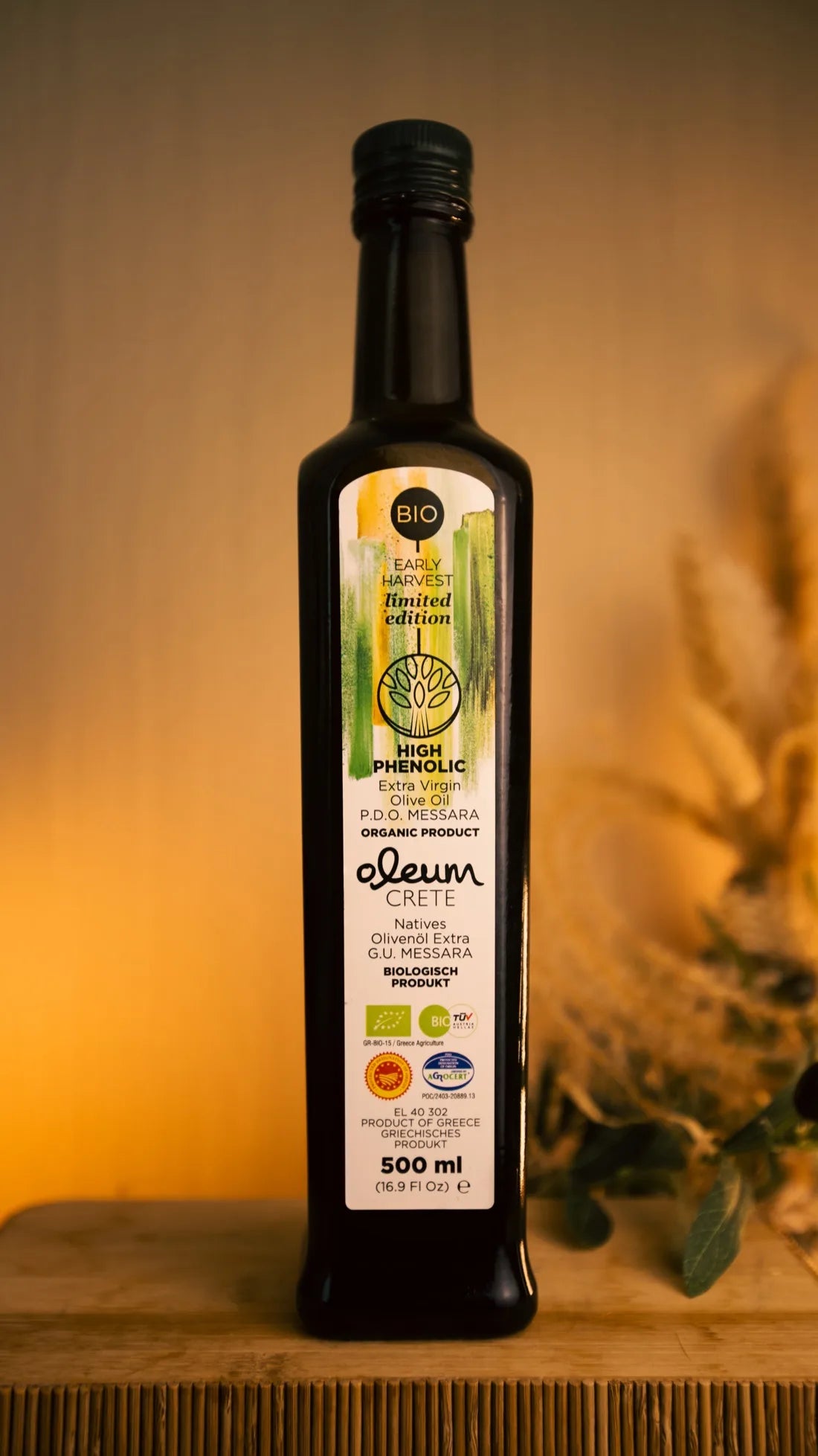
Organic Early Harvest: The Higher-Polyphenol Option
Our Organic Early Harvest Olive Oil is pressed from younger, greener fruit. The result is more intense: deeper bitterness, stronger pepper, a grassier nose. It suits readers who want a bold, high-polyphenol, organic oil in the glass.
Sizing Your Bottle to Your Routine
Match the bottle to how many people in your home take a shot, and how much you also cook with. The figures below are approximate, for one person taking one shot a day.
| Oil | Size | Best suited to | Days at 15ml | Days at 20g (about 22ml) | Days at 30ml |
|---|---|---|---|---|---|
| One Day Extra Virgin | 500ml | Daily shot, maximum freshness | about 33 | about 22 | about 16 |
| Organic Early Harvest | 500ml | Daily shot, bolder high-polyphenol taste | about 33 | about 22 | about 16 |
| Organic Extra Virgin (everyday PDO) | 750ml | Shot plus dressings, households of two | about 50 | about 34 | about 25 |
| Collection Premium Organic | 500ml | Gifting, black bottle | about 33 | about 22 | about 16 |
| Extra Virgin 5L Tin | 5L | Cooking and catering alongside a shot oil | about 333 | about 227 | about 166 |
For most single drinkers, a 500ml bottle is right because it stays fresh to the last shot. If two of you take a shot, or you also use the oil raw on salads, the 750ml Organic Extra Virgin is the practical choice. The Collection Premium Organic, in its black bottle, is the one we suggest when the daily shot is a gift.
Delivery across the UAE is handled temperature-controlled, with orders shipped within 24 hours so the oil doesn't sit in the heat before it reaches you.
Fitting the Daily Shot Into Your Routine
A habit you keep is worth more than a perfect olive oil dosage per day that you take twice and forget.
Drinking It Straight vs Using It in Cooking
Your shot and your cooking oil do different jobs. The shot is raw, measured and taken for its polyphenols; cooking oil is for flavour and heat. The storage research above found that high temperatures strip away the compounds the EU claim depends on, so count raw uses, such as the shot or a drizzle over hummus, towards your daily 20g, and treat oil used for frying or roasting as cooking fat.
Many households keep two oils: a fresh 500ml bottle for the shot and raw dishes, and a larger format, like our 5L tin, for the kitchen.
Building the Habit Without Wasting Oil
- Measure every time. Use a 15ml measuring spoon or a marked shot glass. Free-pouring drifts upwards.
- Anchor it to something you already do, such as filling the kettle or before your first coffee.
- Store it away from heat and light, in a closed cupboard away from the hob and any sunny window. Never leave it in a car.
- Keep the cap tight. Air is the second enemy after heat.
- Reorder before you run out, using the table above to time your next order.
Frequently asked questions
Can you drink olive oil on an empty stomach every day?
Many people do, and a morning shot before breakfast is the most common routine. Some find it causes mild discomfort, in which case taking it with food works just as well, since the EU claim is based on daily intake rather than timing. If you have a digestive or gallbladder condition, or take medication on an empty stomach, ask your doctor first.
Does drinking olive oil help you lose weight?
The authorised EU claim says nothing about weight. Olive oil is calorie-dense, so a daily shot adds energy to your diet unless it replaces other fats. Anyone managing their weight should discuss it with a doctor or dietitian.
Can children take a daily olive oil shot?
The 20g daily intake behind the EU claim was not set for children. Children can enjoy good olive oil in food, drizzled on vegetables or bread. Speak to your paediatrician before giving a child a daily shot.
What's the best time of day to drink olive oil?
Most people choose first thing in the morning, before food, simply because it's easy to remember. The claim sets a daily amount, not a time, so before lunch or with a meal is fine. Pick the time you'll keep to every day.
Does cooking destroy the polyphenols you need for the dose?
High heat reduces them substantially. Laboratory storage trials found that at 50°C and 60°C, practically no sample kept enough of the relevant polyphenols to retain the EFSA claim, and cooking temperatures run higher still. Take your shot raw and keep a separate oil for frying and roasting.
Ready to start your daily shot the right way? Shop the Oleum Crete collection and bring home a bottle pressed within a day of harvest.
More from the Journal
All entriesKoroneiki Olive Oil and Heart Health: What Studies Show
Koroneiki olive oil carries some of the highest polyphenol counts of any olive variety, and that matters for heart health. We look at what the research actually shows, what the EU health claim permits us to say, and how much oil delivers it.

Olive Oil Acidity Level: How to Check Before You Buy
Acidity is the one number most shoppers skip past on an olive oil label, yet it decides whether a bottle can legally call itself extra virgin. Here is how to find it, read it and check it against the PDO Messara standard before you buy.

How Much Olive Oil Should a Family of Four Buy Monthly?
Most households either run out of olive oil mid-month or let a bottle oxidise on the shelf. Here is a concrete monthly estimate for a family of four, broken down by cooking, salads and daily shots, mapped straight onto Oleum Crete's 500ml, 750ml and 5L sizes.
