
Olive Oil Freshness After Opening: How Long It Really Lasts
Once a bottle of extra virgin olive oil is opened, the clock starts. Air, light and heat all work against it. Here's how long a bottle genuinely lasts once opened, and how to slow the decline.

In this article8 sections
Key takeaways
- An opened bottle of extra virgin olive oil is at its best for about two months, the window the UC Davis Olive Center recommends. A sealed bottle bought within a year of harvest can last up to two years, which is the period the best-before date describes.
- Oxygen, light and heat break olive oil down fastest. A dark, cool cupboard away from the stove does far more for freshness than the fridge.
- A 500ml bottle used daily for cooking and dressing empties before it oxidises. That is why Oleum Crete bottles its One Day and Collection ranges in sizes suited to steady use.
- Rancid oil tastes flat, crayon-like or faintly metallic where a fresh Koroneiki oil tastes peppery and of green tomato. Once that change has happened, it cannot be reversed.
- Once the seal is broken, no storage trick matters as much as buying a recent harvest in a smaller bottle.
How Long Does Olive Oil Really Last After Opening?
Once opened, olive oil is at its best for about two months. Researchers at the UC Davis Olive Center in California advise using extra virgin olive oil soon after you buy it and within a couple of months of opening it; after that, its bright flavour and peppery finish start to fade. At Oleum Crete, every decision we make, from harvest day to bottle size, is built around protecting that short window.
A sealed bottle is a different story. According to the same UC Davis guidance, extra virgin olive oil bought within the year of its harvest may last for two years if it stays unopened, and the best-before date on the label describes that sealed bottle. The moment you break the seal, oxygen starts to work on the oil, and over the next two months or so much of its bright, peppery character softens.
The oil does not turn bad on a fixed day. It changes gradually. The grassy top notes go quiet first. The pepper at the back of the throat fades. Then a flatness creeps in that no amount of salt or lemon will hide. A bottle opened in spring and still on the shelf in autumn may sit comfortably within its printed date and still taste tired.
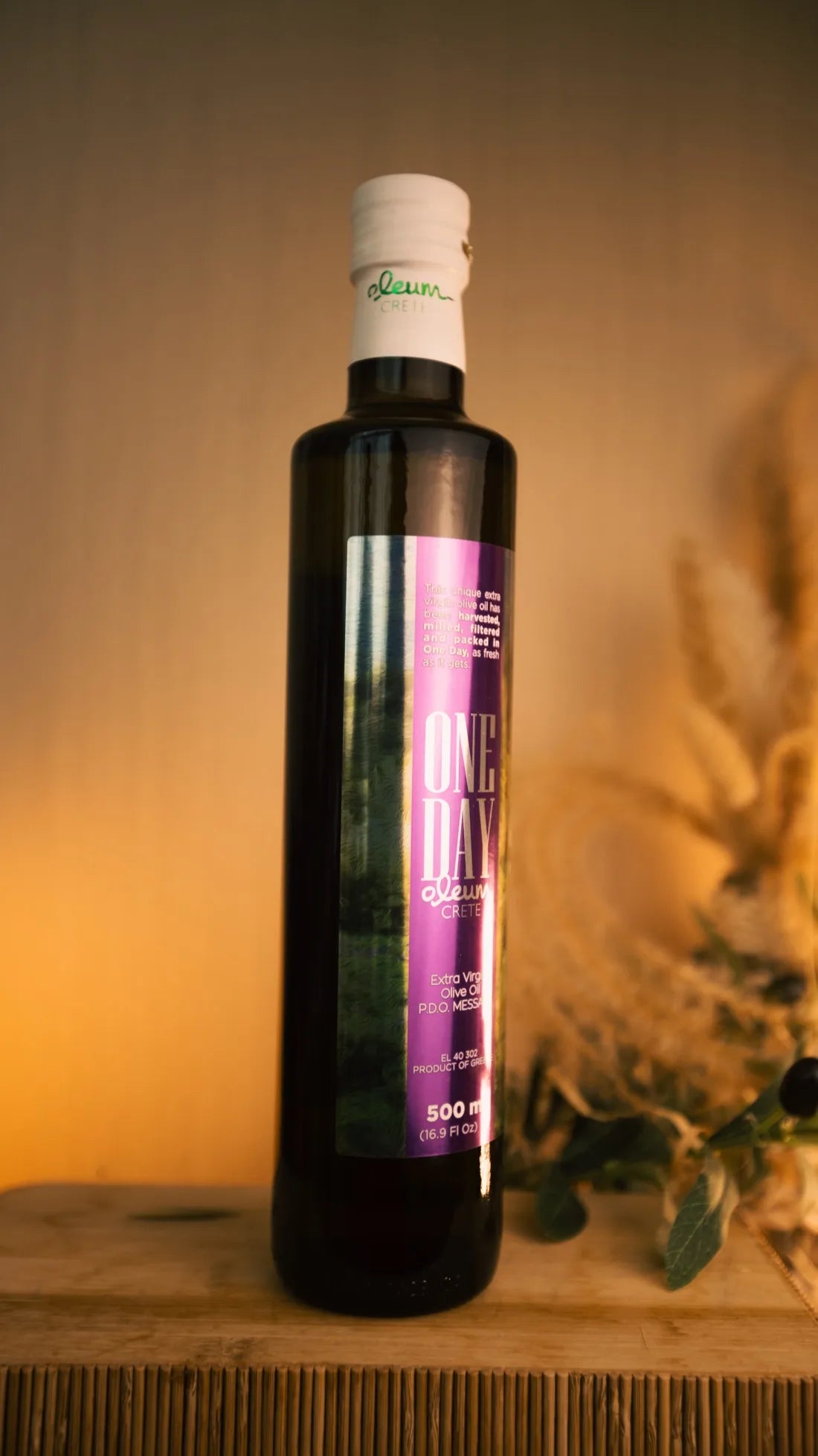
Our One Day Extra Virgin Olive Oil is picked and pressed on the Messara Plain within a single day, so the clock starts as late as it possibly can, then shipped across the UAE in temperature-controlled conditions within 24 hours. What happens after you open it is down to your kitchen, and the rest of this guide explains how to make those weeks count.
What Breaks Olive Oil Down Once the Seal Is Open
Olive oil is a fresh fruit juice, pressed from olives and nothing else. Like any fresh product, it reacts to its surroundings. Three forces do almost all the damage.
Oxygen: the moment air gets in
Olive oil oxidation begins as soon as air meets the oil. Oxygen reacts with the fatty acids and, alongside them, with the natural antioxidants that protect them. Polyphenols act as a shield: they oxidise first and are used up in the process, which slows the damage to the fats. Every time you open the cap, fresh air replaces the oil you poured, so the pocket of air above the oil grows as the bottle empties. A bottle two-thirds empty oxidises faster than a full one.
Light: why dark glass and dark cupboards matter
Light, especially sunlight and strong kitchen lighting, speeds up oxidation through photo-oxidation. Chlorophyll, the pigment behind the green hue of early-harvest oils, absorbs light and passes that energy into reactions that degrade the oil. Clear glass on a sunny windowsill is one of the quickest ways to ruin a good oil. Dark glass helps. A closed cupboard helps more.
Heat: why a bottle by the hob ages fastest
Heat accelerates every chemical reaction in the bottle, oxidation included. The shelf beside the hob, the top of the fridge and the counter above the oven all run warmer than the rest of the kitchen, and a bottle kept there ages faster than one in a cupboard across the room. In the UAE this matters more than in cooler climates, because kitchens, cars and delivery points can run hot for much of the year. Good olive oil storage starts with keeping the bottle away from any heat source. The UC Davis Olive Center gives the same advice: keep olive oil somewhere cool and dark, because light and heat make it lose its freshness faster.
Signs Your Olive Oil Has Gone Rancid
You do not need a laboratory to judge a bottle. Your nose and palate are reliable instruments if you know what to look for.
Taste: flat, crayon-like or musty instead of peppery
Pour a little into a small glass or spoon and taste it on its own. A fresh Koroneiki oil from Messara is lively: green tomato, artichoke, garden herb, a gentle bitterness and a clean peppery catch in the throat. The most common signs that olive oil tastes rancid are the opposite of that. Look for a flat, greasy feel on the tongue, a waxy flavour often compared to crayons, or a stale note like old nuts. A faintly metallic or musty edge is another warning. If the pepper has vanished and nothing green remains, the oil has passed its best.
Smell: the giveaway before you even taste it
Warm the glass in your hand for a moment, cover it, then uncover it and smell. Fresh oil smells of cut grass, leaves or green fruit. Rancid oil smells of putty, old crayons or stale crackers, and you will usually notice it before you taste anything. If the smell already puts you off, trust it.
Appearance: does cloudiness or colour tell you anything?
Very little. Colour depends on the olive variety, the ripeness at harvest and the pigments in the fruit. A deep green oil is not automatically fresher than a golden one. Cloudiness usually comes from cold, as some components solidify at low temperatures and clear again at room temperature, or from fine fruit particles in an unfiltered oil. Neither tells you whether the oil is rancid. Judge by smell and taste.
How to Store Olive Oil to Keep It Fresh Longer
Knowing how to store olive oil comes down to four habits. Follow them in order, starting the day the bottle arrives.
Keep it dark
- Store the bottle in a closed cupboard or pantry, never on an open shelf in sunlight. Keep it in dark glass or a tin; if your oil came in a box, the box adds another layer of protection.
Keep it cool, not cold
- Choose the coolest cupboard in the kitchen, away from the hob, oven, dishwasher and any wall that takes direct afternoon sun. A steady, moderate room temperature is ideal. The fridge is not necessary, and it brings its own problems (see the FAQ below).
Keep the cap on tight
- Close the bottle straight after every pour. Avoid leaving a pourer spout open on the counter for days. Every minute uncapped lets in more oxygen.
Decant only what you'll use soon
- If you cook from a cruet or a small dispenser, fill it with only a few days' worth at a time and keep the main bottle sealed and dark. Wash and dry the dispenser between refills, so old oil never mixes with fresh.
These steps will keep olive oil fresh for as long as the oil itself allows. They cannot restore freshness that was lost before the bottle reached you, which is why harvest date and bottle size matter so much.
Does Bottle Size Change How Long It Lasts?
Yes, and this is the detail most people overlook. Olive oil bottle size and freshness are directly linked, because the clock starts the moment you open the bottle, however much oil is inside. A large container takes longer to empty, so its last portion spends longer exposed to air.
The table below is an illustrative estimate, not a verified figure. It assumes a household uses about two tablespoons (30ml) a day for cooking and dressing; a tablespoon is 15ml. Your own pace will vary.
| Size | Estimated days to empty at 30ml/day (illustrative only) | Finished within about two months? | Best suited to |
|---|---|---|---|
| 500ml bottle | About 17 days | Comfortably | Daily cooks, dressings, finishing, gifting |
| 750ml bottle | About 25 days | Comfortably | Larger households using oil every day |
| 5L tin | About 167 days | No, unless decanted or used heavily | Catering, large families, very heavy use |
Daily users vs occasional cooks
If you cook with olive oil most days, either a 500ml or a 750ml bottle will be finished well within its freshest weeks. For a family that dresses salads, roasts vegetables and drizzles over labneh daily, the 750ml Organic Extra Virgin Olive Oil, our everyday PDO pressing, is the natural choice in the 500ml vs 750ml olive oil question. If you use oil a few times a week, the 500ml size gives you a fresh bottle more often.
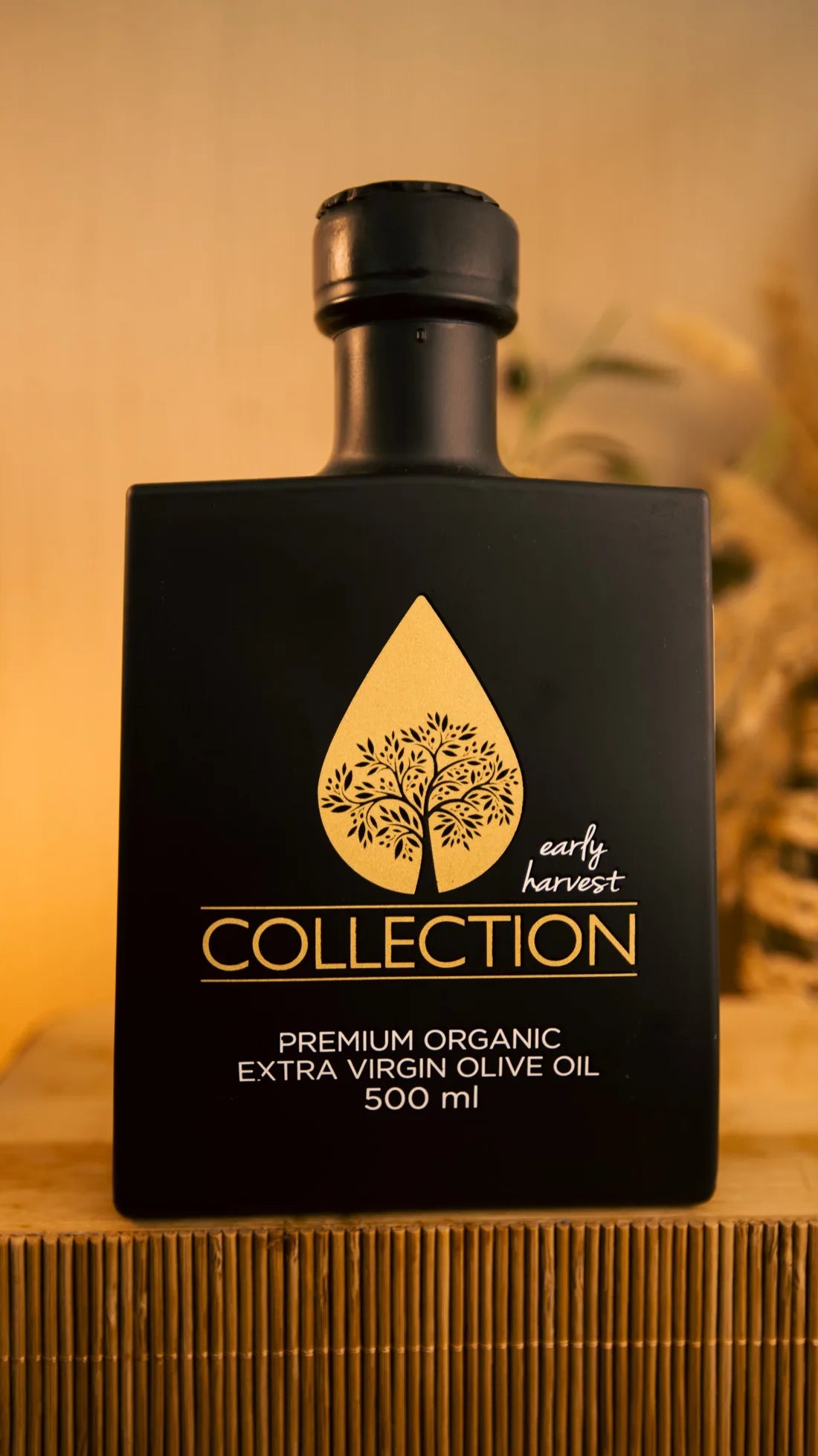
For gifting, the Collection Premium Organic Olive Oil comes in a 500ml black bottle that shields the oil from light, in a size a recipient will enjoy at its best rather than keep half-full at the back of a cupboard.
When a 5L tin still makes sense
Our Extra Virgin Olive Oil 5L Tin is made for kitchens that go through oil quickly: restaurants, caterers and large households cooking for many people. A tin blocks light completely. For anyone using less, the answer is to decant: fill a clean, dark bottle with a week or two's supply, then close the tin tightly and store it somewhere cool and dark.
Does Olive Oil Freshness After Opening Affect the Health Benefits?
It does, because the compounds behind the health claim are the same ones that oxidation uses up first.
Polyphenols fade as the oil oxidises
Polyphenols are the natural antioxidants in extra virgin olive oil. They give fresh oil its bitterness and pepper. As explained above, they sacrifice themselves to protect the oil from oxygen, so their level falls as a bottle ages after opening. You can taste this happening: an oil that has lost its peppery catch has usually lost a good share of its polyphenols too.
The European Union authorises one health claim for these compounds, set out in Commission Regulation (EU) No 432/2012: "Olive oil polyphenols contribute to the protection of blood lipids from oxidative stress." That is the claim's exact wording, and it says nothing beyond that. The regulation sets out specific conditions of use for the claim, and whether a given bottle meets them depends on factors the regulation defines. For questions about the claim's conditions, or about your own diet or health, speak to your doctor, a registered dietitian or consult the regulation directly.
Why starting with a high-polyphenol oil buys you more time
An oil that starts with a high polyphenol content has more protection to spend. Our oils exceed 800mg/kg of polyphenols, per our own measurements. That does not stop the clock, but a well-stored, high-polyphenol olive oil keeps its character for longer after opening than a low-polyphenol one. For more on how these oils are defined and dosed, see our journal piece on high-polyphenol olive oil.
How to Buy Olive Oil That Stays Fresh Longer
Storage protects what you bring home. What you bring home is decided at the shelf or the checkout, and two things matter most.
Check the harvest date, not just the best-before date
The best-before date is set by the producer and often sits far from the harvest. The harvest date tells you how old the oil actually is. Look for the most recent harvest you can find, and be wary of bottles that show only a best-before date. Our guide to checking the harvest date on the label explains what to look for, and what it means when a date is missing.
When you buy fresh olive oil, provenance is the other half of the picture. A PDO Messara certification ties the oil to one protected place. A single estate and a single variety, 100% Koroneiki from the Kidonakis family groves, means nothing has been blended in from another harvest or another country. Our One Day range is picked and pressed within a single day, then carried to you in temperature-controlled conditions within 24 hours, with free delivery anywhere in the UAE and no minimum spend.
Choose a bottle size that matches how fast you'll use it
Be honest about how much oil you use. If a bottle will be empty within a month, any of our sizes will serve you well. If it might linger, choose smaller. A 500ml bottle opened fresh and finished in a few weeks gives you more flavour and more polyphenols than a larger bottle that fades on the shelf.
Frequently asked questions
Does refrigerating olive oil after opening make it last longer?
The fridge slows oxidation slightly, but it causes other problems. Olive oil turns cloudy and partly solid in the cold. Taking it in and out repeatedly can draw condensation into the bottle, and moisture is bad for flavour. A dark, cool cupboard is the better choice for most households.
Can you still use olive oil after the best-before date if it smells fine?
A clean smell is a good sign, but taste a spoonful on its own before you decide. If it is still fruity and peppery with no waxy or stale notes, it is likely still pleasant to use. If it tastes flat or rancid, its flavour and polyphenols have faded and it will dull whatever you cook. If you are unsure whether a food is safe to eat, seek advice from a qualified food safety source.
Does olive oil freshness after opening differ between organic and non-organic oils?
Organic certification describes how the olives are grown. It does not by itself change how quickly an opened bottle oxidises. Harvest date, polyphenol content, packaging and storage matter far more. Our organic oils combine EU Organic certification with a high polyphenol content, and it is the polyphenols that help them hold up after opening.
Why does my olive oil taste bitter after a few weeks open?
Bitterness in a fresh extra virgin olive oil is a positive quality, linked to its polyphenols, and it tends to soften with time rather than grow. If the oil now tastes harsh alongside stale, waxy or musty notes, oxidation is the likely cause and the oil is past its best. If it tastes bitter but still green and clean, you are probably just noticing its natural character.
Is it safe to top up an old bottle of olive oil with a new one?
We do not recommend it. Older oil already contains oxidation products, and mixing it with fresh oil speeds up the ageing of the new oil and spoils its flavour. Finish the old bottle, or set it aside, then wash and dry the container thoroughly before refilling.
Ready for a bottle that's fresh from the first pour to the last? Shop the Oleum Crete collection and choose the size that matches how you cook.
More from the Journal
All entriesKoroneiki Olive Oil and Heart Health: What Studies Show
Koroneiki olive oil carries some of the highest polyphenol counts of any olive variety, and that matters for heart health. We look at what the research actually shows, what the EU health claim permits us to say, and how much oil delivers it.

Olive Oil Acidity Level: How to Check Before You Buy
Acidity is the one number most shoppers skip past on an olive oil label, yet it decides whether a bottle can legally call itself extra virgin. Here is how to find it, read it and check it against the PDO Messara standard before you buy.

How Much Olive Oil Should a Family of Four Buy Monthly?
Most households either run out of olive oil mid-month or let a bottle oxidise on the shelf. Here is a concrete monthly estimate for a family of four, broken down by cooking, salads and daily shots, mapped straight onto Oleum Crete's 500ml, 750ml and 5L sizes.
